Are Cleaning Chemicals Safe in Daycare Centers?
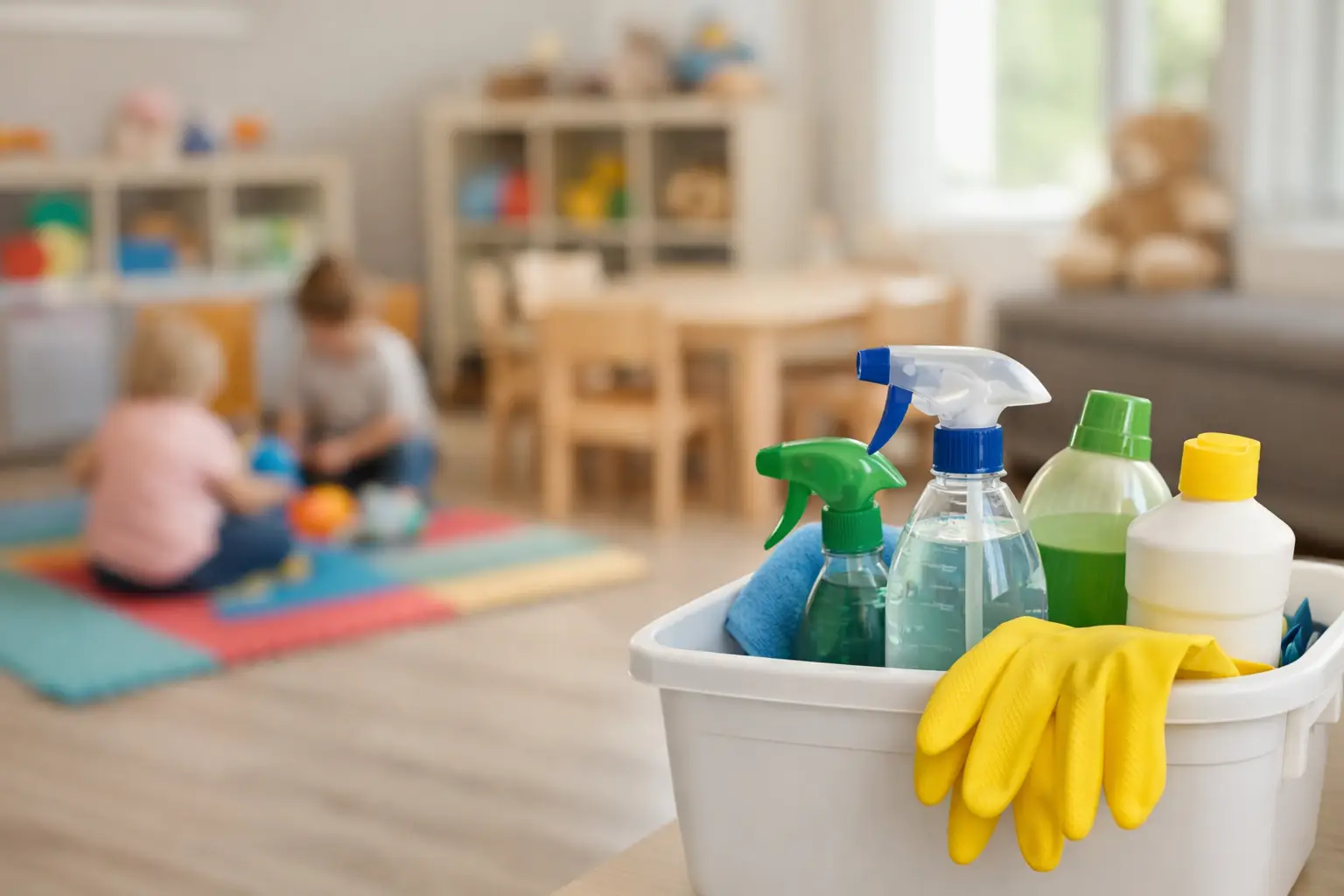
A sticky art table, a bathroom accident, and a classroom full of toddlers can create three very different cleaning needs before lunch. The question is not whether cleaning chemicals are safe in daycares. It is whether the products, procedures, and timing are appropriate for the children and spaces involved.
For daycare directors and facility managers, the risk is rarely one bottle on a supply shelf. Problems happen when a product is used at the wrong concentration, left within reach, applied without enough ventilation, or treated as a disinfectant when it is only a cleaner. A dependable daycare cleaning program accounts for those details before the cleaning crew arrives.
Are Cleaning Chemicals Safe in Daycares?
They can be, but safety depends on how they are selected and managed. Daycare centers need to remove dirt, food residue, bodily fluids, and germs without leaving behind avoidable chemical exposure for children, teachers, or cleaning staff.
Children are more likely than adults to touch floors and low surfaces, put hands near their mouths, and spend extended time close to recently cleaned areas. That does not mean a facility should avoid cleaning or disinfecting. It means each task should use the least hazardous effective product and a process that follows the product label exactly.
A commercial cleaning provider should not take a one-product-fits-all approach. A neutral cleaner may be appropriate for daily classroom surfaces and floors. A registered disinfectant may be needed for a restroom, diaper-changing station, or an illness-related cleanup. Using a stronger chemical where routine cleaning would do the job can create unnecessary exposure and may damage finishes over time.
Cleaning and Disinfecting Are Different Jobs
One common source of confusion in daycares is treating cleaning and disinfecting as the same thing. They are related, but they serve different purposes.
Cleaning removes visible soil, crumbs, oils, and residue. It also reduces the number of germs on a surface. Disinfecting uses an approved product to kill or inactivate certain germs, but it works properly only when the surface has been cleaned first and the product remains wet for its required contact time.
That contact time matters. If a disinfectant is sprayed on a changing table and wiped away immediately, it may not perform as intended. On the other hand, spraying disinfectant into an occupied classroom or onto toys that children will immediately handle is not a sound routine practice.
A site-specific plan should identify which surfaces need routine cleaning, which require disinfection, and when each task occurs. For example, classroom tables may be cleaned after meals and activities, while diapering surfaces are cleaned and disinfected according to the center's procedures. Restrooms, high-touch handles, and shared equipment may need more frequent attention during periods of elevated illness.
Product Selection Should Start With the Label
The safest product is not simply the one with the strongest scent or the most aggressive claim. It is the product that is appropriate for the surface and task, used according to its directions.
Daycare decision-makers should expect their cleaning partner to understand product labels, including dilution instructions, personal protective equipment requirements, contact time, first-aid directions, and storage requirements. Labels also identify the surfaces a product can safely be used on. A product suitable for a hard restroom surface may not be appropriate for a classroom rug, food-contact surface, or soft play equipment.
When evaluating products, look for clear documentation rather than vague assurances. The facility should know what products are used, where they are used, and how staff can access safety information if needed. This also makes it easier to respond when a parent, teacher, or inspector asks a reasonable question about the center's cleaning process.
Fragrance deserves attention, too. A strong chemical smell is not proof that an area is clean. In fact, heavily fragranced products can be uncomfortable for children or staff with sensitivities. Low-odor products and adequate ventilation are often better choices for occupied childcare settings, provided they meet the required cleaning or disinfection purpose.
Dilution, Storage, and Timing Prevent Most Problems
A properly selected product can still become a problem when it is mixed or stored carelessly. Concentrated chemicals should be diluted with calibrated dispensing equipment or according to the manufacturer's directions. Guessing at dilution can leave a product too weak to work or too strong for the surface and environment.
Cleaning chemicals should remain in their original labeled containers or in properly labeled secondary containers. They should be stored in a locked area away from classrooms, food, toys, and child-accessible sinks. Spray bottles without labels are a red flag because no one can reliably confirm what they contain or how they should be used.
Chemical incompatibility is another serious issue. Products should never be mixed unless the manufacturer specifically instructs otherwise. Combining bleach with ammonia-containing products or certain acidic cleaners can create dangerous fumes. A trained cleaning team follows a controlled product system so staff are not improvising in a supply closet.
Timing protects children as much as product selection does. Many deeper cleaning and disinfection tasks are best completed after children have left for the day, especially when a product requires a longer contact time or the space needs to air out. During operating hours, the team should use targeted procedures, keep children away from active cleaning areas, and return surfaces to a dry, ready-to-use condition before normal activity resumes.
A Daycare Cleaning Plan Needs More Than a Checklist
A generic janitorial checklist can miss the details that make childcare facilities different. Daycares have nap areas, play zones, restrooms, entryways, food-preparation spaces, changing stations, and high-touch fixtures with different risks and cleaning requirements.
A documented scope of work should assign responsibilities by area and frequency. It should also establish how the cleaning team handles spills, illness-related incidents, supply refills, missed details, and concerns reported by center staff. For a Newark or Essex County daycare, that structure is especially useful when weather brings wet entryways, salt residue, and increased slip hazards into busy common areas.
Quality checks should confirm more than whether a room looks presentable. They should verify that chemicals are secured, dispensers are functioning, restrooms are stocked, floors are dry, and cleaning records are completed when required by the facility. These checks create accountability and help address small issues before they become parent complaints or compliance concerns.
Questions to Ask a Daycare Cleaning Company
Before hiring or reviewing a commercial cleaning provider, ask direct questions about its chemical safety process. The answers should be specific and easy to verify.
- Which products will be used in classrooms, restrooms, food areas, and changing areas?
- How are concentrates diluted, bottles labeled, and chemicals stored on site?
- How do cleaners distinguish between routine cleaning and disinfection?
- What training do team members receive on labels, contact times, and chemical incompatibilities?
- How are spills, bodily-fluid incidents, and illness-related disinfection requests documented and communicated?
- Who inspects the work and follows up if the center identifies an issue?
A reliable provider should be comfortable walking through these questions. If the response is simply that the team uses safe products, ask for the process behind that statement. Safety comes from consistent execution, not a broad promise.
What Staff Should Notice After Cleaning
The goal is a clean, calm facility, not a lingering scent that suggests chemicals were heavily used. Classrooms should be free of visible residue, floors should be dry, and supplies should be secured before children arrive or return to the area.
Teachers should also know how to report a concern quickly. If a cleaner misses a diapering-area detail, leaves a supply cabinet unsecured, or uses a product that creates an objectionable odor, the issue needs prompt correction and documented follow-up. Clear communication between the cleaning provider and center leadership prevents repeat problems.
At CEECEE Commercial Cleaning, daycare cleaning plans are built around the actual rooms, routines, and responsibilities at each facility, with documented expectations and quality inspections that support a safer daily environment.
A daycare should never have to choose between cleanliness and chemical safety. Schedule a walkthrough with a commercial cleaning partner who will review your facility's needs, explain the process clearly, and build a plan that helps your staff focus on caring for children.
Call (917) 837-6499 or email info@ceeceecleaning.com