Can Janitors Clean Medical Equipment Safely?
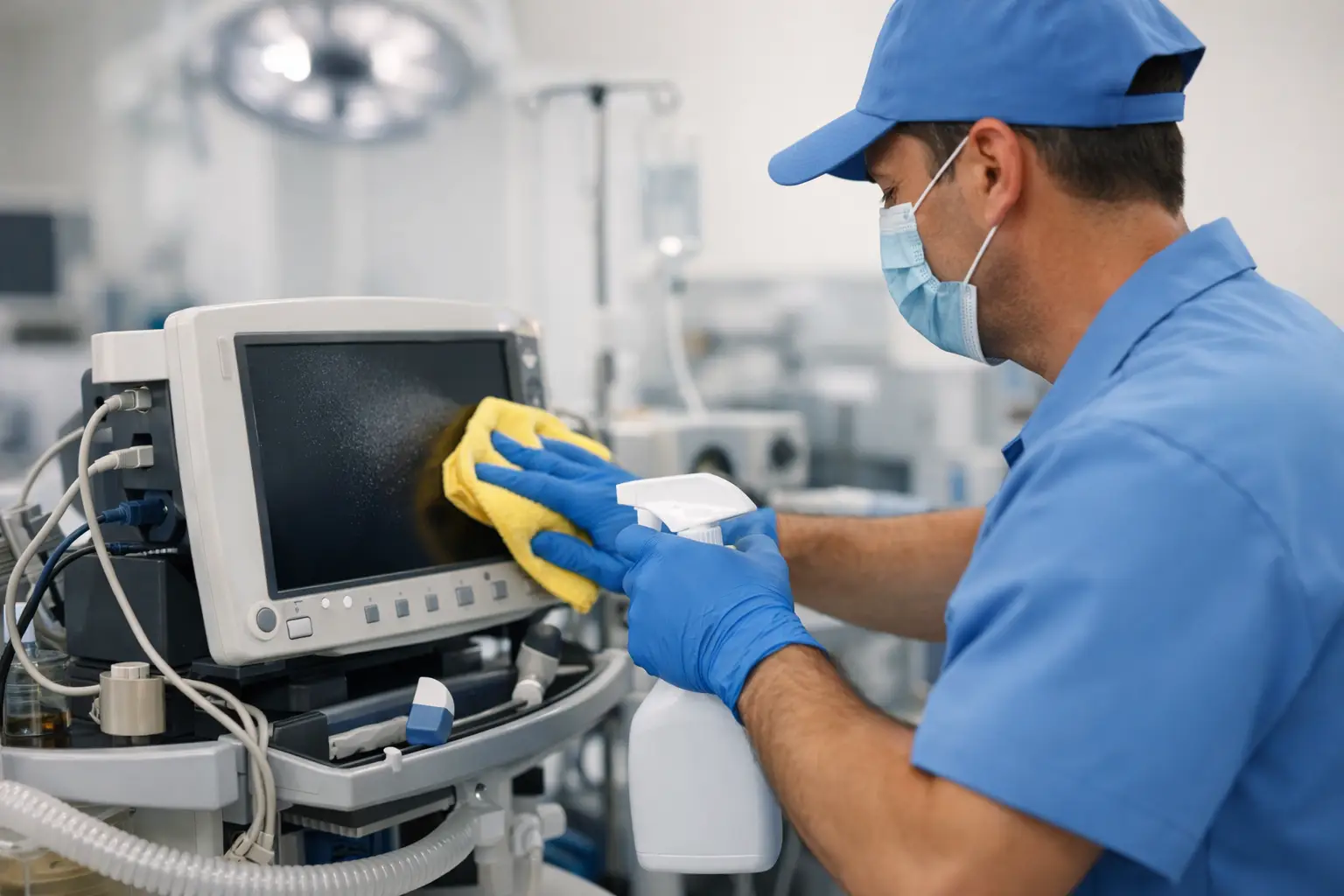
A smudged monitor, dusty imaging cart, or sticky exam-table control panel can make a medical office look poorly managed in minutes. But the answer to can janitors clean medical equipment is not a simple yes or no. In a medical or dental facility, the wrong person using the wrong product can damage a device, compromise infection-control practices, or create confusion about who owns a critical task.
For practice administrators and facility managers, the goal is clear: keep patient-facing areas clean and presentable without crossing the line into clinical cleaning, disinfection, or equipment reprocessing that requires specialized training and responsibility.
Can Janitors Clean Medical Equipment?
Janitorial staff can often clean the external, nonclinical surfaces of certain medical equipment when the work is clearly authorized, documented, and performed according to the equipment manufacturer's instructions. Examples may include wiping dust from the exterior of an imaging unit, cleaning fingerprints from a monitor stand, or removing visible soil from the outside of a noninvasive device cart.
That does not mean janitorial staff should clean every item that happens to be in an exam room. Medical equipment varies widely. A waiting-room blood pressure kiosk is not the same as a patient-monitoring device, a dental handpiece, an ultrasound probe, or a surgical instrument.
The key question is not whether an item is called “equipment.” The question is whether the surface is environmental and noncritical, whether it is safe to clean with the approved product, and whether the task falls within the cleaning team's written scope of work.
Where the Line Should Be Drawn
A dependable medical-office cleaning plan separates routine environmental cleaning from clinical responsibilities. That distinction protects patients, staff, equipment, and the cleaning crew.
Appropriate Tasks for a Trained Janitorial Team
With site-specific instruction and approved products, janitorial professionals may be assigned to clean low-risk exterior surfaces such as the outside of equipment carts, monitor exteriors, rolling stools, exam-room furniture, wall-mounted dispensers, and nonclinical touchpoints near equipment.
They may also clean floors around equipment, remove dust from accessible exterior surfaces, and address visible soil on surrounding cabinetry. These tasks support a cleaner patient environment without requiring the team to handle devices in a way that affects patient care.
The work still needs limits. A cleaning professional should not unplug a device, move equipment that has not been approved for movement, spray liquid directly onto electronics, or use a disinfectant that the manufacturer does not permit.
Tasks That Belong to Clinical Staff or Specialists
Clinical teams, trained technicians, or the device manufacturer should handle tasks involving equipment reprocessing, sterilization, calibration, internal components, patient-contact parts, probes, sensors, tubing, instruments, or any device used in invasive procedures.
This also includes cleaning and disinfecting surfaces when a manufacturer requires a specific process, dwell time, solution, wipe material, or trained operator. Some equipment can be damaged by common disinfectants. Others require the device to be powered down or placed in a specific mode before cleaning.
If a surface contacts intact skin, mucous membranes, broken skin, or sterile body areas, the facility should have a clinical protocol that identifies exactly who is responsible. Janitorial staff should never be expected to guess.
Why Manufacturer Instructions Matter
A disinfectant that works well on a countertop may not be safe for a touchscreen, acrylic shield, sensor, upholstery, or coated metal surface. Alcohol, bleach, quaternary disinfectants, hydrogen peroxide products, and wipes with abrasive textures can all have different effects depending on the device.
Manufacturer instructions for use should guide the process. They typically identify approved cleaning agents, concentrations, contact times, application methods, and any surfaces that should not be cleaned with certain chemicals.
This is where many facilities run into trouble. A cleaning crew may be told to “wipe down all equipment” without receiving a device list, product guidance, or clear boundaries. The result can be inconsistent care at best and equipment damage at worst.
A stronger approach is to identify each equipment category in the cleaning plan. For example, the plan can state that the janitorial team cleans the exterior base and display housing of a designated machine using an approved pre-moistened wipe, while clinical staff clean all patient-contact components. Clear instructions prevent assumptions on both sides.
Build a Medical Cleaning Scope That Works in Real Life
A medical office needs more than a generic nightly checklist. The cleaning scope should reflect how the practice operates, what equipment is present, and which rooms require special handling.
During a walkthrough, the facility manager or practice administrator should identify equipment that janitorial staff may clean, equipment they may clean only on the exterior, and equipment they should not touch. This is especially useful in multi-provider practices where rooms are set up differently and staff rotate throughout the week.
For each approved item, document the cleaning method, the product to use, how often it should be cleaned, and who is responsible. If an item needs to be moved, include whether that is permitted and who must be notified first.
A useful scope also addresses exceptions. If a room is occupied, if equipment is in use, if a device has a contamination concern, or if a spill involves blood or other potentially infectious material, the team should know what to do next. In many cases, the right answer is to stop, secure the area as directed, and notify the designated facility contact or clinical lead.
Training Is Not Optional
Medical and dental office cleaning requires more than knowing how to mop a floor or empty a trash can. Cleaning professionals need training on the facility's infection-control expectations, chemical safety, personal protective equipment, waste handling, sharps awareness, and escalation procedures.
They also need to understand that “clean” and “disinfected” are different outcomes. Cleaning removes visible soil and reduces debris. Disinfection uses an approved product according to its label directions, including the required wet contact time. If a product is wiped off too soon, the disinfection claim may not apply.
Training should be reinforced whenever the facility changes products, brings in new equipment, changes room layouts, or experiences a recurring issue. A documented process is useful only when the people doing the work understand it and supervisors verify that it is being followed.
Protect Equipment Without Creating Gaps in Cleaning
Some practices become so concerned about device damage that cleaning teams are instructed not to touch anything in the exam room. That may feel safe, but it can leave behind dust, fingerprints, and high-touch environmental surfaces that patients and staff notice.
The better answer is controlled responsibility. Give the janitorial team authority over the surfaces it can safely manage, and give clinical staff clear ownership of patient-contact equipment and specialized disinfection. Neither team should assume the other is handling a task.
This is particularly important for busy offices in Newark and across North Jersey, where evening cleaning teams may work after clinical staff have left. If the scope is vague, questions cannot be answered in the moment. Labels, room-specific instructions, and a reliable communication process make the shift run more smoothly.
What to Ask Your Commercial Cleaning Provider
Before assigning medical-equipment tasks to a janitorial provider, ask how they handle site-specific training and documentation. The provider should be able to explain how supervisors communicate changes, how employees are instructed on approved products, and what happens when a worker encounters an unclear situation.
You should also ask whether quality inspections account for medical-office details. A clean lobby is not enough if exam-room bases, equipment-adjacent floors, cabinet handles, and other approved touchpoints are repeatedly missed.
At CEECEE Commercial Cleaning, medical and dental office cleaning plans are built around the actual facility, not a one-size-fits-all checklist. That means confirming what the team should clean, what clinical staff must retain, and how questions or issues will be reported before they become recurring problems.
A free walkthrough can help your practice define those boundaries, document the right responsibilities, and create a cleaning plan your staff does not have to manage every night.
Call (917) 837-6499 or email info@ceeceecleaning.com