Carpet Extraction vs Bonnet Cleaning: Which Fits?
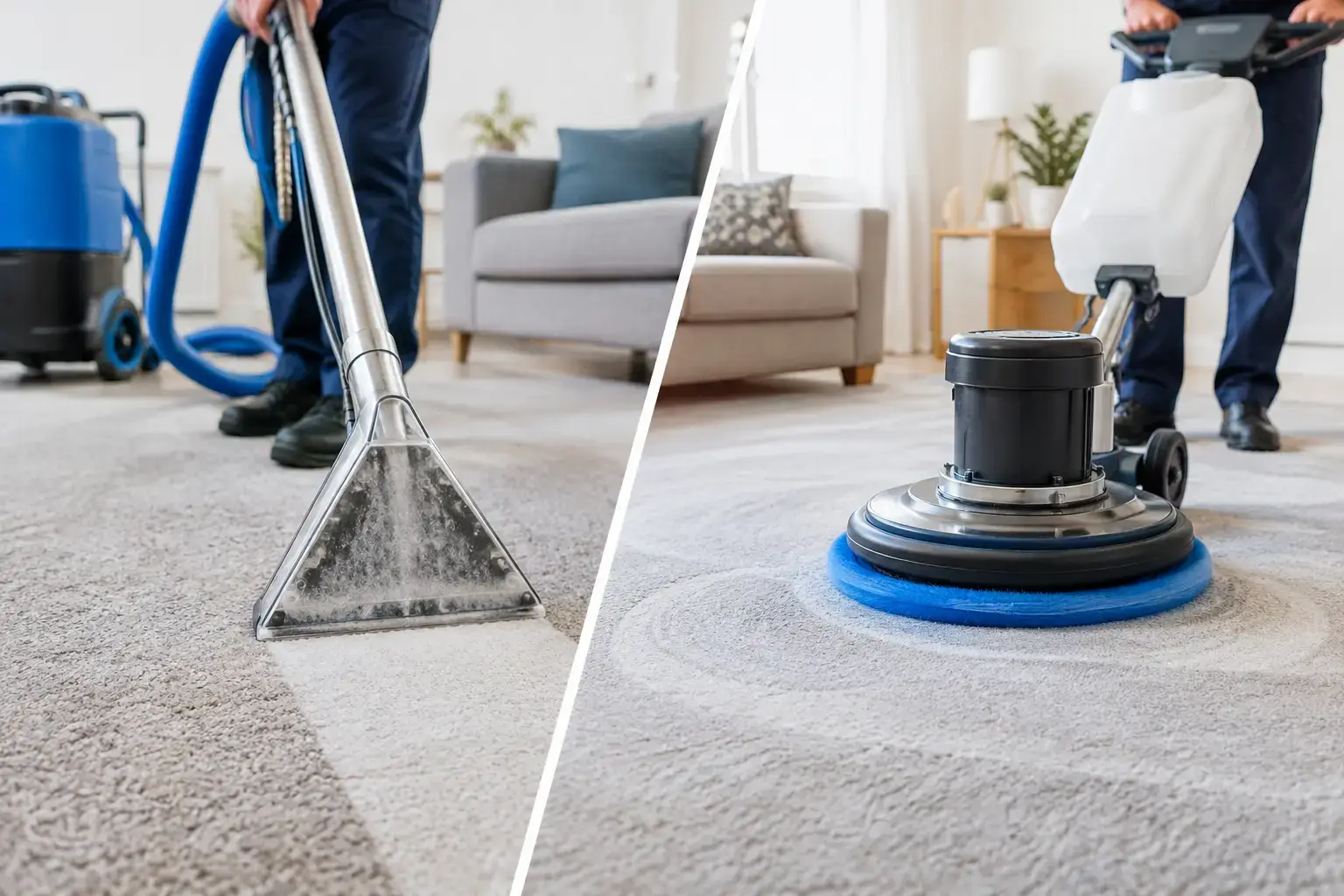
A carpet can look acceptable at 8 a.m. and appear worn, stained, and flat by the afternoon rush. For facility managers, that gap matters. It affects first impressions, indoor appearance standards, and how often tenants, staff, or visitors raise concerns. When comparing carpet extraction vs bonnet cleaning, the right choice depends less on which method sounds stronger and more on what the carpet actually needs at that moment.
Both methods have a place in a commercial carpet maintenance plan. One is designed for deeper restorative cleaning. The other is often used to improve appearance between deeper services. Choosing without understanding that difference can leave soil below the surface, create drying concerns, or shorten the useful life of the carpet.
Carpet Extraction vs Bonnet Cleaning: The Core Difference
Carpet extraction, often called hot water extraction, applies cleaning solution and water into the carpet fibers and then uses powerful vacuum recovery to remove loosened soil, moisture, and cleaning residue. In commercial settings, this process is commonly used for periodic deep cleaning, especially in entryways, corridors, waiting areas, and other heavily traveled spaces.
Bonnet cleaning is a low-moisture surface-cleaning method. A cleaning solution is applied to the carpet, then a machine fitted with an absorbent pad - or bonnet - agitates the fibers and absorbs soil from the upper portion of the carpet. It can make a noticeable visual improvement quickly, particularly on lightly soiled commercial carpet.
The practical distinction is simple: extraction reaches farther into the carpet system, while bonnet cleaning focuses primarily on the surface. Neither approach is automatically right or wrong. The mistake is treating an interim appearance service as a replacement for restorative cleaning.
When Carpet Extraction Is the Better Choice
Extraction is generally the better option when a carpet has embedded dirt, visible traffic lanes, spills, odors, or buildup that has not responded to routine vacuuming and spot treatment. This is common near building entrances during wet North Jersey weather, in office corridors, and around reception desks where visitors consistently walk the same path.
A properly performed extraction service can remove a substantial amount of soil that regular vacuuming and surface cleaning cannot reach. That matters because dry particulate soil acts like an abrasive inside carpet fibers. Over time, the fibers lose texture and color definition, especially in high-traffic commercial areas.
Extraction is also appropriate after a known spill or contamination event, provided the cleaning process matches the carpet type and site conditions. Medical and dental offices, daycares, gyms, and multi-tenant buildings may need deeper carpet cleaning because appearance, odors, and sanitation concerns can all affect the customer or visitor experience.
The trade-off is drying time. Depending on carpet construction, airflow, humidity, soil level, and the equipment used, carpets may need several hours before they are fully dry. A professional cleaning team should plan the work around occupancy, use proper recovery techniques, and communicate which areas should remain clear until dry.
For an office that is occupied Monday through Friday, extraction often works best after business hours or during a planned low-traffic window. The schedule should be part of the cleaning plan, not an afterthought once equipment is already on site.
Signs Your Facility Needs Extraction
You likely need extraction rather than a surface-cleaning service when carpet traffic lanes remain dark after vacuuming, spots return after previous cleaning, odors linger, or the carpet feels stiff or matted. Another warning sign is repeated tenant or employee complaints about the appearance of shared corridors and common areas.
Recurring spots can indicate wicking, where soil deeper in the carpet backing moves back toward the surface as the carpet dries. They can also point to incomplete prior cleaning or a spill that was never fully removed. A site inspection helps determine whether the issue is isolated or part of a broader maintenance problem.
When Bonnet Cleaning Makes Sense
Bonnet cleaning is useful as an interim maintenance method when carpet is lightly to moderately soiled and the facility needs a fast appearance refresh. A property manager may use it in a lobby before an event, or an office manager may schedule it for open work areas that cannot be taken out of service for a long drying period.
Because it uses less moisture than extraction, bonnet cleaning typically allows for a quicker return to use. That can be valuable in busy commercial environments where access is limited. It can also help maintain a cleaner appearance between scheduled deep cleanings.
However, quick drying should not be confused with deep soil removal. If the carpet is heavily soiled, bonnet cleaning can improve the visible surface while leaving embedded debris lower in the fibers. In some cases, aggressive or repeated surface agitation without an appropriate deep-cleaning schedule may contribute to fiber wear or leave cleaning product behind.
Bonnet cleaning works best as part of a documented maintenance cycle. For example, a corporate office with steady foot traffic may benefit from routine vacuuming and spot response, interim bonnet cleaning in high-visibility areas, and periodic extraction based on traffic volume and carpet condition. The frequency should be adjusted after inspections, not guessed from a generic calendar.
Factors That Should Drive the Decision
The choice between extraction and bonnet cleaning should begin with the facility, not the machine. Carpet age, construction, manufacturer recommendations, traffic patterns, spill history, and operating hours all matter.
A low-pile commercial carpet tile in a busy office may tolerate a different schedule than carpet in a quiet professional suite. A gym may need more frequent attention around entrances and stretching areas because of moisture and tracked-in debris. A daycare may need prompt spot response and carefully scheduled cleaning that supports a safe, organized environment without disrupting operations.
Consider these four questions before approving carpet service:
- Is the concern mostly surface appearance, or is there embedded soil, odor, or recurring spotting?
- How quickly must the area return to service?
- Which zones receive the most foot traffic, and are they being addressed more often than low-use areas?
- Does the proposed method follow the carpet manufacturer's care guidance and your facility's operational needs?
These questions move the discussion beyond price or a one-size-fits-all service. They help a cleaning provider recommend a method that protects the carpet and supports the way your building actually operates.
The Importance of Vacuuming and Spot Response
Neither extraction nor bonnet cleaning can compensate for inconsistent day-to-day carpet care. Vacuuming removes dry soil before it is ground into the fibers, and prompt spill response reduces the chance that a small incident becomes a permanent stain.
High-traffic entrances may need vacuuming every business day, while lower-use spaces may follow a different schedule. The key is to match the frequency to real traffic conditions. If one corridor regularly looks dull before the next scheduled cleaning, the plan needs adjustment.
Spot treatment should also be documented. A cleaning team needs to know what was spilled, when it happened, and what product was used previously. Applying the wrong chemical or repeatedly treating the same spot without identifying the cause can make removal more difficult.
Build a Carpet Plan Around Your Facility
The strongest commercial carpet program uses both restorative and interim methods when appropriate. Extraction handles periodic deep cleaning. Bonnet cleaning can support appearance between those services. Routine vacuuming, entry mat maintenance, and fast spot response help both methods work better.
For facilities in Newark, Essex County, and surrounding North Jersey communities, seasonal weather is another planning factor. Rain, snow, salt, and slush can quickly create dark traffic lanes near entrances. Increasing vacuuming and focusing carpet service on entry zones during those periods can protect the rest of the floor from tracked-in soil.
A reliable provider should walk the site, identify high-use areas, confirm access requirements, and explain the expected drying process. The work should be checked after completion, with clear follow-up if a spot reappears or a particular area needs additional attention. That is the practical standard behind consistent carpet care.
CEECEE Commercial Cleaning can evaluate your carpet condition, traffic patterns, and operating schedule to recommend a site-specific plan. Schedule a free walkthrough to determine whether your facility needs deep extraction, interim bonnet cleaning, or a combination that keeps your floors presentable without disrupting the workday.
Call (917) 837-6499 or email info@ceeceecleaning.com