Commercial Cleaning Technology That Improves Consistency
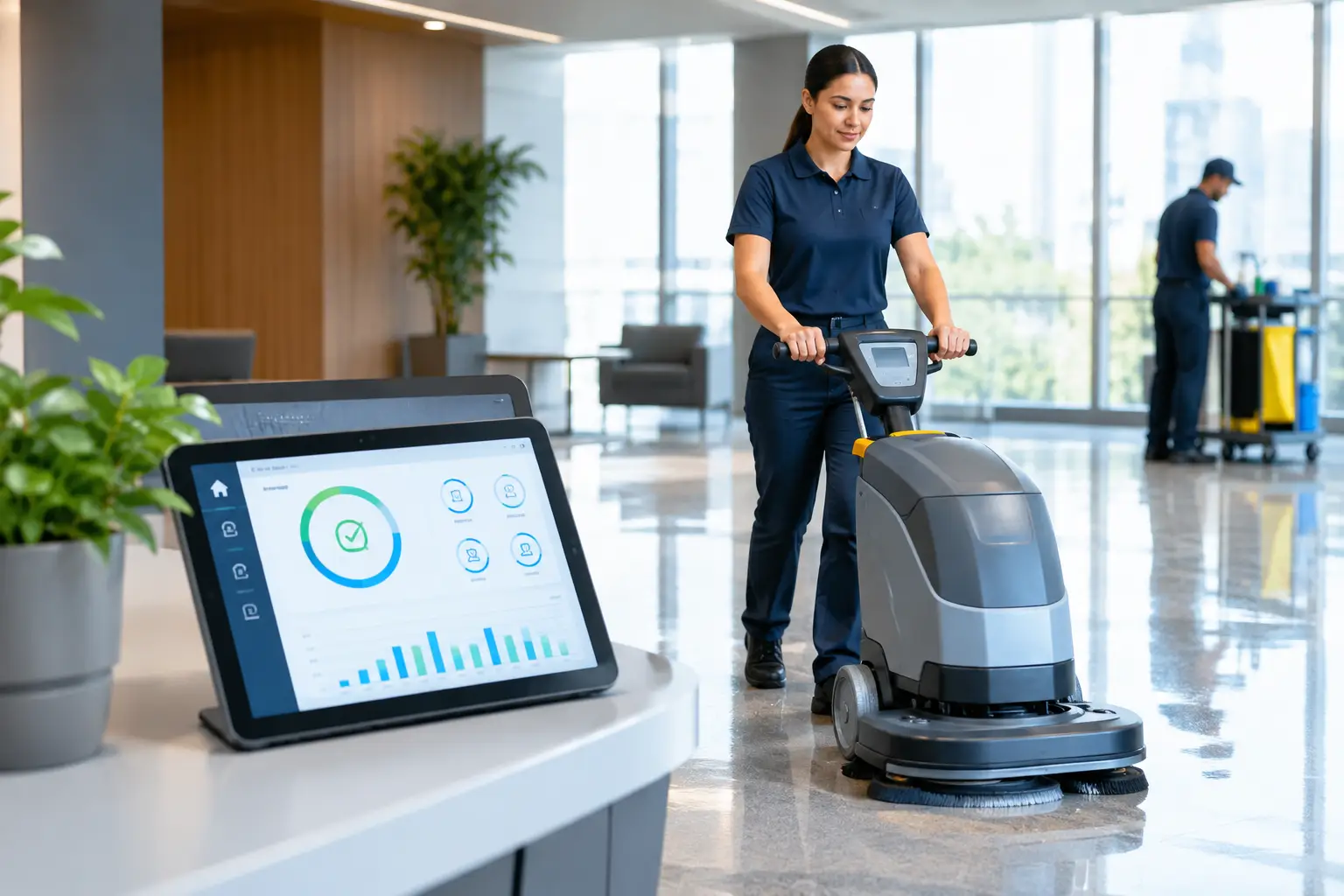
A restroom can look acceptable at 8:00 a.m. and become a complaint by noon. A lobby trash can can be missed even when the rest of the floor looks clean. For facility managers, the problem is rarely just whether a cleaning crew showed up. It is whether commercial cleaning technology gives everyone a clear way to confirm what was done, identify what needs attention, and resolve issues before tenants, patients, employees, or visitors notice.
Technology is changing commercial cleaning, but it does not replace trained people or a well-managed cleaning plan. Its real value is practical: fewer assumptions, better communication, documented accountability, and more consistent results across every shift.
What Commercial Cleaning Technology Should Actually Solve
Some cleaning companies talk about technology as if a new app alone improves a facility. It does not. A missed detail is still a missed detail, whether it is recorded on paper or a phone.
The right tools support a clear site-specific scope of work. They help cleaners know the required tasks, supervisors verify completed work, and facility contacts report concerns without having to repeatedly chase a vendor. For a busy medical office in Newark or a multi-tenant property in Essex County, that clarity matters more than flashy features.
Good technology should answer straightforward questions: Was the scheduled service completed? Were high-priority areas checked? Was an issue reported and assigned? Did someone follow up? If the system cannot make those answers easier to find, it may be adding another layer of work rather than improving service.
The Tools That Make a Real Difference
Not every facility needs every available platform or device. A small professional office has different needs than a gym with locker rooms, a daycare with frequent touchpoint cleaning, or an auto dealership with a high-traffic showroom. Still, several types of technology are especially useful when they are tied to daily operations.
Digital checklists and documented scopes
Paper checklists can work, but they are easy to lose, difficult to review remotely, and often become a box-checking exercise. Digital checklists give cleaning teams a current version of the scope for that location and shift.
For example, a dental practice may require different procedures for treatment rooms, reception areas, staff spaces, and restrooms. A documented digital plan helps separate routine tasks from periodic work such as detail cleaning, floor care, and supply checks. It also gives supervisors a clearer basis for inspecting completed work.
The checklist itself is not the standard. It is evidence of the standard being followed. Supervisors still need to inspect, coach, and address recurring misses.
Quality inspection software
A good inspection process is one of the strongest uses of cleaning technology. Managers can record observations, attach photos when appropriate, identify corrective actions, and track whether an issue was resolved. This creates a useful pattern over time.
If inspections repeatedly show streaked glass at an entryway or neglected corners in a stairwell, the answer is not simply to note the problem again next month. The cleaning provider should adjust training, supplies, staffing, timing, or the scope of work. Technology makes trends visible, but accountability turns those observations into improvements.
For property managers, inspection records can also provide reassurance that common areas are receiving the attention promised in the service agreement.
Mobile communication and service requests
The most frustrating vendor relationship is the one where every concern requires a new email, a voicemail, and a follow-up. Mobile communication tools can give facility contacts a direct channel to report an issue, ask a question, or request attention in a specific area.
Speed matters, but clarity matters just as much. A useful request includes the location, the nature of the concern, its urgency, and who is responsible for follow-up. For instance, “restroom on the second floor needs attention before the 2:00 p.m. client meeting” is easier to act on than a vague message that something is wrong.
A system should not make clients do all the reporting. A proactive cleaning partner uses it to communicate schedule changes, report building issues discovered during service, and confirm completed corrections.
Equipment and sensor data
Larger facilities may benefit from equipment tracking, restroom traffic sensors, or dispenser monitoring. These tools can help determine where attention is needed most and when it is needed.
A high-use restroom in a Jersey City office building may need an additional daytime check, while another restroom on a low-traffic floor may not need the same frequency. Sensor data can support more efficient scheduling and reduce the chance that soap, paper products, or sanitizer run out during business hours.
There are trade-offs. Sensors require installation, maintenance, and thoughtful use of data. They are often more valuable in large, high-traffic facilities than in a small office with predictable occupancy. The goal should be a better service plan, not technology for its own sake.
Technology Cannot Fix an Unclear Cleaning Plan
Before adding new tools, facility managers should confirm that the underlying cleaning plan is specific enough to manage. A generic description such as “clean all common areas” leaves too much room for interpretation.
A useful scope identifies the areas to be cleaned, the expected frequency, the tasks included, the tasks handled periodically, access requirements, and the person to contact if conditions change. It should also account for the way the facility operates. A church may have heavier cleaning needs before weekend services. A daycare may need stronger attention to touchpoints and restrooms throughout the day. A gym may need frequent locker room checks that do not fit a once-per-night approach.
Commercial cleaning technology works best when it is built around these real conditions. If the scope is vague, digital documentation will only produce a more organized record of vague work.
How to Evaluate a Cleaning Provider's Technology
When interviewing a commercial cleaning company, do not just ask, “What software do you use?” Ask how the software changes the service you receive.
A provider should be able to explain how its team documents the scope, handles quality inspections, communicates issues, and closes the loop when a concern is reported. Ask who reviews the information and how often. A dashboard no one monitors has little value.
It is also reasonable to ask what happens when technology fails. Mobile devices lose signal, staff members forget to log a task, and systems occasionally go offline. A dependable provider has operating procedures that do not depend entirely on an app. Site leadership, training, supervision, and communication should remain strong even when a digital tool is unavailable.
Privacy is another consideration, particularly for medical and dental offices. Cleaning documentation should focus on service areas and operational needs, not capture or expose sensitive patient information. The provider should understand access expectations and use photos only when they are appropriate and authorized.
Making Technology Part of a Consistent Standard
The strongest cleaning programs use technology quietly. Facility occupants may never see the checklist, inspection report, or service log. What they notice is that the reception area is presentable, restrooms are stocked, floors are cared for, and concerns do not linger.
That outcome requires a combination of trained cleaners, clear expectations, regular oversight, and responsive communication. Technology makes each part easier to coordinate, particularly across multiple shifts or locations. It also gives facility managers more visibility without requiring them to manage the cleaning crew every night.
At CEECEE Commercial Cleaning, The CEECEE Standard begins with a documented plan for the facility, supported by quality checks and clear follow-up. The tools matter because they help people deliver on the plan consistently.
If your current cleaning service leaves you guessing whether concerns were addressed, schedule a free walkthrough to discuss a site-specific plan that gives your facility clearer oversight and fewer loose ends.
Call (917) 837-6499 or email info@ceeceecleaning.com