Commercial Floor Stripping and Waxing
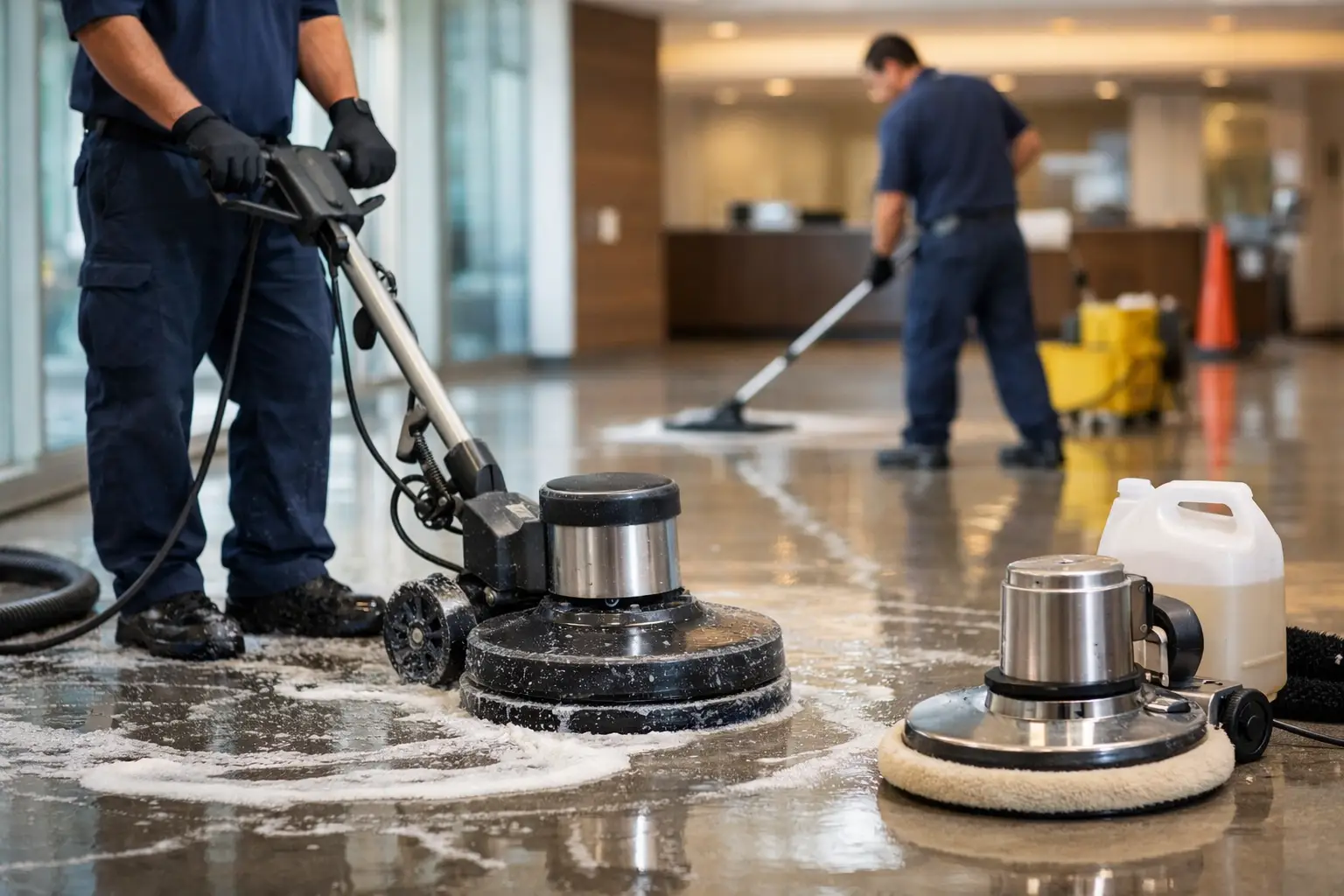
Scuffed, dull floors do more than look tired. In a commercial setting, they change how people judge the space, how staff feel about the work environment, and how much wear your flooring absorbs over time. That is why commercial floor stripping and waxing is not just a cosmetic service. It is a maintenance decision that affects first impressions, floor life, safety, and how much attention your facility needs from week to week.
For office managers, property managers, practice administrators, and facility leaders, the real issue is usually not whether the floor looks bad today. It is whether the floor care program is organized, predictable, and handled without creating more work for your team. When floor maintenance is inconsistent, small problems show up fast - embedded soil, uneven shine, traffic lane discoloration, wax buildup along edges, and surfaces that never quite look clean even after mopping.
What commercial floor stripping and waxing actually does
Stripping and waxing is the process of removing old floor finish, cleaning the surface thoroughly, and applying new coats of finish to protect the flooring and restore a clean, uniform appearance. This service is most commonly used on VCT and other resilient commercial floors that are designed to be maintained with a protective finish.
Over time, regular foot traffic, moisture, grit from outside, rolling equipment, and routine cleaning all wear down that finish. Once the finish becomes scratched, discolored, or uneven, standard mopping and buffing can only do so much. At that point, the floor often needs to be reset.
A proper strip and wax removes the layers of soil and finish that have built up over time, then replaces them with fresh protective coats. The goal is not an overly glossy look for its own sake. The goal is a cleaner, more consistent floor that is easier to maintain and better able to hold up under daily use.
When a facility should schedule floor stripping and waxing
Some floors need a full strip and wax once or twice a year. Others may go longer, especially if they have lighter traffic, consistent daily care, and periodic scrub and recoat service in between. It depends on the type of facility, the amount of traffic, weather exposure, and how well the floor has been maintained.
There are a few common signs that a floor is ready. One is when traffic lanes stay dull even after cleaning. Another is when the finish looks yellowed, patchy, or cloudy. In some buildings, you will also see edge buildup, black heel marks that no longer come up easily, or a floor that feels like it has layers of old finish trapping dirt underneath.
Medical offices, dental offices, schools, daycares, churches, auto dealerships, and multi-tenant office spaces often see this pattern because they have regular traffic but also need floors that stay presentable. In those settings, waiting too long usually makes the restoration more disruptive and more expensive than it needed to be.
Why timing matters more than many managers expect
A floor care issue rarely stays only a floor care issue. If the lobby floor looks worn, visitors notice. If hallways have uneven shine, tenants notice. If exam room corridors or daycare common areas look stained no matter how often they are cleaned, staff begin to assume the building is not being maintained closely.
That perception matters. Floors cover a large percentage of what people see when they enter a facility. Even when everything else is clean, neglected floors can pull the entire space down.
There is also a maintenance cost issue. Once finish layers break down too far, the floor becomes harder to clean properly. Soil sticks more easily, routine service takes longer, and the facility may need more aggressive restoration. In other words, delayed maintenance often creates more labor, more disruption, and a shorter useful life for the floor.
What a well-managed stripping and waxing process should include
The difference between a floor that looks good for a week and one that stays manageable for months usually comes down to process. A rushed job can leave swirl marks, missed corners, uneven coverage, or finish that does not cure properly. A well-managed service follows a documented sequence and accounts for the site itself.
That starts with evaluating the floor type, condition, traffic patterns, furniture layout, and scheduling constraints. A medical office may need after-hours service with close attention to room access and reopening times. A multi-tenant property may need work staged in sections to limit disruption. A daycare or church facility may have very specific timing windows.
The actual service should include complete removal of old finish, detailed edge work, neutralizing and preparing the floor properly, and applying an appropriate number of finish coats based on the condition of the floor and the expected traffic. Dry times and cure times matter. So does communication about when the area can be safely walked on and when furniture can be returned.
Commercial floor stripping and waxing is not the same as routine floor care
One common source of confusion is assuming that stripping and waxing should happen whenever a floor starts to lose shine. In many cases, that is not necessary. Interim services such as scrub and recoat or burnishing may restore appearance and protection without taking the floor all the way back to bare surface.
That is why a good floor care partner does not recommend the same solution for every facility. Some buildings need a full reset. Others need a maintenance plan that extends the life of the existing finish. The right answer depends on wear patterns, budget, timing, and how visible the flooring is to visitors, staff, patients, or tenants.
A practical approach is to think in layers. Daily and weekly maintenance control soil. Periodic corrective services help restore the finish. Full commercial floor stripping and waxing is the larger reset that supports the whole program when lighter maintenance is no longer enough.
What to ask before hiring a floor care vendor
If you are comparing providers, the process matters as much as the price. Floor care can look straightforward on paper, but poor execution creates real problems - downtime, inconsistent appearance, slippery residue, damaged baseboards, and finish that fails too early.
Ask how the vendor evaluates whether your floor needs a full strip and wax or a lighter restoration. Ask how they document the scope of work, how many finish coats they expect to apply, and how they handle site access, signage, dry times, and quality checks. It is also fair to ask who will communicate with your team if the condition of the floor is different than expected once work begins.
This is where accountability becomes important. A facility manager should not have to chase updates or inspect every detail alone. The better approach is a documented scope, clear scheduling, proactive communication, and follow-up after the service to confirm the result matches the plan.
Local facilities need floor plans that match the building
In North Jersey, seasonality changes everything. Winter salt, slush, and moisture can wear down floor finish quickly, especially in entryways, lobbies, and corridors. In high-traffic buildings around Newark, Montclair, Bloomfield, and nearby commercial areas, that means floor appearance can decline faster than many managers expect if the maintenance cycle is too loose.
That is one reason site-specific planning matters. A small professional office, a dental practice, and a gym may all have resilient flooring, but they do not use the space the same way. Their traffic patterns, scheduling limitations, and appearance standards are different. The floor care plan should reflect that reality instead of forcing a generic schedule onto every building.
At CEECEE Commercial Cleaning, that site-specific mindset is part of The CEECEE Standard. The focus is not just completing a floor service, but making sure the work fits the facility, the schedule, and the level of follow-through your team expects.
How to protect results after the service
Once a floor has been stripped and waxed, the next step is protecting the finish. That usually means better control of entrance debris, consistent dust mopping or dry soil removal, prompt cleanup of spills, and a routine maintenance schedule that matches traffic levels.
It also means avoiding the all-or-nothing cycle where floors are ignored until they look bad again. When a facility has a documented maintenance plan, the finish lasts longer and the floor stays more consistent between major services. That reduces surprise issues and helps managers budget more accurately.
If your floors are losing their appearance faster than they should, or if your team is dealing with recurring inconsistencies from one service to the next, it may be time for a walkthrough and a clearer plan. A customized proposal can help you determine whether your building needs a full strip and wax, corrective maintenance, or a more consistent floor care schedule that protects the space without adding headaches.
Call (917) 837-6499 or email info@ceeceecleaning.com