Commercial Janitorial That Keeps Facilities On Track
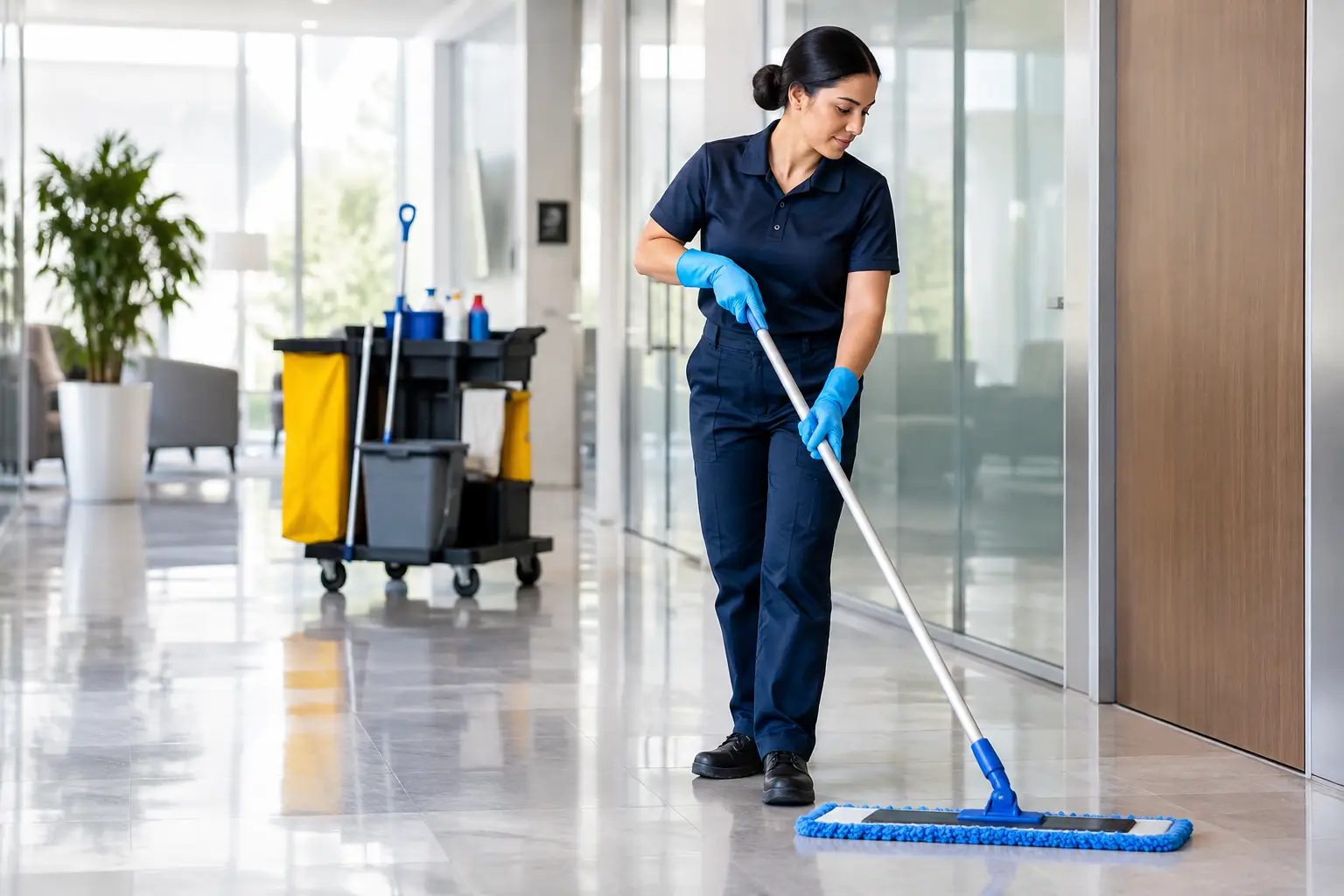
A cleaning vendor should make a facility easier to manage, not create another item on your daily follow-up list. Yet many office managers and facility leaders know the pattern: the lobby looks fine, but fingerprints remain on the entry glass, a restroom runs out of supplies, or trash is missed in a conference room before an important meeting. The problem is not just appearance. It affects employee confidence, visitor impressions, health, safety, and the time your team spends chasing answers.
Commercial janitorial works best when it is treated as an operating system for the facility, not a vague promise to clean after hours. That means a clear scope, a schedule built around how the building is used, visible accountability, and a reliable way to address exceptions before they become recurring frustrations.
Commercial Janitorial Is More Than Emptying Trash
Basic tasks matter. Trash removal, restroom sanitation, vacuuming, floor care, dusting, and high-touch surface cleaning form the foundation of nearly every program. But a dependable janitorial plan goes further by defining what gets cleaned, how often it gets cleaned, and what “complete” looks like in each area.
A corporate office, for example, may need detailed attention in reception areas, shared kitchens, conference rooms, and restrooms each evening. A medical or dental office may require a more specific approach to waiting rooms, treatment-area protocols, and touchpoints. A gym has a different traffic pattern entirely, with locker rooms, fitness equipment, and floors that can become safety concerns when moisture and residue build up.
The right service level depends on the facility. A five-day schedule is not automatically better than three visits per week if the scope is poorly defined. Likewise, a lower-traffic office may not need every task completed nightly, but it still needs restrooms, entry areas, and shared spaces maintained before they show neglect.
Start With the Problems Your Team Actually Sees
Before choosing or revising a janitorial program, identify the conditions that create the most disruption. This should be based on real use, not a generic checklist.
For a multi-tenant commercial property, that may mean entry glass, elevator areas, common restrooms, and lobby floors. For a daycare, it may mean consistent attention to classrooms, restrooms, shared toys and surfaces, and scheduled cleaning around the daily routine. At an auto dealership, spotless showroom floors and customer-facing restrooms can carry just as much weight as clean employee work areas.
Ask the people who experience the space every day. Reception staff often see entry and restroom issues first. Department leaders may notice overflowing waste bins or poorly maintained break rooms. Building engineers can point out floor wear, recurring odor sources, or areas where cleaning access is difficult.
Then distinguish between a one-time issue and a process issue. A spilled drink in a lobby is an exception. Dust accumulating on ledges week after week is a scope, frequency, or inspection problem. That distinction helps a facility manager request the right correction instead of repeatedly reporting the same symptom.
A Site-Specific Scope Prevents Missed Details
A documented scope of work is one of the clearest signs that a commercial cleaning program is built to be managed. It removes guesswork for both the client and the cleaning team.
A useful scope identifies the rooms and zones to be serviced, the tasks assigned to each area, the expected frequency, and any special instructions. It should account for details that are easy to overlook, such as cleaning under reception seating, polishing entry glass, wiping vending areas, addressing interior window ledges, or checking paper products in less-used restrooms.
It should also establish boundaries. Some tasks are part of recurring service, while others are periodic projects. Carpet extraction, machine floor scrubbing, strip and wax work, high dusting, and post-event cleaning may need their own schedule and pricing. Clear separation prevents assumptions and makes it easier to plan maintenance before surfaces visibly decline.
The document should not sit in a folder untouched after the first week. Facilities change. A department expands, a new tenant moves in, a waiting room is reconfigured, or traffic increases during a busy season. Reviewing the scope periodically keeps the cleaning plan aligned with the building rather than with an outdated walk-through.
Consistency Depends on Communication and Inspection
Most cleaning complaints are not caused by a lack of effort on one night. They happen because a small miss is not reported, verified, and corrected in a way that prevents it from repeating.
A strong janitorial partner creates a practical communication path. The facility should know who to contact, how to submit a concern, what information is useful, and when to expect a response. The provider should be able to explain what happened, what was done to correct it, and whether the issue calls for a change in training, staffing, supplies, or the scope of work.
Quality inspections are equally important. They provide a check beyond whether there was a complaint. An inspection can catch worn floor edges, soap buildup around fixtures, dust on high-visibility surfaces, or supply levels that are likely to become a problem before the next service.
For busy facilities in Newark and across North Jersey, communication matters because building conditions can change quickly. A tenant event, a flu outbreak, bad weather, or an unexpected increase in visitors can place extra pressure on common areas. A cleaning company should be prepared to adjust service when needed and communicate the plan clearly.
Floor and Carpet Care Need a Maintenance Plan
Floors carry much of a facility’s first impression, but they are often addressed only after they look worn. By then, restoration can be more disruptive and more expensive than routine care.
Hard floors need daily debris removal and appropriate damp mopping, but they also benefit from scheduled machine scrubbing or refinishing based on traffic, soil load, and the floor material. Entrances, hallways, and break room paths usually need more frequent attention than private offices. Using the wrong chemical or an overly wet process can damage finishes or create slip risks, so method matters as much as frequency.
Carpet has similar trade-offs. Regular vacuuming removes dry soil before it is ground into fibers. Periodic deep cleaning helps address embedded soil and appearance, but the schedule should account for occupancy and drying time. A medical office or busy corporate lobby may need a different cadence than a lightly used suite.
The goal is not to make every surface look newly installed every day. It is to protect the investment, reduce visible wear, and keep the facility consistently presentable between larger maintenance projects.
What to Ask a Commercial Janitorial Provider
A proposal is more useful when it answers operational questions, not just pricing questions. During a walk-through, ask how the provider will document the scope, handle concerns, inspect completed work, and communicate changes. Ask who is responsible for supervision and how coverage is handled when regular staff members are unavailable.
You should also discuss access procedures, alarm protocols, supply responsibilities, restricted areas, and any facility-specific safety requirements. In medical, daycare, gym, and other high-use settings, these details affect whether the work can be performed correctly and without disrupting operations.
Be wary of vague descriptions such as “clean all areas as needed.” They leave too much open to interpretation. Specificity does not make a program inflexible. It makes expectations clear, which is what allows both sides to adapt intelligently when needs change.
The Standard Should Be Visible in the Building
The value of a janitorial program is felt in small, repeatable moments: a visitor walking through a clean entrance, an employee finding a stocked restroom, a practice administrator opening a treatment day without worrying about the waiting room, or a property manager receiving a prompt answer when an issue is reported.
At CEECEE Commercial Cleaning, The CEECEE Standard is built around that kind of reliability: site-specific plans, documented expectations, ongoing checks, and straightforward communication. It is designed for facility leaders who need a cleaning partner that follows through without requiring constant oversight.
If your current service leaves your team tracking missed details or wondering who owns the next step, schedule a free walkthrough and request a customized proposal. A cleaner facility should not demand more management from you. It should give you one less thing to worry about.
Call (917) 837-6499 or email info@ceeceecleaning.com