Commercial Restroom Cleaning Guide for Facility Managers
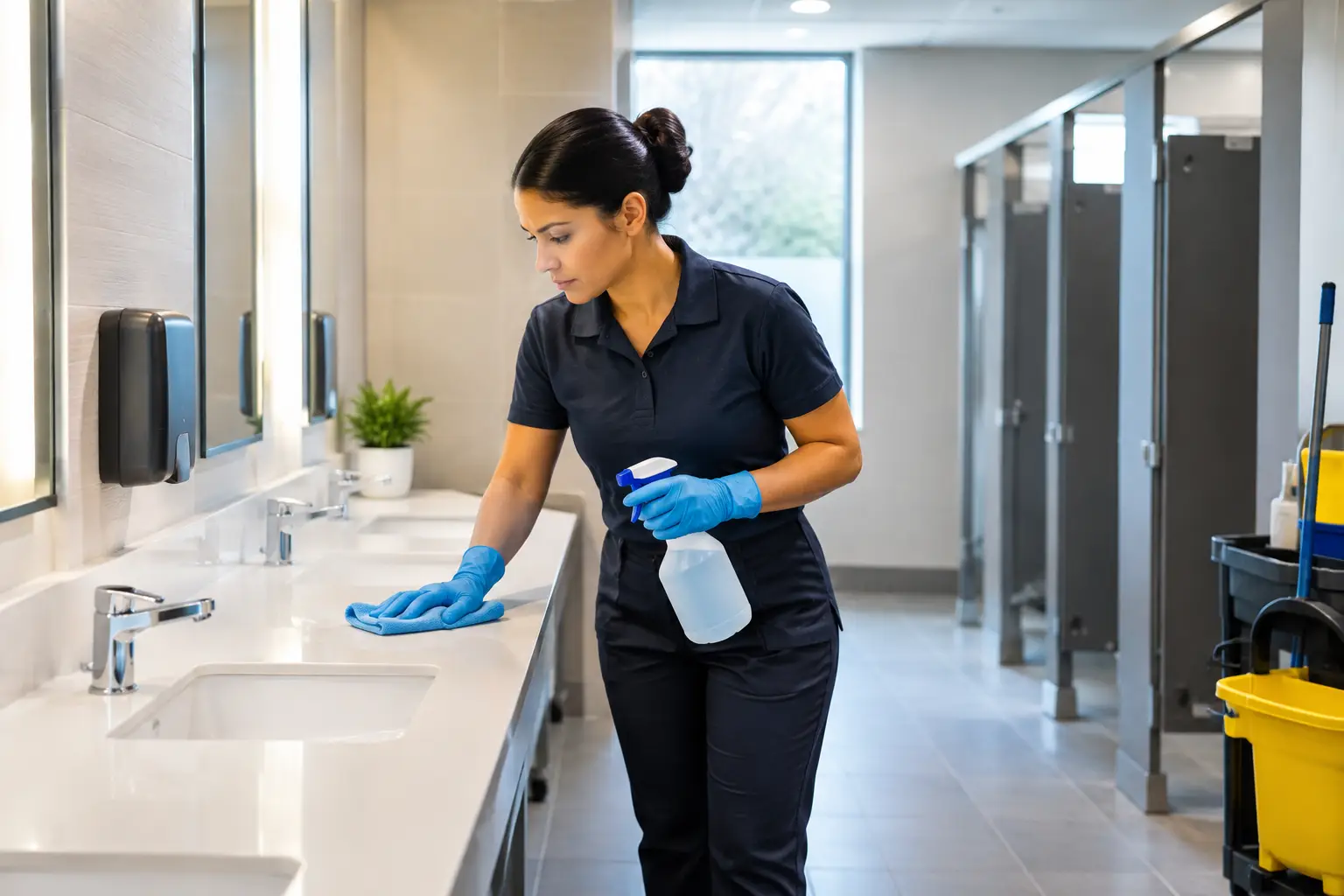
A restroom can look acceptable at 8:00 a.m. and become the source of tenant complaints, patient concerns, or employee frustration before lunch. This commercial restroom cleaning guide is built for facility managers who need more than a quick wipe-down. They need a dependable process that keeps restrooms sanitary, supplied, odor-controlled, and presentable throughout the workday.
The challenge is not simply cleaning a restroom once. It is maintaining the same standard across shifts, traffic patterns, and different user expectations. A medical office restroom, a gym locker room, and a multi-tenant office restroom may require different schedules, but every one of them needs clear ownership and documented follow-through.
Start With the Facility's Actual Restroom Use
A cleaning schedule should reflect how people use the space, not a generic checklist. A restroom near a busy reception area may need several day porter checks. A smaller private office restroom may only need a thorough evening service and a mid-day supply check. The right frequency depends on occupancy, operating hours, restroom size, fixtures, and the type of business.
For example, a dental practice may prioritize touchpoint disinfection and a clean patient-facing appearance throughout the day. A gym may need more frequent attention to showers, floors, and odors. In an office building, overflowing waste receptacles and empty dispensers often create the fastest complaints.
Before assigning tasks, walk the restroom at the busiest time of day. Look for wet floors, paper buildup, empty soap dispensers, odors, damaged dispensers, and areas that are difficult to reach. Those observations should shape a site-specific cleaning plan instead of relying on assumptions.
Set a Clear Commercial Restroom Cleaning Standard
A strong restroom program separates routine service from periodic deep cleaning. Routine service keeps the space functional and presentable. Deep cleaning addresses buildup that develops slowly around fixtures, grout, partitions, vents, and floor edges.
The daily standard should cover the visible and high-touch essentials: toilets and urinals, sinks, counters, mirrors, dispensers, stall doors, handles, light switches, waste receptacles, and floors. Supplies should be replenished before they run out, not after a complaint. That includes soap, hand towels or tissue, toilet paper, feminine hygiene products where provided, and sanitizer stations.
A practical daily cleaning sequence helps teams avoid missed steps and cross-contamination:
- Post wet-floor signage and ventilate the area where possible.
- Remove waste and replace liners before cleaning fixtures.
- Apply appropriate restroom cleaner or disinfectant to toilets, urinals, sinks, and other required surfaces, allowing the labeled dwell time.
- Clean from higher, cleaner surfaces to lower, dirtier areas, using designated cloths and tools.
- Refill dispensers, spot-clean mirrors and partitions, then mop the floor last.
- Complete a final visual check from the doorway, where visitors form their first impression.
The order matters. Mopping before restocking or wiping down fixtures often means returning to a freshly cleaned floor with wet shoes or a full trash bag. It also helps to use color-coded cloths and mop heads so restroom tools are not used elsewhere in the facility.
Protect Health Without Overpromising
Restrooms require careful attention to both cleaning and disinfection. Cleaning removes soil and residue. Disinfection is used on appropriate hard, nonporous surfaces to reduce germs when the product is applied according to its label. Those are related tasks, but they are not interchangeable.
Product selection depends on the facility and surface. A healthcare setting may have more specific protocols than a standard corporate office. Some disinfectants can damage natural stone, certain metals, or finished surfaces if used incorrectly. Stronger is not always better. The correct product, concentration, contact time, and staff training matter more than a product label with the biggest claims.
Floor safety deserves the same attention. Restroom floors are exposed to water, soap residue, and heavy foot traffic. Use proper dilution, change dirty mop water, and place warning signs during service. If a floor remains slippery after routine cleaning, the problem may be worn finish, poor drainage, a leaking fixture, or the wrong cleaning chemical. That is a maintenance concern that should be reported, not repeatedly cleaned around.
Control Odors by Finding the Cause
Fragrance can temporarily mask an odor, but it does not solve the reason it is there. Persistent restroom odors usually come from missed cleaning areas, dirty floor drains, splash zones around fixtures, full waste receptacles, aging caulk, ventilation issues, or plumbing problems.
A cleaner should inspect behind and around toilets, the base of urinals, floor edges, partition hardware, and drain areas. These are common places for residue to build up even when the visible portions of the restroom look clean. Regular detail work prevents the gradual decline that users notice before a manager does.
If the odor continues after detailed cleaning, document the location and timing. Does it occur only in the afternoon? Is it strongest near one fixture or drain? Clear notes help a facility manager determine whether the issue belongs with the cleaning team, building maintenance, or a plumbing professional. Fast, specific reporting is far more useful than simply saying that a restroom smells bad.
Make Supplies Part of the Cleaning Scope
An empty soap dispenser can undermine an otherwise clean restroom. So can a jammed paper towel dispenser, a missing toilet tissue roll, or an overflowing feminine hygiene receptacle. Supply management should be included in the scope of work, with agreed par levels and a process for reporting unusual usage.
The trade-off is straightforward. Keeping a large amount of stock on site reduces the risk of outages, but it can crowd storage rooms and make inventory harder to manage. Keeping too little creates emergency requests. The best approach is to set a reasonable backstock level based on average use, then adjust after reviewing a few weeks of consumption.
For multi-tenant properties and busy offices in Newark and across North Jersey, day porter checks can make a noticeable difference. A short scheduled inspection can catch low supplies, wet floors, and waste buildup before they affect visitors. The check should be documented, even if no issue is found. That record confirms the restroom was reviewed rather than assumed to be fine.
Build Accountability Into Every Visit
A checklist is useful only when it reflects the actual restroom and someone reviews the results. Generic forms often fail because they do not account for a facility's unique fixtures, traffic level, dispensers, or service expectations.
A better checklist identifies each restroom, required tasks, supply items, inspection points, and any recurring concerns. It should also create a clear path for exceptions. If a dispenser is broken, a ceiling tile is stained, or a fixture is leaking, the cleaning team should report it promptly with enough detail for the right person to act.
Quality inspections should look beyond whether the floor has been mopped. Check corners and grout lines, undersides of dispensers, partitions, waste liners, mirror edges, and the overall smell when entering the room. These details are where inconsistent vendors tend to fall short and where a documented standard protects the facility.
At CEECEE Commercial Cleaning, The CEECEE Standard is built around site-specific scopes, communication, and quality checks so managers are not left chasing routine restroom issues. The goal is not to create more paperwork. It is to make expectations visible, repeatable, and easy to correct when conditions change.
Know When Routine Cleaning Is Not Enough
Even a well-maintained restroom needs scheduled detail work. Mineral deposits, soap scum, grout discoloration, floor finish wear, and buildup around fixtures do not disappear during a standard nightly service. Plan periodic deep cleaning based on the restroom's traffic and condition.
High-traffic restrooms may need monthly detail attention, while lower-use areas may need it less often. The schedule should remain flexible. If a facility hosts an event, experiences seasonal traffic changes, or has a staffing increase, restroom service may need to adjust before complaints begin.
The most reliable restroom program is one people do not have to think about. When the room is clean, dry, stocked, and free of odor, employees can work and visitors can focus on why they came. If your current cleaning plan leaves too much to chance, schedule a free walkthrough with CEECEE Commercial Cleaning to build a restroom scope that fits your facility and gives your team one less issue to manage.
Call (917) 837-6499 or email info@ceeceecleaning.com