Daily Tasks for Office Janitors That Prevent Misses
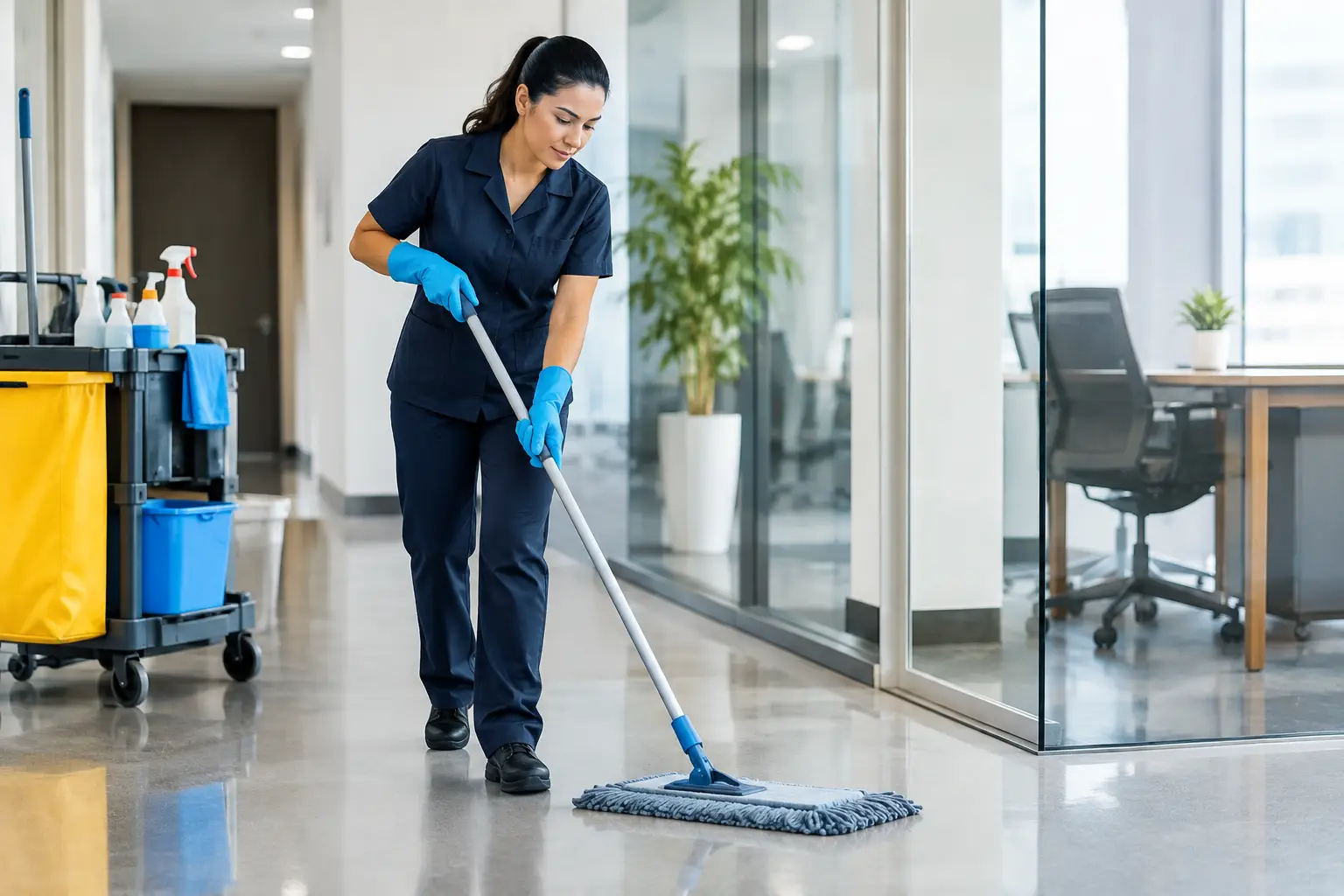
A full trash can in the lobby, fingerprints on the entry glass, or an empty soap dispenser can make an otherwise well-run office feel neglected. These are small details, but employees, visitors, and tenants notice them immediately. Clear daily tasks for office janitors give facility managers a dependable way to prevent those misses instead of reacting to complaints after the fact.
A daily cleaning routine should not be a vague instruction to “clean the office.” It should be a documented, site-specific plan that tells the cleaning team what must be completed, where it applies, how often it is checked, and who receives notice if a problem cannot be resolved during the visit. That structure is especially valuable in busy North Jersey offices, where visitor traffic, weather, and shared workspaces can change the condition of a facility quickly.
Daily Tasks for Office Janitors Start With the Public Areas
The entrance, lobby, reception area, and main corridors set the tone for the rest of the building. These areas usually receive the most foot traffic and should be addressed early in the cleaning sequence, particularly when a crew works after business hours.
Entry glass should be cleaned to remove fingerprints, smudges, and streaks. Floors should be vacuumed, swept, or damp mopped based on the surface and soil level. During winter or wet-weather periods, crews may need to focus more heavily on salt residue, tracked-in water, and debris near mats and doorways. A routine that works in July may not be enough during a Newark-area winter.
Reception counters, visitor seating, door handles, elevator buttons, and other high-touch points also need attention. The goal is not to overuse disinfectant on every surface. It is to use the right product and contact time where hygiene and frequent hand contact make it appropriate, while cleaning general dust and soil from the rest of the area.
Restrooms Need More Than a Quick Wipe-Down
Restrooms are one of the clearest measures employees use to judge cleaning performance. A restroom can look acceptable at first glance while still having empty dispensers, neglected floor edges, odors, or buildup around fixtures. Those details are where inconsistent service becomes obvious.
Daily restroom duties should include cleaning and disinfecting toilets, urinals, sinks, faucets, counters, and touchpoints. Mirrors should be polished without leaving streaks. Floors should be swept and damp mopped, including around the base of fixtures where paper debris and moisture collect.
Supply checks matter just as much as surface cleaning. Toilet tissue, hand towels, soap, feminine hygiene products where provided, and waste liners should be replenished according to the facility’s standard. A good cleaning crew does not wait for an office manager to report an empty dispenser if it was visible during service.
Odor control also requires some judgment. A persistent restroom odor may point to a full waste container, an overlooked floor drain, moisture behind a fixture, or a building maintenance issue. Janitors should address what falls within the cleaning scope and report conditions that require the property manager or maintenance team. Clear reporting prevents a recurring issue from becoming a blame game.
Workspaces and Common Areas Require a Defined Scope
Desk areas can create confusion unless expectations are written down. In most offices, daily service includes removing trash, replacing liners when needed, vacuuming or sweeping accessible floor areas, and dusting or wiping common horizontal surfaces. It does not necessarily include moving personal papers, cleaning computer equipment, or handling confidential materials.
That boundary protects both the client and the cleaning team. If employees leave files, food containers, or personal items across their desks, the janitor needs a site-specific instruction for what can be moved and what should be left untouched. For facilities with clean-desk policies, the scope may allow more detailed surface care. For legal, financial, or medical administration offices, a more limited approach may be appropriate.
Break rooms and kitchens deserve closer attention because food residue attracts complaints quickly. Countertops, tables, sinks, appliance exteriors, and cabinet pulls should be cleaned daily. Waste and recycling must be removed, floors should be cleaned, and spills should be addressed before they become sticky buildup.
A practical daily break room checklist typically covers these five areas:
- Empty trash, recycling, and compost containers where applicable
- Clean tables, counters, sinks, and touchpoints
- Wipe microwave, refrigerator, and coffee station exteriors
- Restock paper towels, soap, and liners
- Sweep and damp mop the floor
Interior refrigerator cleaning, appliance interiors, and expired-food removal may be scheduled separately. Trying to include every deep-cleaning task in a nightly routine often leads to rushed work and missed essentials.
Floors Need Daily Attention and Scheduled Care
Floor appearance has a direct effect on how clean an office feels. Daily vacuuming removes grit that can wear down carpet fibers over time. Hard floors need routine sweeping or dust mopping before damp mopping, since wet mopping over loose debris can leave residue behind.
Janitors should pay special attention to walkways, elevator landings, copy rooms, break rooms, and entrances. These are the areas where soil accumulates first. Spot cleaning carpet stains as soon as they are identified can also improve results, although not every stain can be fully removed with routine service. Older spots, dye-based spills, and stains that have penetrated backing may require specialized carpet cleaning.
Daily work keeps floors presentable, but it does not replace periodic floor care. Burnishing, scrub-and-recoat work, extraction, or stripping and waxing should be planned based on floor type, traffic, and finish condition. A documented plan helps a facility avoid waiting until flooring looks worn before taking action.
Waste Removal Is a Safety and Appearance Task
Emptying trash is basic, but doing it well involves more than collecting bags. Janitors should remove waste from offices, restrooms, break rooms, conference rooms, and shared stations according to the site schedule. Containers should be relined as needed, and spills or leaks inside receptacles should be cleaned rather than covered with a new liner.
Waste routes should be efficient and discreet, especially in multi-tenant properties and offices with late-shift employees. If a dumpster area is inaccessible, overflowing, or unsafe, that condition should be documented and communicated promptly. It is a simple example of accountability: the cleaning crew can report the issue even when the final correction belongs to another party.
Daily Cleaning Requires Inspection, Not Assumptions
The difference between a completed task and a reliable result is inspection. A janitor may mop a restroom floor, for example, but a quick final look can reveal streaking, debris behind a door, or an empty dispenser. Quality checks catch those problems before employees arrive.
For office managers, the most useful cleaning plan includes a clear daily scope, periodic tasks, and a process for exceptions. If a meeting ran late, a suite was locked, construction dust appeared, or a spill required extra time, the cleaning provider should communicate what happened and what follow-up is needed. Silence creates uncertainty. Clear notes create trust.
At CEECEE Commercial Cleaning, The CEECEE Standard begins with understanding how each facility operates, not applying the same checklist to every office. A professional services firm, a medical administration office, and a multi-tenant property may all need daily cleaning, but their priorities, access rules, and traffic patterns are different.
What Office Managers Should Review Each Day
A manager does not need to inspect every room personally after every visit. Still, a brief daily walk-through of the entrance, restrooms, break room, and high-traffic floors can reveal whether the cleaning scope matches the facility’s current needs.
Watch for repeat problems rather than isolated imperfections. One missed trash can may be a simple oversight. Repeated full bins, dusty ledges, low supplies, or unresolved odors usually indicate that the scope, staffing level, communication process, or inspection routine needs adjustment. The right cleaning partner welcomes that conversation and responds with a practical correction plan.
If your office in Newark, Essex County, or the surrounding North Jersey area needs a documented daily cleaning plan that your team can rely on, schedule a free walkthrough with CEECEE Commercial Cleaning. A clear scope and consistent follow-through make the daily details easier to manage.
Call (917) 837-6499 or email info@ceeceecleaning.com