Day Porter Versus Nightly Cleaning Explained
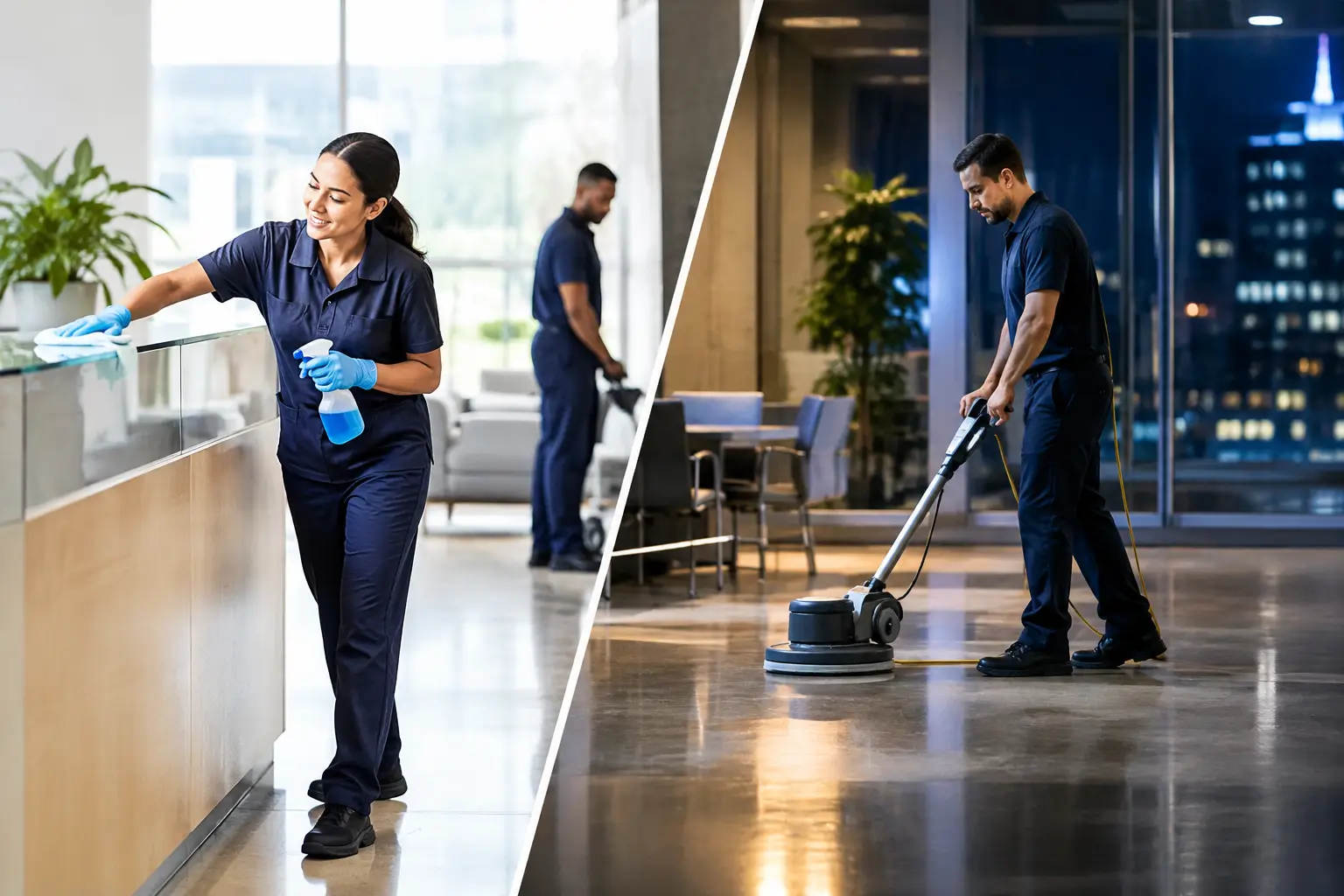
A lobby can look polished at 8:00 a.m. and still become a problem by lunch. Restrooms run low on supplies, rainwater collects near an entry, trash builds up after meetings, and fingerprints appear on every glass door. That is where the decision between day porter versus nightly cleaning becomes more than a scheduling question. It affects first impressions, employee comfort, safety, and how much time your team spends chasing facility issues.
For most commercial facilities, the right answer depends on what happens during operating hours, not just the square footage of the building. A nightly crew handles essential cleaning after business hours. A day porter keeps public-facing and high-use areas under control while people are in the building. Some sites need one service. Others need both, with clear responsibilities for each.
What a Nightly Cleaning Service Handles
Nightly cleaning is the foundation of most recurring commercial cleaning plans. The crew works after employees, visitors, patients, members, or customers have left, allowing them to clean thoroughly without interrupting daily operations.
A documented nightly scope commonly includes restroom cleaning and disinfection, trash and recycling removal, vacuuming, mopping hard floors, dusting accessible surfaces, cleaning break rooms, and wiping touchpoints. Depending on the facility, it may also include glass cleaning, floor care, carpet care, or detailed cleaning on a scheduled rotation.
For a standard office with consistent traffic, nightly cleaning may be all that is needed. The team resets the space so employees arrive to clean restrooms, emptied bins, presentable common areas, and floors ready for the next day.
Nightly cleaning works especially well when the facility has limited daytime visitors, predictable occupancy, and no expectation that a cleaner will be available for immediate requests. It is also usually the more efficient choice when tasks require uninterrupted time, such as vacuuming open office areas, mopping corridors, or cleaning a large restroom.
The limitation is simple: once the crew leaves, there is no one assigned to respond to what happens the following day. A spilled drink in the lobby, an overflowing restroom bin, or a wet entrance may remain until the next scheduled service unless your staff handles it.
What a Day Porter Does During Business Hours
A day porter is an on-site cleaning professional scheduled during business hours. Rather than performing the full overnight reset, the porter focuses on maintaining the facility as it is being used.
The work is responsive, visible when appropriate, and shaped by the rhythm of the building. In a busy medical office, that could mean checking restrooms between patient rushes, wiping waiting-room surfaces, removing trash, and keeping entry glass clear. In a multi-tenant property, it might mean monitoring common areas, addressing elevator spills, restocking restroom supplies, and keeping the lobby presentable for visitors.
A day porter can also support meeting room turnover, spot-clean carpet, collect cardboard, manage small cleanup needs, and report issues such as damaged fixtures, leaks, or supply shortages. The exact duties should be site-specific. “Porter service” without a defined scope often leads to confusion about what the person is expected to cover.
The value is not that a porter does every cleaning task immediately. The value is that someone is accountable for high-visibility areas and routine issues before they become complaints, safety concerns, or poor first impressions.
Day Porter Versus Nightly Cleaning: The Core Difference
The clearest difference is timing and purpose. Nightly cleaning restores the facility. Day porter service maintains it while it is occupied.
A nightly team generally works from a planned checklist and has time to complete the full scope. A day porter works from a combination of scheduled rounds, priority tasks, and real-time needs. Both should operate with documented expectations, but the porter role requires more communication and judgment throughout the day.
Think of an auto dealership on a busy Saturday. Nightly cleaning can prepare the showroom, sales offices, restrooms, and customer lounge before opening. But during the day, visitors bring in rainwater, coffee spills happen, restroom supplies move quickly, and glass doors show fingerprints. A porter helps the showroom stay ready for the next customer. Nightly cleaning alone cannot solve problems that occur after the building opens.
On the other hand, assigning a full-time porter to a quiet professional office with modest daytime traffic may not be the best use of the cleaning budget. A reliable nightly service with periodic daytime support may be a more practical plan.
When Nightly Cleaning Is Usually Enough
Nightly service is often sufficient for offices with controlled access, stable employee counts, and limited public traffic. It can also work well for churches, administrative offices, and smaller professional spaces where staff can handle minor daytime needs internally.
The key question is whether daytime issues are occasional or constant. An isolated spill or supply request does not necessarily justify daily porter coverage. Repeated restroom complaints, cluttered common areas, and entryway conditions often do.
Before adding daytime service, review the actual pain points for two to four weeks. Note when complaints occur, which areas generate the most requests, and whether the problem is cleaning frequency, inadequate supplies, building traffic, or an unclear scope of work. This prevents paying for a solution that does not address the real issue.
When a Day Porter Makes Sense
Day porter service is most valuable where appearance, sanitation, and quick response matter throughout the day. Medical and dental offices are common examples because waiting rooms and restrooms need attention between the nightly cleanings. Daycares, gyms, customer-facing offices, dealerships, and high-traffic properties often benefit for the same reason.
Consider a porter when your facility experiences four or more of these conditions:
- High visitor traffic or frequent client meetings
- Restrooms that need attention more than once per day
- Busy entries affected by rain, snow, salt, or heavy foot traffic
- Food service, break rooms, or common spaces with frequent spills
- Multiple tenants or shared public areas
- Staff complaints about overflowing bins, supplies, or presentation
A porter may be scheduled for the full business day, but that is not the only option. Many North Jersey facilities benefit from a focused morning, midday, or afternoon shift. A medical practice may need coverage during peak patient hours. A corporate office may only need a porter for lunch coverage and late-day restroom checks. The schedule should match the building's busiest periods.
The Blended Approach Often Solves the Real Problem
For high-traffic facilities, the strongest plan is often nightly cleaning paired with scheduled porter coverage. The nightly crew handles deep, systematic cleaning. The porter protects the standard during the day.
This division matters because it keeps both roles realistic. If a porter is constantly asked to perform extensive cleaning, respond to every request, restock supplies, and cover multiple floors without a priority plan, visible areas can still decline. If the nightly crew is expected to compensate for a full day of unmanaged traffic, the facility may look clean only briefly each morning.
A blended scope should clearly define who handles restrooms, trash, break rooms, entryways, meeting spaces, supply restocking, spot cleaning, and incident response. It should also state the service windows, inspection process, and communication path for urgent needs. Clear ownership prevents the familiar problem of everyone assuming someone else handled it.
Questions to Ask Before Choosing a Service Model
Start with the business impact of a poorly maintained space. Are patients commenting on restrooms? Are tenants reporting lobby issues? Is your receptionist being pulled away from their work to manage cleaning problems? Are employees starting the day with bins that were missed the night before?
Then look at traffic patterns rather than averages. A building may appear quiet overall but experience intense activity at opening, lunch, shift changes, or after events. Those periods often determine whether a porter is needed.
Ask a prospective cleaning partner how they will document the scope, monitor quality, handle missed items, and communicate changes. The answer should go beyond “we will take care of it.” You should know who receives requests, how follow-up occurs, and how recurring issues are identified before they become routine frustrations.
At CEECEE Commercial Cleaning, this starts with a walkthrough and a site-specific plan. For offices, medical facilities, gyms, and commercial properties in Newark and surrounding North Jersey communities, the goal is not to sell unnecessary labor. It is to assign the right coverage at the right times and hold the work to a clear standard.
If your building looks clean at opening but struggles by midday, a day porter may be the missing piece. If problems begin before the doors open, the nightly scope or quality controls may need attention first. Schedule a free walkthrough to review the traffic, priorities, and cleaning gaps in your facility, then build a plan your team does not have to manage every day.
Call (917) 837-6499 or email info@ceeceecleaning.com