Day Porter vs Nightly Cleaning: Which Fits?
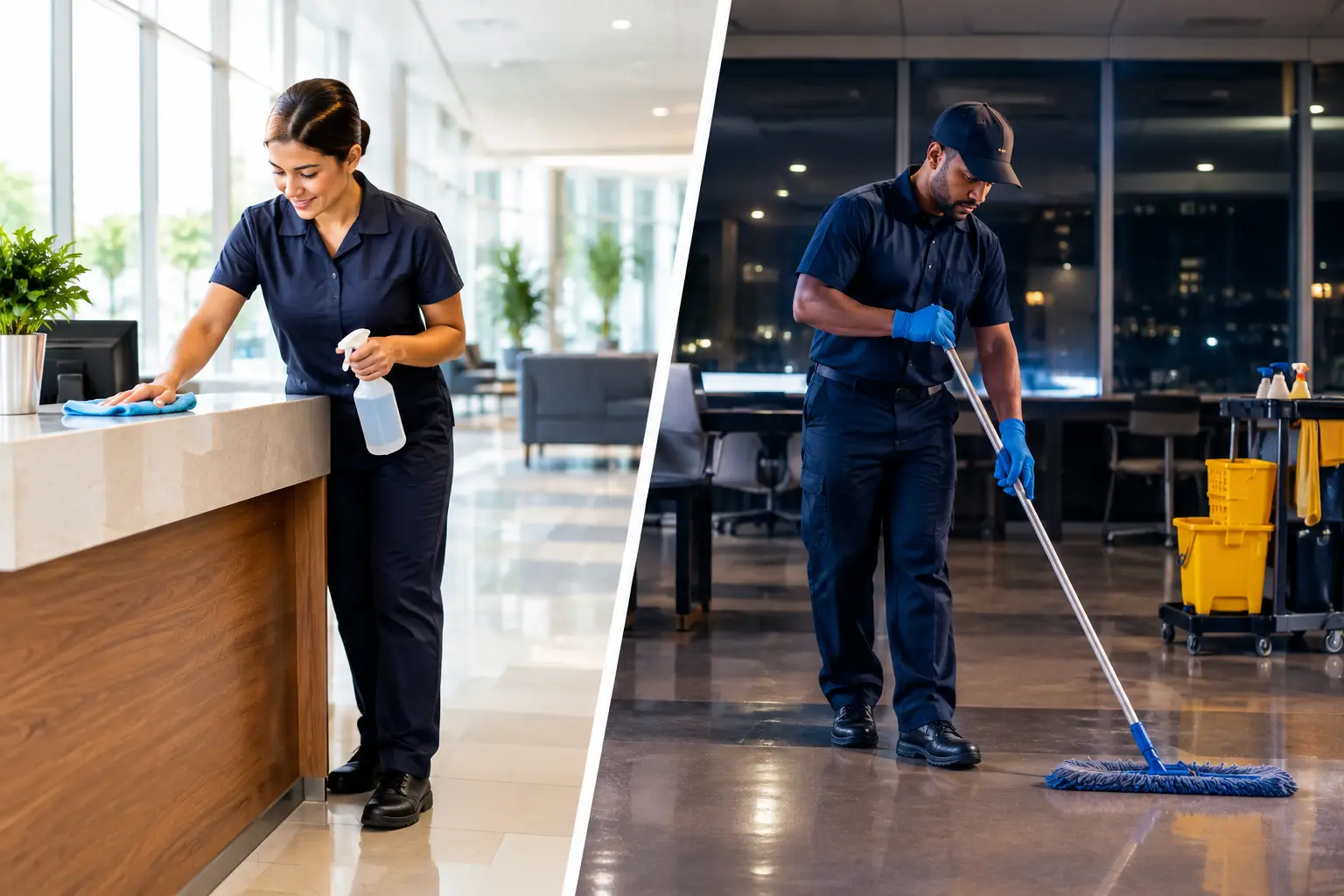
A full trash can in a busy lobby at 2:00 p.m. can undermine an otherwise well-managed facility. So can a restroom that looked fine at opening but needs attention before the afternoon rush. This is where the day porter vs nightly cleaning decision becomes practical, not theoretical. The right choice affects first impressions, employee comfort, safety, and how much time your staff spends chasing cleaning issues.
For many North Jersey offices, medical practices, and multi-tenant properties, the answer is not automatically one service or the other. It depends on what happens in your facility between opening and closing, how much traffic it receives, and which areas cannot wait until the evening.
What Is the Difference Between Day Porter vs Nightly Cleaning?
A day porter works during operating hours. Their role is to keep the facility presentable, stocked, and responsive as conditions change throughout the day. They are often visible to employees, visitors, patients, tenants, or customers.
Nightly cleaning is performed after business hours or during a low-occupancy period. The cleaning team focuses on the full scheduled scope of work: emptying trash, cleaning restrooms, vacuuming or mopping floors, wiping common touchpoints, cleaning break areas, and handling other recurring tasks documented for the site.
The simplest distinction is timing and purpose. A day porter maintains the space while people are using it. A nightly crew restores the space after people leave.
Neither service is automatically better. A quiet professional office may only need dependable nightly service. A medical office with a busy waiting room, a gym, or a property with active common areas may need daytime support as well.
When a Day Porter Makes Sense
Day porter service is most useful when the facility’s appearance changes quickly during business hours. Think of a lobby where visitors track in rain, a restroom used by dozens of people each day, or a cafeteria that needs attention after lunch.
A porter can respond before a small issue becomes a visible problem. That may include spot-mopping an entryway, refreshing restroom supplies, removing overflow trash, wiping fingerprints from glass doors, or straightening a reception area between appointments.
For property managers, a day porter can also provide a helpful extra set of eyes. If a soap dispenser is empty, a spill occurs in a common hallway, or a high-traffic area needs immediate attention, the issue can be addressed quickly instead of waiting for the evening crew.
Facilities that often benefit from daytime coverage
Day porter service is commonly a good fit for medical and dental offices, active corporate offices, gyms, auto dealerships, churches with weekday activity, and multi-tenant commercial properties. It can also support daycares where cleanliness needs change throughout the day and staff cannot reasonably step away from their primary responsibilities to manage common-area upkeep.
That said, a day porter is not a replacement for a detailed after-hours cleaning program. If the porter spends the day responding to immediate needs, there may not be enough uninterrupted time to complete the deeper, systematic work a nightly crew handles.
When Nightly Cleaning Is the Better Fit
Nightly cleaning works especially well when the facility needs a complete reset without disrupting operations. Crews can vacuum open office areas, clean restrooms thoroughly, service break rooms, remove waste, and care for floors without working around meetings, customers, patients, or staff.
For an office manager, this often creates a predictable rhythm. Employees arrive to clean deskside areas, refreshed restrooms, and orderly shared spaces. For a practice administrator, evening cleaning can be scheduled around patient hours and tailored to clinical and nonclinical areas according to the facility’s needs.
Nightly service also supports consistency. A documented scope can define what happens every visit, what happens weekly, and what requires periodic floor or carpet care. That structure helps prevent the common problem of tasks being assumed but never actually assigned.
A lower-traffic office may not need anyone present during the day. In that setting, paying for a porter can add labor hours without solving a real operational problem. Reliable nightly cleaning, regular inspections, and a clear process for reporting issues may be the more sensible plan.
The Trade-Offs to Consider
The choice usually comes down to responsiveness, disruption, budget, and the condition you need the facility to maintain during open hours.
A day porter provides immediate visibility and faster response. The trade-off is that daytime work can be interrupted by foot traffic, meetings, patient flow, and changing priorities. The porter’s schedule must be clear enough that essential tasks are completed without becoming a general-purpose helper for unrelated building duties.
Nightly cleaning allows a team to work efficiently with fewer interruptions. The trade-off is that spills, restroom supply issues, and lobby messes that occur at noon may remain visible until the next service window unless your staff handles them or can request an additional response.
Budget matters, but it should be evaluated in relation to risk and workload. A facility that receives frequent visitors may lose more in staff time and poor presentation from unmanaged daytime issues than it saves by limiting service to the evening. On the other hand, adding daytime coverage to a lightly occupied office may not be necessary.
A Hybrid Plan Often Solves the Real Problem
Many facilities need both services, but not at the same level every day. A hybrid plan might include nightly cleaning five days per week and a day porter during the busiest days, peak hours, or special events.
For example, a Newark medical practice may schedule evening cleaning for treatment rooms, waiting areas, restrooms, and staff spaces, then have a porter present during high-volume appointment blocks to monitor the lobby and restrooms. A multi-tenant property may use nightly service for common areas and add daytime porter coverage only for its busiest weekday shifts.
The goal is not to create the largest possible cleaning schedule. It is to match labor to actual use of the building. A site walkthrough and a review of traffic patterns often reveal where coverage is truly needed.
Define the Scope Before You Choose
Whether you choose a porter, nightly cleaning, or a combination, vague expectations lead to missed details. “Keep the building clean” is not a workable scope of work. It does not identify priorities, service frequency, supply responsibilities, escalation procedures, or who verifies results.
A useful plan should identify high-traffic zones, restroom checks, trash removal schedules, break room expectations, floor care needs, and the process for reporting concerns. It should also separate routine work from periodic tasks such as carpet cleaning, hard-floor maintenance, interior glass cleaning, and detail work.
For day porter coverage, clarify the service window and the recurring rounds the porter should complete. Define what requires immediate attention, what can wait for the next round, and who to contact if a situation falls outside the normal scope.
For nightly cleaning, establish the expected results by area rather than relying only on a generic checklist. A reception area, a staff kitchenette, a gym locker room, and a dental waiting room have different priorities. Site-specific instructions give the cleaning team a clear standard to follow.
Questions to Ask a Cleaning Partner
Before selecting a service model, ask how the provider manages communication when conditions change. You should also understand how work is inspected, how missed items are corrected, and who is accountable for follow-up.
Ask whether the provider can adjust staffing for seasonal traffic, events, weather, or a temporary increase in building use. Confirm whether the team documents site-specific procedures and whether there is a clear point of contact for your facility.
These questions matter because cleaning reliability is not only about having someone on site. It is about having a system that notices issues, communicates clearly, and addresses them without requiring repeated reminders from your staff.
Build a Cleaning Plan Around Your Building’s Real Needs
The right day porter vs nightly cleaning plan should make your facility easier to manage, not add another vendor relationship that needs constant attention. Start with the moments when cleanliness has the biggest impact: opening hours, visitor traffic, patient flow, shared restrooms, lunch periods, and weather-related messes.
CEECEE Commercial Cleaning helps facilities across Newark and surrounding North Jersey communities build site-specific cleaning plans with documented expectations and routine quality checks. A walkthrough can clarify whether your building needs daytime support, nightly cleaning, or a practical combination of both. Request a customized proposal, then choose a schedule that keeps your facility ready for the people who rely on it every day.
Call (917) 837-6499 or email info@ceeceecleaning.com