Daycare Cleaning and Sanitizing Services
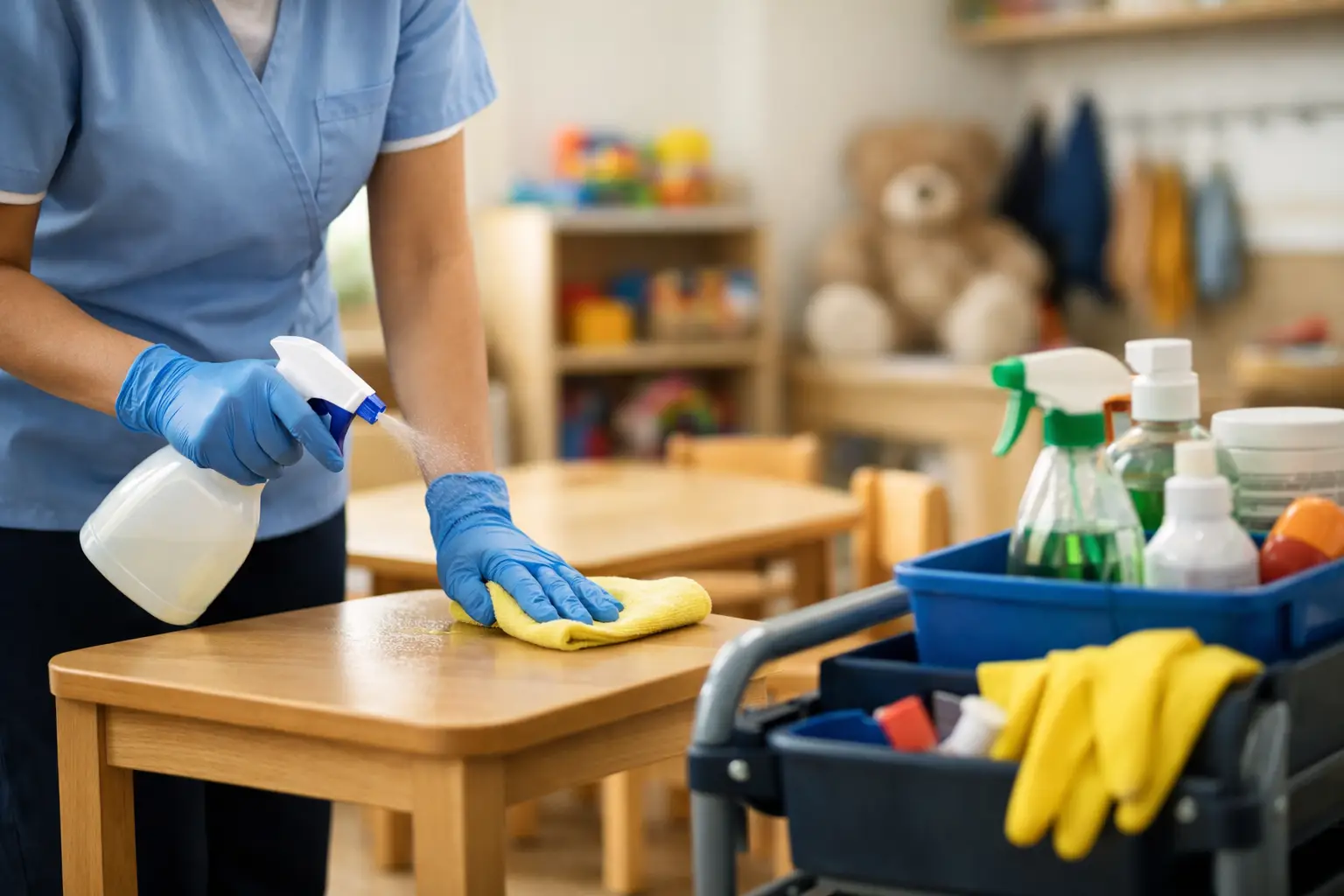
A daycare can look tidy at pickup and still have cleaning problems that show up the next morning. Sticky tables, restroom odors, smudged glass, and neglected touchpoints do more than affect appearance. They interrupt routines, raise concerns with parents and staff, and create extra work for directors who already have enough to manage. That is why daycare cleaning and sanitizing services need to be structured, consistent, and easy to monitor.
For daycare operators and facility decision-makers, the issue is rarely whether cleaning gets done at all. The real question is whether it gets done thoroughly, on schedule, and the same way every visit. In a setting where children move constantly between classrooms, restrooms, eating areas, and shared surfaces, missed details add up quickly.
What daycare cleaning and sanitizing services should actually cover
A daycare has a different cleaning profile than a standard office or retail space. Activity is constant, surfaces are touched all day, and the condition of the building affects both first impressions and daily operations. Parents notice the front entry and lobby, but staff feel the impact most in classrooms, restrooms, and break areas where repeated use exposes every inconsistency.
A strong daycare cleaning program usually includes classroom surfaces, floors, restrooms, common areas, entrances, interior glass, trash removal, and high-touch points such as door handles, light switches, shared counters, and check-in stations. It may also include periodic floor care and carpet cleaning, depending on the facility layout and traffic levels.
Sanitizing is part of that work, but it should be applied with purpose rather than treated as a vague add-on. Some surfaces need frequent attention because they are touched often. Others need regular cleaning first so sanitizing products can be effective. If a provider cannot explain that difference clearly, the scope may not be as controlled as it should be.
Why consistency matters more than promises
Most facility frustrations start the same way. The first few visits go well, then details begin to slip. Trash liners are skipped. Restrooms are restocked inconsistently. Floors near cubbies or check-in desks start to look neglected. Eventually, the director or manager is doing inspections personally and following up on work that should have been routine.
In daycare environments, inconsistency creates operational drag. Staff should not have to report the same issue twice. Directors should not need to wonder whether a restroom was fully addressed or whether a classroom got the same attention as the front office. A cleaning vendor should lower your management burden, not add to it.
That is why documented scopes of work matter. A daycare cleaning plan should define what gets cleaned, how often, and what standards are expected for each area. Without that level of clarity, performance becomes subjective. One crew may focus on visible appearance while another misses touchpoints or restocking. A written plan creates accountability and makes follow-up much easier.
The areas that need the most attention
Every daycare has its own traffic patterns, but a few zones consistently drive the most complaints when cleaning is uneven. Restrooms are one. They affect health perception immediately, and even small misses stand out. If odors linger, dispensers are empty, or corners look neglected, confidence drops fast.
Classrooms are another priority. Tables, chairs, sinks, floors, and frequently handled surfaces need regular attention because they are used continuously throughout the day. This is where site-specific planning matters. A toddler room, a pre-K room, and an administrative office do not wear the same way, so they should not be cleaned as if they do.
Entries and parent-facing areas also deserve close attention. These spaces shape first impressions, especially during morning drop-off and evening pickup. Smudged glass, dusty ledges, dull floors, or overflowing trash may seem minor on paper, but in practice they signal a lack of control.
Shared staff areas are easy to overlook as well. Break rooms, offices, and internal hallways may not be client-facing, but they still affect morale and workflow. When these spaces are neglected, teams notice.
How to evaluate daycare cleaning and sanitizing services
If you are comparing providers, ask how they build the scope of work. A serious commercial cleaning company should want to walk the building, assess traffic patterns, identify problem areas, and understand your schedule before proposing service. Daycares operate on tight timelines, so cleaning plans need to fit around arrival, pickup, classroom use, and after-hours access.
You should also ask how quality is checked. Inspections, supervisor follow-up, and documented reporting matter because daycare cleaning cannot depend on assumptions. If a company has no process for reviewing work, then consistency depends too much on whoever happened to be assigned that night.
Communication is just as important. When something changes, such as an event, a room closure, or a temporary scheduling adjustment, you need a provider who responds clearly and confirms the plan. Delayed or vague communication usually leads to service gaps.
It also helps to ask how issues are corrected when they come up. No cleaning program is perfect every single time. What matters is whether the company addresses concerns quickly, documents the correction, and prevents the same problem from repeating. Accountability is not about pretending problems never happen. It is about having a clear process when they do.
Why site-specific plans work better than generic checklists
Generic checklists often look fine at first glance. The problem is that they treat every facility the same. A daycare in Newark with high daily foot traffic, multiple classrooms, and mixed flooring does not need the same plan as a small office suite. Even two daycare centers can have very different demands based on enrollment, building age, room count, restroom layout, and schedule.
A site-specific plan reflects how the building is actually used. It accounts for heavy-touch areas, supply needs, floor types, and the order in which spaces should be serviced. It also gives managers something concrete to review. Instead of asking whether the building was cleaned well, you can ask whether the agreed scope was completed to standard.
That shift matters. It turns cleaning from a vague expectation into a managed operation.
The role of inspections and proactive follow-up
Good cleaning should not be invisible in the sense that no one owns it. It should feel easy for your team because the provider is paying attention before issues become patterns. Routine inspections help catch the kind of drift that happens over time, especially in facilities with recurring service.
Proactive follow-up is part of that. If a company checks in only after a complaint, you are already doing too much of the management work. A better approach is regular communication, documented reviews, and quick response when conditions change. This is especially useful in daycare settings where a classroom setup, event schedule, or seasonal traffic pattern can affect the cleaning approach.
For commercial facilities across northern New Jersey, that level of follow-through often makes the difference between a vendor relationship and a true cleaning partner. CEECEE Commercial Cleaning refers to this disciplined approach as The CEECEE Standard - clear scopes, consistent execution, and accountability you do not have to chase.
When to adjust your daycare cleaning plan
A cleaning scope should not stay frozen if the building has changed. If your center has added classrooms, shifted schedules, increased enrollment, or started seeing more wear on floors and restrooms, the service plan may need to be updated. The same is true if your team is raising repeated concerns about the same areas.
Seasonality can affect needs too. Wet weather brings in more soil at entrances and hallways. Busy periods may put more pressure on restrooms and common areas. Carpeted classrooms may need periodic attention based on traffic and spot issues, while hard floors may need scheduled maintenance to keep them presentable.
The key is to review service before small issues become routine frustrations. Cleaning works best when it is managed as an ongoing system, not a set-it-and-forget-it task.
Choosing a partner you do not have to manage every day
The best daycare cleaning and sanitizing services do not rely on broad promises. They rely on clear scopes, trained execution, inspections, and responsive communication. That is what protects first impressions, supports staff, and helps your facility run with fewer interruptions.
If you are evaluating daycare cleaning for your facility, start with the basics. Ask how the scope is documented, how quality is checked, how issues are resolved, and how communication is handled after service begins. Those answers will tell you far more than a polished proposal ever could.
If your daycare in Newark or the surrounding area needs a more structured cleaning plan, CEECEE Commercial Cleaning can provide a walkthrough and a customized proposal built around your facility, your schedule, and the standard you want to maintain. A clean building should not require constant follow-up from your team.
Call (917) 837-6499 or email info@ceeceecleaning.com