Daycare Cleaning Example for a Safer Center
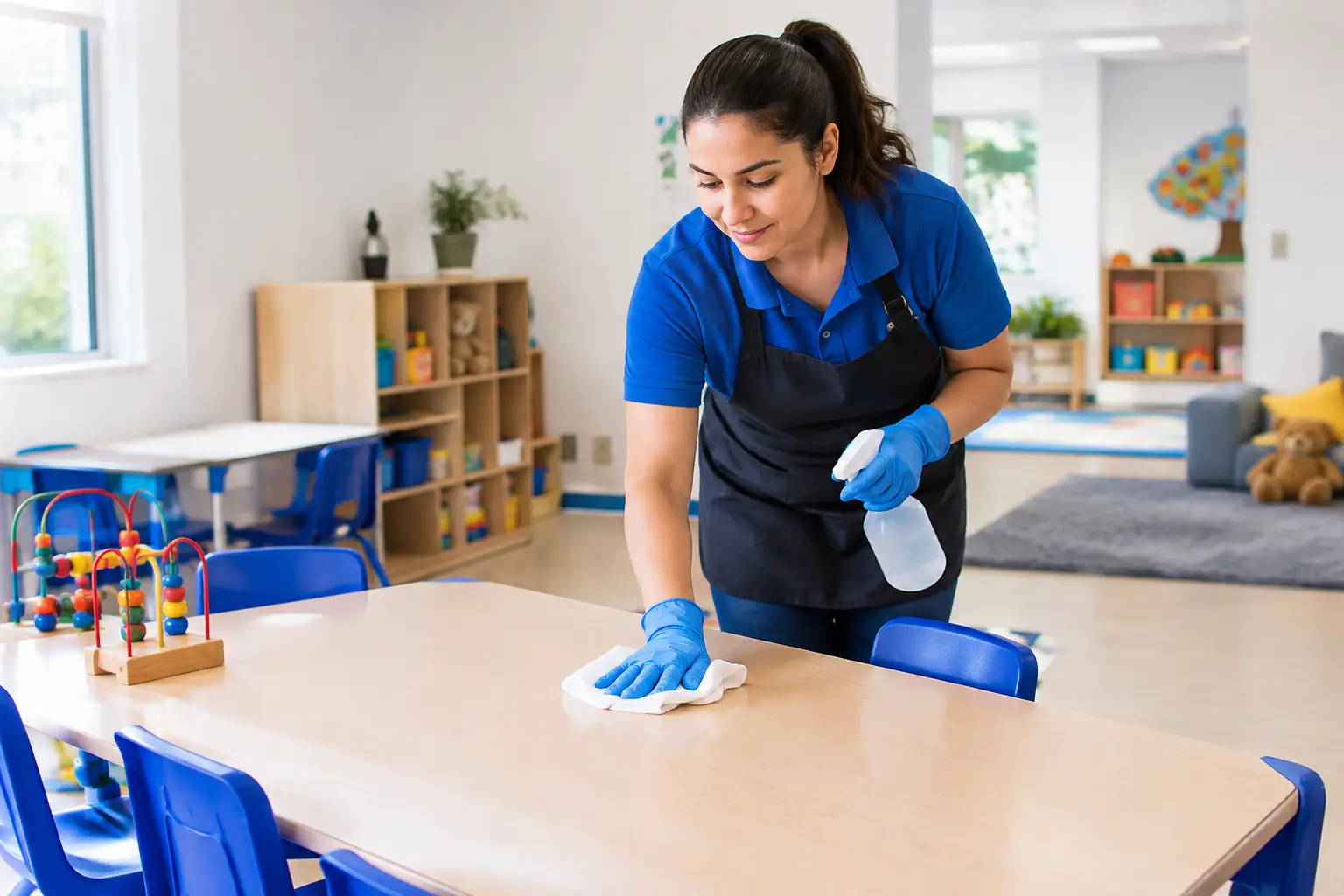
A daycare can look clean at pickup time and still have gaps that matter: a restroom checked only once, a shared toy bin missed after a busy afternoon, or a changing area restocked too late. For a director or facility manager, those gaps create more than extra work. They can affect parent confidence, staff morale, and the daily health and safety of the children in your care.
This daycare cleaning example shows what a practical, site-specific cleaning plan can look like. It is not a substitute for your center’s licensing requirements, product instructions, or internal health procedures. It is a working model for turning broad expectations like “keep classrooms clean” into clear tasks, responsible people, and verifiable results.
Why a Generic Cleaning Checklist Falls Short
Daycare environments change by the hour. A classroom that is orderly at 8:00 a.m. may have snack residue, fingerprints, tracked-in moisture, and a full trash can before noon. Restrooms, entryways, infant rooms, staff areas, and multipurpose spaces all have different traffic patterns and different priorities.
A generic checklist often fails because it treats every room the same and leaves too much open to interpretation. “Clean toys” does not say which toys, how often, which product is approved, where they should dry, or how completion is documented. A useful plan answers those questions before the cleaning team arrives.
The goal is consistency, not simply visible cleanliness. Staff should know what was completed, managers should know what needs attention, and parents should see a center that feels orderly and well cared for every day.
A Daycare Cleaning Example for an Active Center
Consider a child care center with six classrooms, an infant room, two restrooms, a staff lounge, a small office, and a shared indoor play area. The center operates from 7:00 a.m. to 6:00 p.m. and has a commercial cleaning team onsite after closing, while teachers handle immediate cleanup during the day.
The scope should separate day porter responsibilities from evening janitorial duties. That distinction prevents a common problem: everyone assumes someone else handled a spill, a restroom, or a high-touch surface.
During operating hours
Teachers and designated onsite staff address immediate sanitation needs as they happen. This includes cleaning spills promptly, following the center’s approved procedure for bodily-fluid incidents, wiping tables before and after meals, and placing mouthed toys in the designated collection bin rather than returning them to circulation.
Restrooms should be checked at scheduled intervals and after heavy use. The check should cover toilet paper, soap, paper towels, visible soil, dry floors, and trash levels. An evening cleaning crew cannot correct a restroom issue that affected children and staff all afternoon.
Entryways also need attention throughout wet North Jersey weather. A wet floor at morning drop-off is both a safety concern and a poor first impression. Mats should be positioned properly, moisture should be removed promptly, and caution signage should be used when needed.
After closing
The evening cleaning team follows a documented room-by-room plan. A typical routine may include:
- Emptying trash and replacing liners in classrooms, offices, restrooms, and staff areas.
- Cleaning and disinfecting high-touch points such as door handles, light switches, faucet handles, toilet flush handles, cabinet pulls, and shared equipment controls.
- Cleaning classroom tables, chairs, counters, sinks, and other approved hard surfaces according to product label directions.
- Vacuuming carpeted areas and damp mopping hard floors, with extra attention to snack areas, entrances, and restroom floors.
- Cleaning restrooms from high surfaces to low surfaces, then restocking consumables and checking floors for remaining moisture.
- Cleaning the staff lounge and office areas, including breakroom counters, sinks, appliance exteriors, and waste bins.
That sequence matters. For example, floors should be cleaned after tables, counters, and trash have been addressed. Restrooms require dedicated tools and materials that are not used in classrooms or food-service areas. Color-coded cloths and mop systems can help reduce cross-contamination when the process is followed consistently.
Cleaning and Disinfecting Are Not the Same Task
Many cleaning problems begin with vague language. Cleaning removes visible dirt, crumbs, residue, and some germs from a surface. Disinfecting uses an appropriate EPA-registered product to kill or inactivate specified germs when used according to the label.
A surface that is visibly soiled may need to be cleaned before it can be properly disinfected. The disinfectant also needs its required contact time. Spraying a surface and wiping it dry immediately may not deliver the intended result.
This is where a site-specific plan protects the center. The plan should identify approved products, dilution requirements if applicable, contact times, storage locations, and the surfaces where each product is used. Staff should never have to guess whether a product is appropriate for a classroom table, a restroom fixture, or a food-adjacent surface.
Build the Plan Around Zones, Not Just Tasks
A reliable daycare cleaning plan is easier to manage when it is organized by zones. Each zone should have a defined frequency, task list, supply requirements, and inspection point.
Classrooms and infant rooms
Classrooms need close attention to tables, chairs, sinks, handles, shelving, and floors. Infant rooms require an even more detailed approach because of floor-level activity, feeding areas, cribs, and changing stations. The cleaning crew should know which surfaces are included in the nightly scope and which items remain the responsibility of classroom staff under the center’s health procedures.
Toys need a realistic system. Large fixed toys may be cleaned and disinfected on a scheduled rotation, while mouthed toys need to be removed and processed promptly. A plan that simply says “disinfect all toys nightly” may be impractical for some centers. The better approach depends on the number of toys, classroom ages, storage capacity, and the center’s established procedures.
Restrooms and changing areas
Restrooms should receive a detailed nightly clean, including toilets, sinks, faucets, dispensers, partitions, handles, mirrors, and floors. Changing areas need a defined process because they involve frequent use and sensitive hygiene concerns. Supplies must be stocked before opening, not discovered empty during the first busy hour.
Shared spaces and entrances
Indoor play areas, hallways, reception desks, and entry doors carry traffic from multiple classrooms. They also shape parent perception. Cleaning should address touchpoints, floor edges, glass, mats, and any visible buildup on doors or walls. If an event, bad weather, or high attendance increases traffic, the cleaning frequency may need to change.
Document What Was Done and What Was Found
A checklist is valuable only when it supports accountability. It should be simple enough to complete accurately and specific enough to show what happened. Rather than checking one box for “restrooms,” the form can include fixtures, floors, restocking, and final inspection.
Quality checks should also capture exceptions. If a dispenser is damaged, a floor finish is wearing down, or supplies are running low, the cleaning team should report it promptly instead of hoping the next shift notices. Photos can be helpful for recurring issues or areas that need manager approval, but they should be handled with care to protect children’s privacy.
At CEECEE Commercial Cleaning, documented scopes and routine quality inspections help keep expectations visible. The same principle applies whether a center is in Newark, Montclair, or another North Jersey community: a cleaning provider should communicate issues early and give the manager a clear path to resolution.
Adjust the Schedule When the Center Changes
A daycare cleaning plan should not stay frozen once it is written. Enrollment shifts, seasonal illnesses, construction nearby, special events, and weather can all change what the facility needs. A center with more toddlers may need greater attention to low surfaces and snack areas. A center with extended hours may need a mid-shift restroom service instead of relying solely on closing-time cleaning.
Review the scope regularly with the cleaning provider and center leadership. Look for repeated concerns, missed tasks, supply shortages, and rooms that require more time than the schedule allows. Small adjustments made early are far easier to manage than ongoing frustration with a vendor you have to chase.
A good daycare cleaning example is not a long list that sits in a binder. It is a practical agreement that tells every person what clean looks like, how it is checked, and who responds when something falls short. If your center needs a site-specific plan with clear routines and documented follow-up, schedule a free walkthrough with CEECEE Commercial Cleaning and start with the areas creating the most daily pressure.
Call (917) 837-6499 or email info@ceeceecleaning.com