Daycare Sanitizing vs Nightly Cleaning Explained
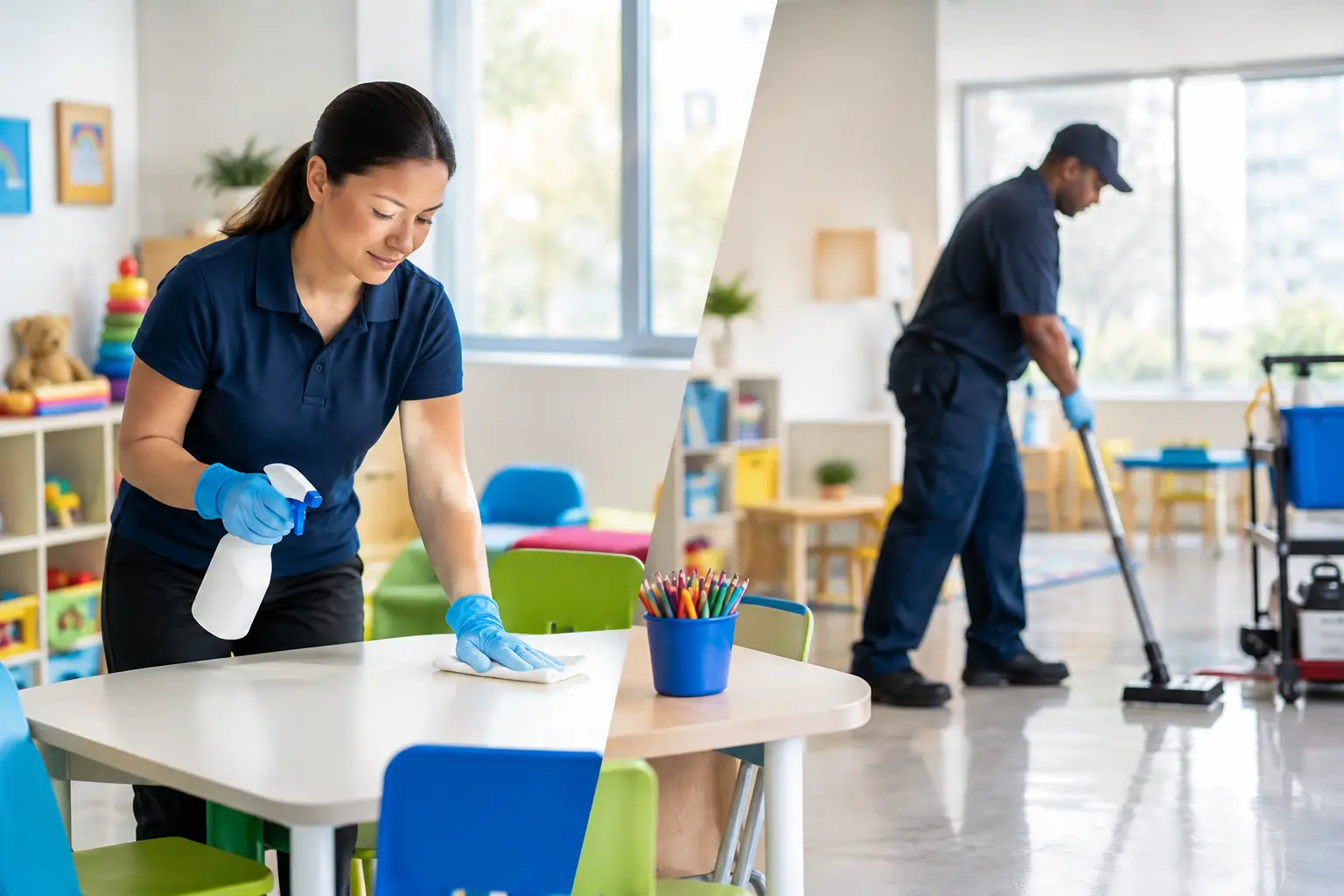
A classroom can look clean at 6:00 p.m. and still need attention at 10:30 a.m. after shared toys, snack time, bathroom visits, and a runny-nose season. That is the practical difference behind daycare sanitizing vs nightly cleaning. One manages the high-touch moments that happen while children are present. The other resets the facility after closing so staff and families return to a clean, orderly space.
For daycare directors and operations leaders, treating these as the same task creates gaps. A nightly crew may do excellent work, but they cannot address a table used for lunch six hours earlier. On the other hand, frequent daytime wiping does not replace a complete evening clean of floors, restrooms, entry areas, and overlooked surfaces. A dependable program needs both, with clear ownership of each task.
What daycare sanitizing handles during the day
Sanitizing reduces germs on surfaces to levels considered safer by public health standards. In a daycare, the focus is usually on hard, nonporous, high-contact surfaces that children and staff touch repeatedly. Think classroom tables after meals, shared toys, door hardware, faucet handles, cot frames, bathroom fixtures, and changing-station surfaces.
The timing matters as much as the product. A surface should first be free of visible soil, then receive the sanitizer according to the label directions, including the required contact time. Spraying a product and immediately wiping it away may leave the job incomplete. Using more chemical than needed is not the answer either, especially around young children. Staff need products appropriate for the surface and environment, plus a straightforward process they can follow consistently.
Daytime sanitizing is often handled by classroom teams because they are present when a mess occurs or a shared activity ends. That does not mean the responsibility should be vague. A written routine should define which items are sanitized after each use, after meals, after diapering or toileting, and at scheduled intervals. It should also state where supplies are stored and who alerts management when stock is low.
Sanitizing is not always disinfecting
These terms are often used interchangeably, but they are not identical. Sanitizing generally lowers the number of germs on a surface. Disinfecting is designed to kill a broader range of germs and may be appropriate after bodily-fluid incidents, during a known illness concern, or where a center's protocol specifically requires it.
Disinfectants can require longer contact times and more careful use. They should be selected and applied according to product labels, state childcare rules, and the center's own health policies. A cleaning partner can support the program, but management should also ensure its procedures align with guidance from its licensing authority and health professionals.
What nightly cleaning should accomplish
Nightly cleaning is the full operational reset. It addresses the dirt, crumbs, tracked-in soil, restroom use, fingerprints, and daily buildup that daytime staff cannot reasonably manage while supervising children. The goal is not simply to make rooms look presentable. It is to prepare each area for a safe, organized opening the next morning.
A site-specific nightly scope commonly includes cleaning and sanitizing classroom tables and chairs, emptying waste, cleaning restrooms, replenishing consumables, vacuuming or mopping floors, wiping touchpoints, and cleaning entry and common areas. Depending on the facility, it may also include kitchen-adjacent areas, staff rooms, interior glass, gym spaces, or floor care.
The work should follow a logical sequence. Higher surfaces are cleaned before floors. Restroom tools are kept separate from classroom tools. Products and cloths are used in a way that avoids transferring soil from one room or surface type to another. These details are easy to miss when a scope is generic or a crew is rushed.
Nightly cleaning also gives a provider the opportunity to identify recurring concerns. A bathroom dispenser that is repeatedly empty, a floor area that stays tacky, or a classroom with overflowing waste may point to a supply, staffing, or scheduling issue. Good communication turns those observations into action before they become parent complaints or opening-day surprises.
Daycare sanitizing vs nightly cleaning: why you need both
The simplest way to separate the two is this: sanitizing responds to use, while nightly cleaning restores the facility after use. They overlap on some surfaces, but they solve different problems.
A child may touch the same activity table throughout the morning. Classroom staff may sanitize it after snack and again after an art project. That same table should still receive a thorough evening clean as part of the room reset. Likewise, a restroom may receive immediate attention during the day, but nightly service handles the broader cleaning of fixtures, partitions, floors, waste containers, and touchpoints.
Relying only on nightly service leaves long stretches where high-contact surfaces receive no scheduled care. Relying only on daytime staff can pull teachers away from supervision and lesson planning, while allowing floors, restrooms, and common areas to deteriorate. The right balance depends on enrollment, age groups, facility layout, hours of operation, and the volume of daily activity.
Build a schedule staff can actually follow
The strongest daycare cleaning plans are specific enough to create accountability without becoming difficult to use. Rather than telling everyone to “sanitize regularly,” define the trigger and the responsible role.
For example, classroom teams may handle immediate cleanup, meal-table sanitizing, changing-area procedures, and shared materials according to the center's policy. The nightly cleaning provider handles the documented evening scope. Management verifies the system through routine walkthroughs, supply checks, and follow-up when an issue is reported.
A useful plan should answer these questions:
- Which surfaces are cleaned, sanitized, or disinfected, and under what circumstances?
- Who completes each task during operating hours and after closing?
- Which approved products are used, including required dwell times and storage procedures?
- How are incidents, missed tasks, supply shortages, and recurring concerns reported?
- How is completion checked and documented?
This structure matters most when staffing changes, a classroom is unusually busy, or illness concerns increase. If the plan only exists in one supervisor's memory, it will not deliver the same result every day.
Do not overlook floors and soft surfaces
Hard surfaces receive most of the attention, but floors carry dirt from entrances, playground transitions, food areas, and restroom traffic. Daily vacuuming or mopping, with the correct method for the flooring type, helps keep the facility presentable and reduces soil being tracked into classrooms. Periodic floor care may be needed when finish, grout, carpet, or entry matting begins to show wear.
Soft items require their own process. Fabric furnishings, rugs, and washable classroom materials should be addressed according to manufacturer instructions and center policy. A nightly janitorial scope should clearly state what is included, what classroom staff launder, and what requires periodic specialty service. Assumptions are where tasks get missed.
How to evaluate a daycare cleaning partner
A commercial cleaning company should not offer the same checklist to every daycare. Ask how the provider will learn your room count, enrollment patterns, restroom setup, floor types, pickup schedule, access process, and areas that create the most concern for parents or staff. The answers should become a documented scope of work, not a verbal promise.
Also ask how quality is verified. A cleaner's visit is only one part of reliable service. You need a process for inspections, issue reporting, response times, and communication with the person responsible for the site. If a concern is found in a classroom or restroom, there should be a clear path for correcting it and preventing a repeat.
For centers in Newark, Essex County, and throughout North Jersey, seasonal weather adds another consideration. Rain, slush, and winter salt can quickly affect entryways and flooring. A cleaning plan should account for changing conditions rather than waiting for an entrance to look neglected.
CEECEE Commercial Cleaning builds daycare service around site-specific scopes, routine quality checks, and direct communication, so directors are not left tracking down answers after closing. The CEECEE Standard is not a one-size-fits-all checklist. It is a consistent process built around what your center needs each day.
If your current routine leaves uncertainty about who sanitizes what, when, and how it is checked, schedule a free walkthrough and request a customized daycare cleaning proposal. A clear plan gives your staff more time to focus on children and gives families one less reason to worry.
Call (917) 837-6499 or email info@ceeceecleaning.com