Dental Office Cleaning Checklist That Works
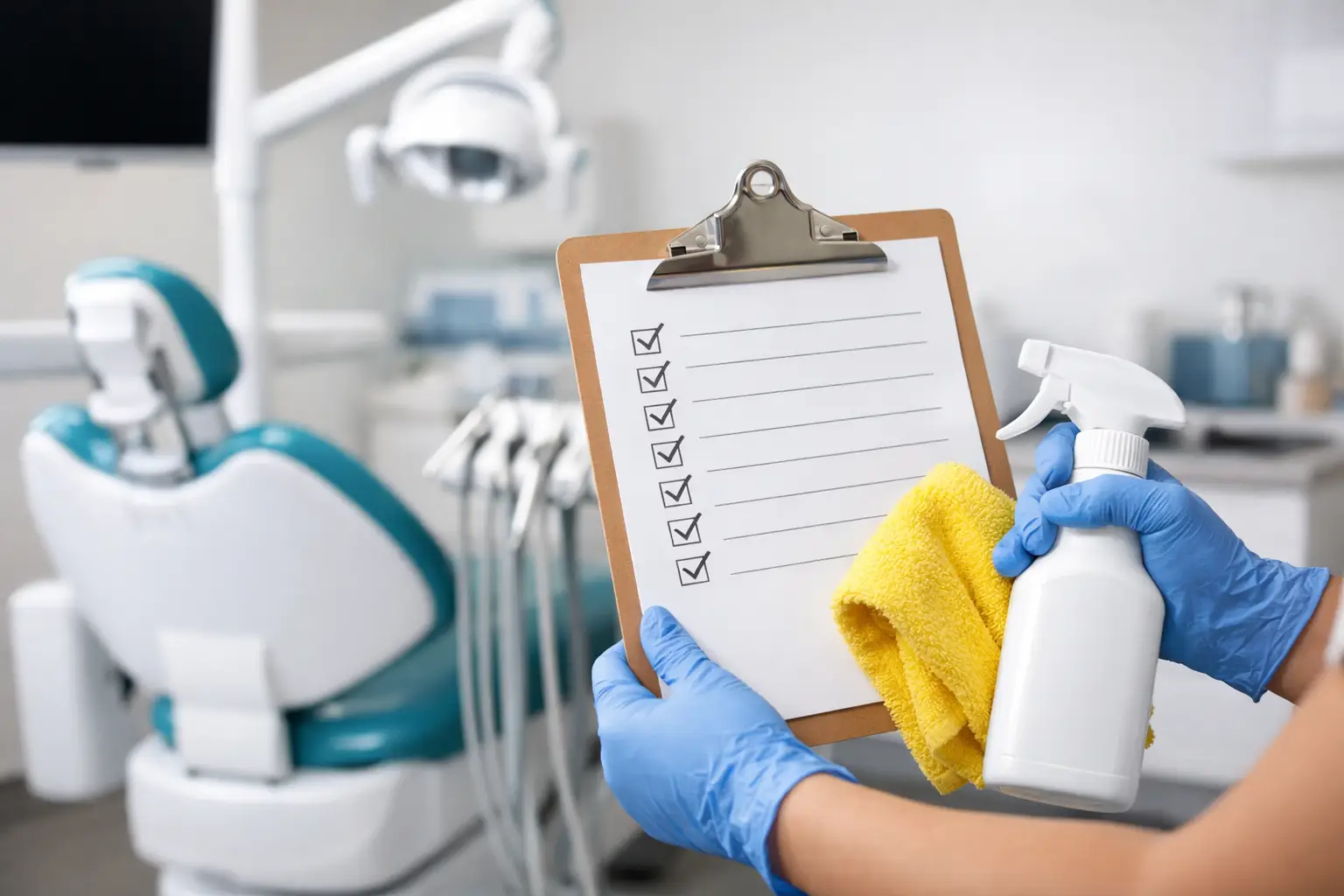
A missed smudge on the front door is one thing. A missed touchpoint in an operatory, restroom, or reception area is another. That is why a dental office cleaning checklist matters. In a setting where patient trust, staff safety, and presentation all meet in the same square footage, cleaning has to be consistent, documented, and specific to how the practice actually operates.
At CEECEE Commercial Cleaning, we’ve found that the most effective dental office cleaning programs start with a customized checklist based on each practice’s layout, patient volume, and cleaning requirements—not a one-size-fits-all template.
For office managers and practice administrators, the challenge is rarely knowing that the office needs to be cleaned. The real challenge is making sure nothing gets skipped when the day gets busy, schedules run long, and different people handle different parts of the facility. A strong checklist creates accountability, supports infection-control efforts, and makes it easier to manage quality whether cleaning is handled in-house, outsourced, or shared.
Why a dental office cleaning checklist matters
Dental environments have a different risk profile than a standard office. You are dealing with treatment rooms, patient waiting areas, staff spaces, restrooms, flooring that sees constant traffic, and high-touch surfaces that can quickly affect both appearance and hygiene. A checklist helps separate routine expectations from assumptions.
It also improves communication. If your janitorial provider is responsible for floors, common areas, and restrooms, while clinical staff handles instrument processing and certain operatory disinfection steps, everyone needs clear boundaries. Without that clarity, gaps show up fast. One team assumes the other handled a task, and the result is inconsistency.
The best checklists also account for timing. Some items should be addressed throughout the day, others after hours, and some on a weekly or monthly basis. Trying to force everything into one generic daily list usually leads to either overcleaning low-priority areas or missing the high-priority ones.
Dental practices throughout Newark and across New Jersey often have different schedules, patient volumes, and treatment room layouts. A customized checklist helps ensure every area receives the appropriate level of attention without disrupting daily operations.
Building a practical dental office cleaning checklist
A useful checklist should follow the way the practice works, not just the layout of the building. Start by dividing tasks by space and frequency. That makes inspections easier and helps your cleaner or cleaning company understand exactly what completion looks like.
Reception and waiting area
This is where many patients form their first impression. Dust on furniture, dirty glass, stained flooring, or overflowing trash may not be clinical issues, but they affect confidence in the practice immediately.
Your checklist should cover disinfecting high-touch points such as door handles, counters, pens, clipboards, payment terminals, and seating arms where applicable. Floors should be vacuumed or mopped based on surface type and traffic level. Trash should be removed, liners replaced, and entry glass spot-cleaned. Front desks and ledges should be cleaned in a way that removes dust and fingerprints without creating clutter for the next shift.
If the waiting room includes children’s items, beverage stations, or retail displays, those should be specifically listed. General wording like clean waiting room is too vague to manage.
Operatories and treatment rooms
This area requires the most coordination. The exact division of responsibilities depends on your internal protocols and the scope of your cleaning provider, but your checklist should make those lines clear.
Environmental cleaning tasks may include floors, baseboards, exterior cabinet surfaces, sinks, trash removal, and high-touch non-critical surfaces according to office protocol. If certain clinical disinfection steps are completed by dental staff between patients, that should be noted separately from after-hours cleaning so there is no confusion.
This is one of the biggest places where practices benefit from a written dental office cleaning checklist. A treatment room can look tidy while still missing necessary touchpoint cleaning. Visual neatness is not the same as process compliance.
Restrooms
Restrooms deserve more attention than many checklists give them. They affect patient perception, staff satisfaction, and health standards all at once. Toilets, urinals, sinks, dispensers, mirrors, partitions, and floors should all be addressed individually. Supplies should be restocked before they become a problem, not after complaints start.
In dental offices, restrooms also need a closer eye on touchpoints. Faucet handles, flush points, stall latches, counters, and door hardware should be disinfected consistently. If your practice sees a high patient volume, one cleaning at the end of the day may not be enough.
Staff break rooms and offices
These spaces are easy to overlook because they sit outside patient view, but they still affect workplace health and morale. Counters, tables, sink areas, appliance exteriors, and shared touchpoints should be cleaned regularly. Trash removal matters here, especially if food waste is involved.
Private offices may require lighter service depending on use, but shared workstations, phones, and common equipment should be addressed. Again, the checklist should reflect actual use patterns rather than broad assumptions.
Floors and touchpoints throughout the office
Floor care is often where inconsistency becomes visible first. Entry mats, hard floors, grout lines, corners, and edges collect debris quickly in dental settings. Daily vacuuming or damp mopping may be enough for some practices, while others need periodic machine scrubbing, burnishing, or carpet extraction based on traffic and finish condition.
Touchpoint cleaning should be listed separately from general surface cleaning. Light switches, handrails, door plates, elevator buttons if applicable, shared keyboards, and time clocks are easy to miss if they are buried in general wording.
Daily, weekly, and monthly cleaning responsibilities
One reason checklists fail is that they treat all tasks as equal. They are not. A cleaner can complete every daily item and still miss long-term buildup if no weekly or monthly standards exist.
A daily checklist should focus on visible cleanliness, high-touch disinfection, trash removal, restroom service, and floor care in active areas. Weekly tasks may include detailed dusting of vents, ledges, blinds, chair bases, and corners that do not need daily attention but do affect overall condition. Monthly tasks might include deep floor care, high dusting, spot cleaning walls, detailing baseboards, and reviewing supply areas for overlooked buildup.
If your provider is responsible for specialty services such as carpet cleaning or floor maintenance, those should be documented outside the daily checklist but still tied to a recurring schedule. Otherwise, they tend to become reactive instead of planned.
What to look for during inspections
A checklist only works if someone verifies it. That does not mean a long formal inspection every night, but there should be a routine way to confirm quality. Many facility and practice managers use quick visual walkthroughs with a few key indicators: odor control, floor condition, restroom restocking, dust on horizontal surfaces, and whether high-touch areas look consistently maintained.
It also helps to check the places that are easy to ignore. Behind waiting room furniture, around toilet bases, along baseboards, under sink pipes, and on door frames often reveal whether the cleaning process is detailed or rushed.
If problems keep repeating, the issue is usually one of three things: the checklist is too vague, the assigned responsibilities are unclear, or there is no accountability process tied to performance.
Common mistakes that weaken a dental office cleaning checklist
The most common problem is using a generic office cleaning list for a dental practice. Dental spaces need more precision. Another mistake is failing to distinguish between cleaning, disinfecting, and clinical infection-control duties. Those terms should not be blended together casually.
Some practices also make the checklist too long and too broad. If every line says sanitize all surfaces or clean thoroughly, the document becomes hard to audit. Specificity makes a checklist useful. It should say what gets cleaned, how often, and who is responsible.
There is also a staffing reality to consider. A checklist can be technically complete but operationally unrealistic. If the time budget does not match the scope, corners will be cut. That is where a walkthrough with a qualified commercial cleaning partner can help align expectations with actual labor needs.
When to outsource and what to expect
For many practices, outsourced janitorial support works best when the provider understands that dental cleaning is not the same as standard office cleaning. Reliability, communication, and scope clarity matter as much as price. You want a provider that can follow site-specific instructions, document service expectations, and respond quickly when needs change.
That is especially true for multi-room practices, high patient volume offices, and facilities that need recurring service without constant oversight. A dependable vendor should help refine the checklist, not just take it and disappear.
At CEECEE Commercial Cleaning, that process usually starts with a walkthrough so the cleaning plan matches the office layout, traffic patterns, and operational needs. That kind of upfront clarity makes day-to-day service easier to manage and easier to trust.
A strong checklist does more than organize tasks. It protects standards when the office is busy, helps your team avoid preventable gaps, and gives you a cleaner way to manage accountability. If your current process feels inconsistent or too dependent on memory, this is a good time to review it, tighten the details, and request a customized proposal built around how your dental office actually runs.
Call (917) 837-6499 or email info@ceeceecleaning.com