How Often Should Daycare Be Sanitized Each Day?
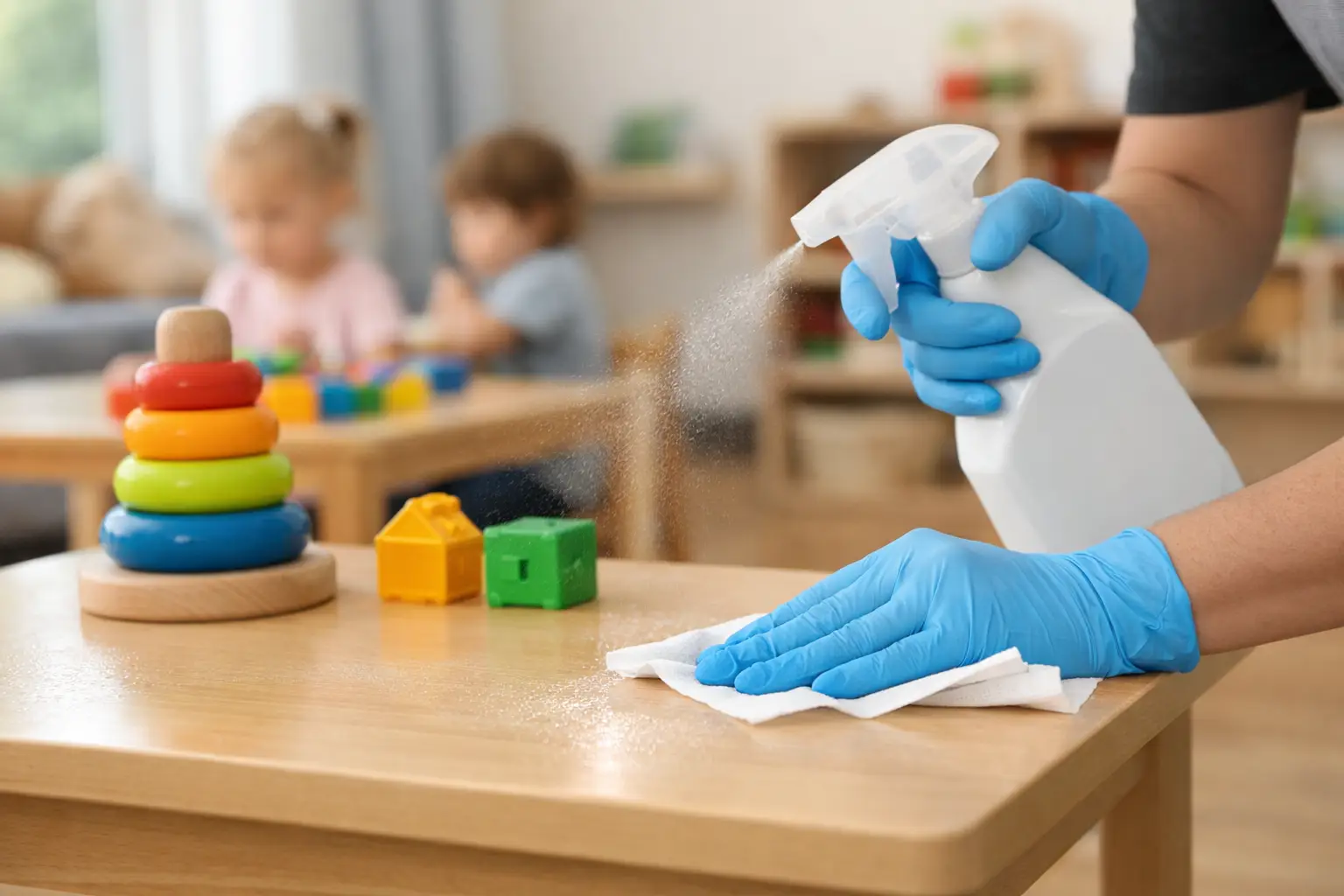
A daycare can look clean at 8:00 a.m. and still need attention by midmorning. A shared block, a classroom door handle, or a changing table can pass through many small hands in just a few hours. That is why the question, how often should daycare be sanitized, cannot be answered with one nightly cleaning shift.
For most centers, sanitation needs to happen throughout the day at the moments when germs are most likely to transfer. A dependable schedule combines immediate staff response, routine between-use sanitation, daily detailed cleaning, and a documented professional cleaning plan. The goal is not to make a facility smell strongly of chemicals. It is to reduce contamination in a safe, consistent way while keeping classrooms ready for children, staff, and parents.
How Often Should Daycare Be Sanitized?
High-touch surfaces should be sanitized several times a day and whenever they are visibly soiled or used in a way that creates a contamination risk. Items and surfaces used for eating, toileting, diapering, or mouthing require more frequent attention than a bookshelf or wall display.
A practical daycare sanitation schedule usually works in layers. Staff handle immediate needs during the day, such as sanitizing a table after snacks or cleaning a changing surface after every use. Classroom touchpoints receive attention between activity periods or at least several times during a full-day program. A trained commercial cleaning team handles the more detailed daily work after closing, including floors, restrooms, waste areas, and overlooked high-contact surfaces.
Frequency should increase when illness is circulating, enrollment is high, classrooms have younger children, or a center has long operating hours. An infant room, for example, needs a more intensive schedule than a room where older children spend much of the day in structured activities. The right plan is based on how the space is actually used, not a generic checklist copied from another facility.
The Difference Between Cleaning, Sanitizing, and Disinfecting
These terms are often used interchangeably, but they serve different purposes. Cleaning removes dirt, food residue, dust, and many germs from a surface. Sanitizing reduces germs to a safer level on surfaces such as tables, toys, and food-contact areas. Disinfecting uses an approved product to kill or inactivate a broader range of germs on hard, nonporous surfaces.
The order matters. A disinfectant cannot work as intended when applied over visible soil or spilled food. Surfaces need to be cleaned first, then treated with the appropriate sanitizer or disinfectant according to the product label. That includes the required contact time, which is the amount of time the surface must remain wet.
For daycare operators, this is more than a technical distinction. Rushed cleaning can leave behind residue, miss contact time, or use a product on a surface where it is not appropriate. A site-specific plan helps staff know what product to use, where to use it, and what must happen after a spill, diaper change, meal, or illness-related incident.
What Needs Attention During the Day
Daycare staff should not have to stop programming every few minutes for a full classroom reset. But the most frequently touched and highest-risk surfaces need a clear, realistic routine. The following areas typically require attention multiple times each day or between uses:
- Meal and snack tables, chairs, high chairs, and food-preparation surfaces
- Changing tables, toilet seats, flush handles, restroom sinks, and faucet handles
- Classroom door handles, cabinet pulls, light switches, railings, and shared tablets
- Frequently mouthed toys, sensory-play materials, and shared activity supplies
- Cots, nap mats, and bedding areas between children or according to the center's laundering procedure
- Entry points, reception counters, sign-in stations, and common-area seating
Some surfaces need immediate response rather than a scheduled time slot. Vomit, blood, urine, feces, and other bodily-fluid incidents require trained handling, appropriate personal protective equipment, and the correct disinfecting procedure. The affected area should be controlled quickly so children and staff do not walk through or touch it before it is addressed.
Soft surfaces deserve attention as well. Upholstered seating, rugs, fabric toys, and carpets do not always need daily disinfecting, but they need routine vacuuming, spot response, and scheduled deep cleaning. If a classroom carpet has recurring spills or frequent floor play, waiting until it looks dirty is usually too late.
Build a Schedule Staff Can Actually Follow
The best sanitation plan is one that fits the rhythm of the center. If the schedule is too complicated, staff will understandably prioritize supervision and child care over paperwork. Instead, build sanitation into natural transition points: after meals, after restroom breaks, after messy activities, before nap time, and at closing.
A written room-by-room scope is especially useful. It should identify the surface, the expected frequency, the responsible role, the approved product, and any special instructions. For example, a classroom checklist may require staff to sanitize tables after each meal while the evening cleaning team cleans and disinfects restroom fixtures, removes trash, mops floors, and addresses touchpoints throughout the building.
Documentation is not about creating busywork. It provides accountability when a parent raises a concern, a staff member is absent, or an inspection occurs. It also exposes gaps. If a sign-in tablet is routinely missed because it is outside the classroom, the checklist makes that issue visible before it becomes a recurring complaint.
Daily closing cleaning is still essential
Even with strong daytime habits, a daycare needs a thorough cleaning after children leave. Closing service should include detailed restroom cleaning and disinfection, floor care, trash removal, cleaning of classroom surfaces, and attention to shared spaces such as lobbies, staff break areas, and offices.
This is where many facilities run into trouble with inconsistent vendors. A crew may empty trash and vacuum, but miss baseboards near handwashing stations, fingerprints on interior glass, buildup around restroom fixtures, or residue under classroom tables. Those details affect both hygiene and parent perception.
A commercial cleaning partner should work from a documented scope rather than assumptions. At CEECEE Commercial Cleaning, daycare cleaning plans are tailored to the center's layout, enrollment, operating hours, and highest-use areas, with quality checks designed to catch missed details before they become a pattern.
When to Increase Sanitizing Frequency
A standard schedule is a baseline, not a ceiling. There are times when a daycare should increase its cleaning and sanitizing frequency. Illness notices, seasonal respiratory viruses, stomach-related symptoms, muddy weather, construction dust, and special events can all change the needs of the facility.
For example, if several children in one classroom are out sick, that room may need more frequent attention to shared toys, door hardware, restroom surfaces, and tables. If a center hosts an evening parent event, the lobby, entry glass, restrooms, and sign-in areas may need a second service before or after the gathering.
Communication matters during these periods. The director, lead teachers, and cleaning provider should agree on what changed, what extra work is needed, and when the normal schedule can resume. A vague request to “clean more” often leads to uneven results. A specific updated scope produces a more reliable outcome.
Common Gaps That Undermine a Good Daycare Cleaning Plan
Most daycare sanitation problems are not caused by a lack of effort. They happen because responsibility is unclear, supplies are stored too far from where they are needed, or the cleaning plan focuses only on what is easy to see.
One common gap is treating toys as a single category. Plastic blocks, fabric dolls, outdoor play equipment, and electronic learning devices need different handling. Another is overlooking shared staff areas. Breakroom handles, staff restrooms, time clocks, and office phones can bring germs back into classroom spaces.
Product use is another frequent issue. Staff should never guess at dilution ratios, mix chemicals, or use products beyond their labeled purpose. Keep safety data, product instructions, and training procedures accessible. For licensed centers in New Jersey, the center should also make sure its procedures align with applicable state requirements and any direction from local health authorities.
A Sanitation Plan Should Protect Operations, Not Interrupt Them
A well-run daycare sanitation program supports the work your teachers are already doing. It gives staff clear expectations, keeps high-risk tasks from being overlooked, and gives families confidence that the facility is managed with care.
If your North Jersey daycare needs a more dependable after-hours cleaning plan, CEECEE Commercial Cleaning can provide a free walkthrough and customized proposal built around your classrooms, traffic patterns, and operating schedule.
Call (917) 837-6499 or email info@ceeceecleaning.com