How to Disinfect Gym Equipment Without Disrupting Members
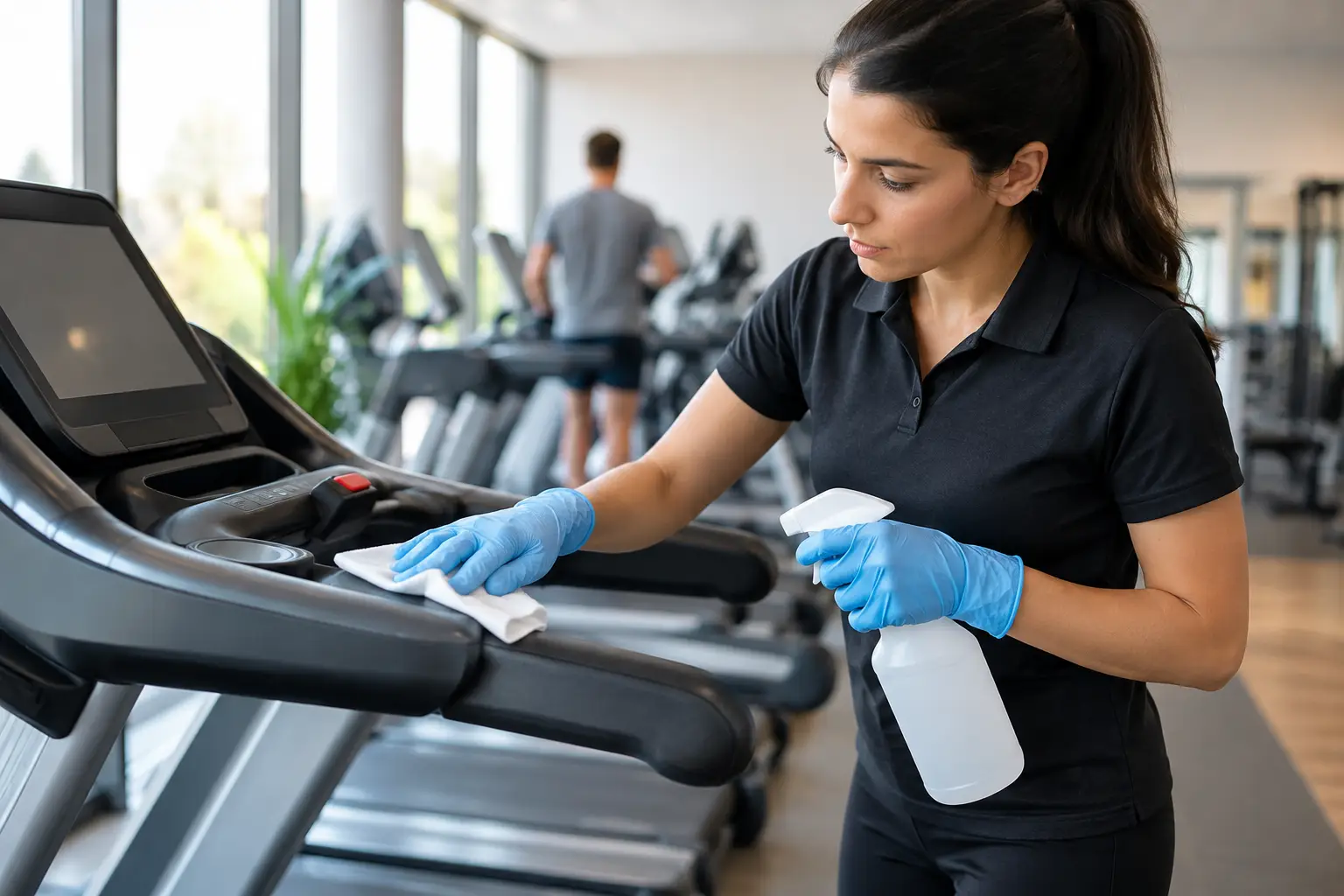
A member finishes a sweaty treadmill session, wipes the console with a dry paper towel, and moves on. Ten minutes later, another member uses the same machine. If that is the only cleaning step between users, your facility has a visible gap in its hygiene program - and members notice those gaps quickly.
Knowing how to disinfect gym equipment is not just about putting wipe dispensers around the floor. It requires the right products, enough dwell time, clear staff responsibilities, and documented follow-through. For gym owners and facility managers, consistency protects member confidence, supports a cleaner workout environment, and prevents your team from scrambling when a complaint reaches the front desk.
Cleaning and disinfecting are not the same job
A disinfectant is not a shortcut around cleaning. Sweat, body oils, dust, skin cells, chalk, and residue can sit on equipment surfaces and reduce a disinfectant's ability to work as intended. Cleaning removes that visible soil. Disinfecting is the separate step that uses an appropriate product to reduce germs on a cleaned surface.
This distinction matters most on high-touch equipment. Handles, adjustment pins, dumbbells, benches, cardio controls, locker handles, touchscreens, drinking fountain buttons, and bathroom fixtures receive repeated contact all day. A spray-and-walk-away routine may look active, but it often misses the product label's directions and contact time.
Start by reviewing each chemical label and the equipment manufacturer's care instructions. The disinfectant must be appropriate for the surface and used exactly as directed. Some products can damage rubber, vinyl, clear plastic, touchscreen coatings, or electronic components if they are sprayed directly or left on too long.
How to disinfect gym equipment correctly
A dependable process is simple enough for staff to follow during a busy shift and detailed enough to stand up to inspection. The order matters.
Remove soil first
Use a clean microfiber cloth or disposable towel to remove sweat, dust, smudges, and visible debris. For benches, mats, machine seats, and handles, this may require a cleaner approved for that material before disinfection begins.
Do not use one dirty cloth across the entire fitness floor. A color-coded microfiber system helps staff keep restroom cloths, general surfaces, and equipment cloths separate. Change cloths frequently, especially after cleaning visibly soiled surfaces.
Apply the disinfectant safely
Apply the product according to the label. For many machines, the safer method is to apply disinfectant to a cloth first rather than spraying directly onto a console, control panel, or electrical opening. The surface should be visibly wet, not merely wiped with a barely damp towel.
Pay close attention to the areas hands actually touch: grips, buttons, seat adjustments, weight stack pins, dumbbell handles, cable attachments, railings, and stretching equipment. Do not forget less obvious contact points such as medicine ball handles, resistance bands, locker latches, and studio door push bars.
Respect the contact time
Every disinfectant has a required contact time, sometimes called dwell time. That is the period the surface needs to remain wet for the product to perform as labeled. If a team member applies a product and immediately wipes it dry, the disinfection step may not be effective.
Contact times vary by product. Your written procedures should state which product is used on each surface type and how long it must remain wet. Train staff on that expectation rather than assuming they know it.
Allow surfaces to dry when required
In many cases, the surface should air dry after the required contact time. If the product instructions allow wiping after the dwell time, use a clean cloth. Equipment should never be returned to member use while excessively wet or slippery.
This is where practical judgment matters. A disinfectant that works well on a locker room counter may not be suitable for a treadmill console or leather-style upholstery. One product for every surface is convenient, but it is not always the right answer.
Set the right cleaning frequency for each zone
The fitness floor is not a single cleaning zone. Equipment use, traffic patterns, class schedules, and member behavior all affect how often surfaces need attention.
High-touch cardio equipment, free weights, benches, cable handles, and studio equipment deserve frequent attention throughout operating hours. Restrooms, locker rooms, water stations, front-desk touchpoints, and entry doors also need scheduled service because they receive consistent traffic from multiple people.
A practical plan usually combines three layers of responsibility:
- Members wipe down equipment after use with clearly placed, stocked supplies.
- On-site staff complete scheduled rounds to disinfect high-touch equipment and common touchpoints.
- A commercial cleaning team completes detailed cleaning and disinfection during off-hours or lower-traffic periods.
Member wipe stations are useful, but they should not be the foundation of your program. Some members will skip them, rush through the process, or use too little product. Staff rounds and professional service close that gap.
For a smaller training studio, staff may disinfect the floor several times during the day and complete a deeper reset after closing. A larger fitness center with heavy evening traffic may need zone-based rounds every hour, plus extra attention before and after group classes. The right frequency depends on your occupancy, equipment density, hours, and available staffing.
Protect equipment while protecting people
Gym equipment is expensive, and poor chemical practices can create avoidable damage. Bleach solutions, harsh degreasers, or products not approved for the material may discolor upholstery, dry out rubber grips, corrode metal, or cloud display screens.
Keep safety data sheets available for every chemical used in the facility. Store chemicals away from members, label secondary containers correctly, and train staff never to mix products. Proper ventilation matters as well, particularly in enclosed locker rooms, studios, and lower-level fitness areas.
Floor safety deserves equal attention. Sweat around cardio equipment, disinfectant overspray, and damp locker room floors can create slip hazards. Use controlled application methods, place caution signs when needed, and address wet floors promptly. A clean facility should not create a new risk while solving another one.
Build a checklist your team can actually use
A cleaning checklist only works when it reflects the way your gym operates. A generic form with vague tasks such as “sanitize fitness floor” gives staff too much room for interpretation. A site-specific checklist identifies each area, the service required, the frequency, and the person responsible.
For example, your cardio checklist may specify treadmill rails, speed controls, incline buttons, screens, cup holders, and emergency stop cords. The free-weight section may list dumbbell handles, kettlebells, bench pads, adjustment levers, racks, and cable attachments. Locker room procedures should separately cover handles, benches, shower controls, dispensers, toilets, sinks, and floors.
Add verification to the process. Staff should initial or digitally log completed rounds, and supervisors should conduct routine quality checks. If a dispenser is empty, a machine is damaged, or an area receives unusually heavy use, the issue needs a clear path for reporting and correction.
That accountability is what separates a cleaning plan from a pile of supplies. When a member reports a concern, you should be able to confirm what was cleaned, when it was cleaned, and what follow-up occurred.
Watch the supplies members rely on
Disinfecting equipment becomes difficult when wipe dispensers are empty, paper towel stations are neglected, or trash cans are overflowing. These details shape a member's impression before anyone performs a formal inspection.
Place supplies where people naturally transition between equipment zones, not only at the front desk. Check dispensers during each staff round, and use durable signage with direct instructions. “Wipe equipment after use” is clearer than a long list of rules. If your facility provides spray bottles, make sure labels are visible and bottles are maintained correctly.
Also consider the waste stream. Used wipes, towels, and disposable cleaning materials should be removed often enough that bins do not overflow near workout areas. This is a small operational detail with a large impact on how well the facility is perceived.
When a professional cleaning partner makes sense
Internal staff can handle many daily touch-ups, but busy facilities often struggle to complete detailed work consistently. Closing duties get rushed, schedules change, and the same hard-to-reach areas are missed week after week. That is where a documented commercial gym cleaning plan can provide structure.
For gyms and fitness facilities in Newark and across North Jersey, CEECEE Commercial Cleaning develops site-specific scopes that account for equipment types, traffic patterns, locker rooms, studios, and operating hours. Regular quality inspections and clear communication help ensure that concerns are addressed before they become member complaints.
If your current process depends on whoever happens to be working that shift, schedule a free walkthrough and request a customized cleaning proposal. A clear plan gives your team a cleaner floor, your members more confidence, and your operation one less detail to chase.
Call (917) 837-6499 or email info@ceeceecleaning.com