How to Maintain Commercial Carpets at Work
A carpet can look worn out long before it is actually ready for replacement. In a busy office, medical practice, daycare, or multi-tenant property, the usual cause is not age. It is tracked-in soil, delayed spill response, and a maintenance plan that changes from week to week. Knowing how to maintain commercial carpets protects a major facility investment while helping your space look managed, clean, and ready for the people who walk through it.
For facility managers, carpeting is often one of the first details visitors notice and one of the last items addressed when cleaning routines get rushed. Dark traffic lanes near entrances, stained conference rooms, and lingering odors can affect how tenants, clients, patients, and employees view the entire property. A consistent carpet care plan prevents those problems from becoming permanent.
How to Maintain Commercial Carpets With a Realistic Plan
Commercial carpet maintenance is not a single deep-cleaning appointment. It is a layered process: daily soil removal, prompt attention to spots, interim cleaning where traffic is highest, and periodic extraction. The right frequency depends on the facility, foot traffic, weather exposure, and the type of carpet installed.
A law office with controlled entry may need a different schedule than a daycare, gym, or medical office with steady movement throughout the day. In North Jersey, rain, snow, road salt, and wet leaves also create seasonal pressure on entry areas. A plan that works in July may not be enough in January.
The key is to document the routine instead of relying on someone to notice the carpet only after it looks bad. Your cleaning scope should identify high-traffic zones, cleaning frequencies, responsible parties, and how concerns are reported and resolved.
Start with thorough vacuuming
Vacuuming is the foundation of carpet maintenance, not a minor finishing task. Dry soil has sharp edges. As people walk over it, the particles work into carpet fibers and gradually create the dull, matted appearance often mistaken for permanent wear.
High-traffic paths should be vacuumed daily, especially entrance corridors, reception areas, hallways, and paths between desks or treatment rooms. Lower-traffic offices may need vacuuming several times per week, depending on occupancy. The goal is to remove soil before foot traffic grinds it deeper into the pile.
Equipment and technique matter. A commercial-grade vacuum with strong suction, a maintained filter, and a properly adjusted brush height will perform far better than an overfilled or poorly maintained machine. Vacuum slowly enough to allow the equipment to collect embedded debris, and make multiple passes in visible traffic lanes.
Control dirt before it reaches the carpet
The most cost-effective way to care for carpet is to stop outdoor debris at the door. Entry matting should cover both the exterior approach and the interior entry area, giving people enough steps to wipe moisture and grit from their shoes.
Mats need their own cleaning schedule. When they are saturated with dirt or moisture, they stop doing their job and can transfer soil back to the carpet. During wet weather, increase mat vacuuming and replacement or rotation as needed. Keep an eye on transition points where mats end and carpet begins, since those areas often develop the first visible traffic lanes.
For facilities with public entrances, consider how visitors actually move through the building. If everyone enters through one door and turns immediately toward reception, that turning point deserves extra attention. A site-specific plan accounts for real walking patterns, not just a generic floor map.
Respond to Spills Before They Become Stains
Spills are unavoidable. The difference between a minor incident and a permanent mark is usually the response time and method. Coffee, food, ink, drinks, and tracked-in moisture should be addressed as soon as possible using products appropriate for the carpet fiber and the type of spill.
Blot, do not scrub. Scrubbing can spread the spill, distort carpet fibers, and push residue further down into the backing. Work from the outer edge toward the center with a clean white cloth so color transfer is easier to see. Avoid over-saturating the carpet, particularly in office suites or areas where drying time is limited.
Not every spot should be treated the same way. An all-purpose cleaner may leave residue that attracts more soil, while the wrong chemical can set certain stains or damage carpet color. Your cleaning provider should have a clear spot-response process, including when staff should escalate an issue rather than applying more product.
In medical and dental settings, spills may also involve safety or compliance considerations. Those incidents should follow the facility's established procedures, with carpet treatment handled only after the area is made safe.
Keep a simple reporting process
A maintenance plan fails when employees do not know how to report a spill or when reports disappear into a general inbox. Give staff a straightforward point of contact and ask the cleaning team to document recurring issues.
For example, repeated drink stains outside a conference room may point to a missing waste station, inadequate entry matting, or a need for more frequent service in that area. Reporting is not only about fixing today's spot. It helps identify the conditions creating tomorrow's problem.
Schedule Interim Cleaning and Deep Extraction
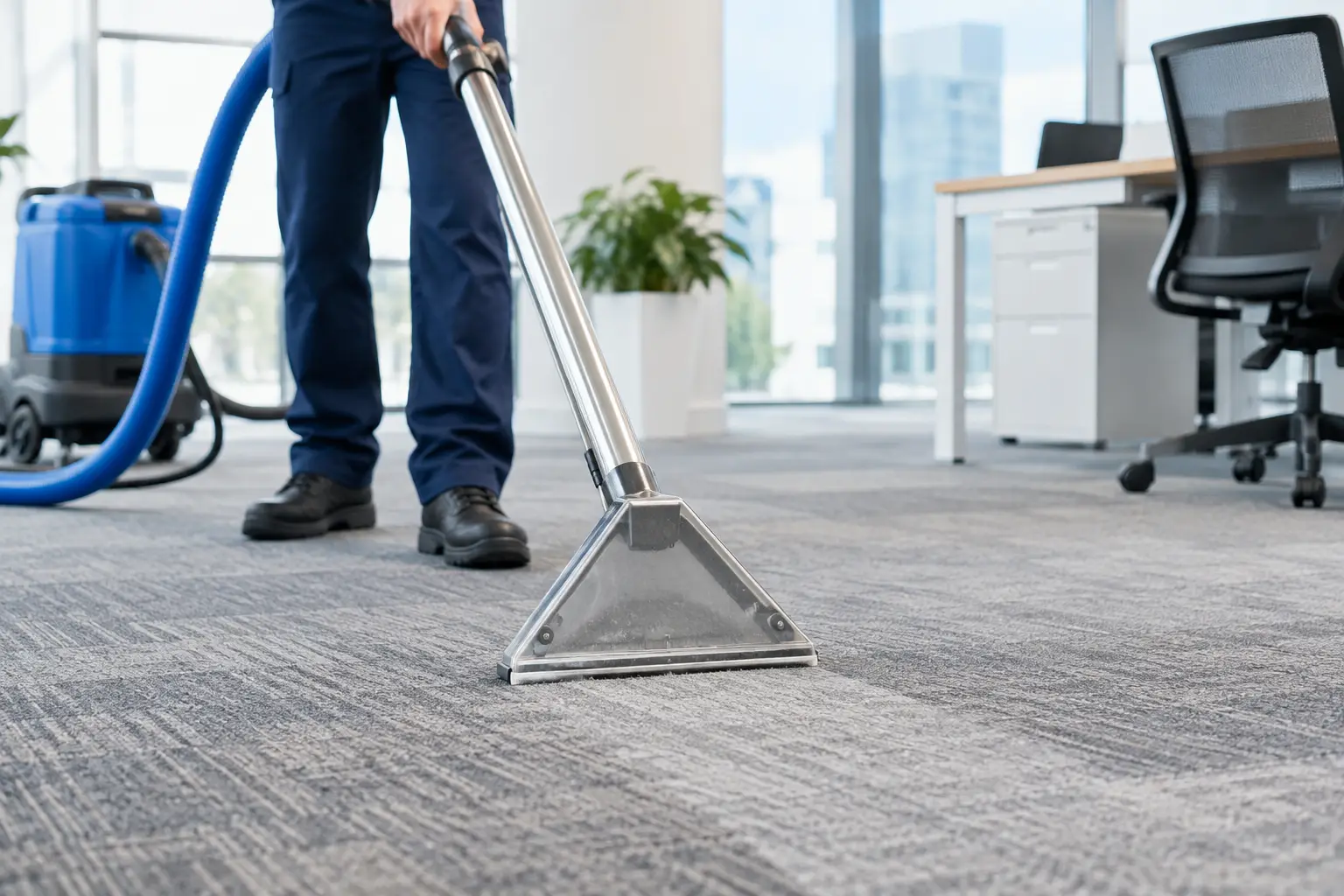
Vacuuming and spot removal handle daily soil, but they do not remove all of the buildup below the surface. Commercial carpet needs periodic restorative cleaning to remove embedded soil, residues, and odors that routine maintenance cannot reach.
Interim methods, such as low-moisture encapsulation cleaning, can be useful in busy facilities because they often allow for faster drying and less disruption. They are a practical option for traffic lanes between scheduled deep cleanings. However, interim cleaning is not a replacement for periodic hot-water extraction or another manufacturer-approved restorative method.
The right interval depends on conditions. A quiet professional office may need deep extraction once or twice a year. A high-traffic medical office, daycare, gym, or dealership may need it more frequently. Waiting until the carpet visibly looks dirty is rarely the best trigger, because soil damage may already be developing below the surface.
When scheduling extraction, plan around occupancy. Cleaning after business hours or before a lower-traffic day gives the carpet time to dry. Adequate drying matters because wet carpet can create odor concerns, attract foot traffic soil, and disrupt normal operations. Your provider should explain the expected drying window and place protective signage while work is underway.
Protect High-Traffic Areas From Premature Wear
Some parts of a facility will always receive more traffic than others. Entrances, elevators, hallways, reception desks, break rooms, and shared work areas need more frequent attention than private offices. Treating every square foot on the same schedule can waste resources in quiet spaces while allowing heavy-use areas to decline.
A practical carpet program separates the building into zones. High-traffic zones receive daily vacuuming, regular spot inspections, and more frequent interim cleaning. Moderate-use areas follow a routine schedule. Low-traffic rooms are still inspected, but may not require the same level of service.
Pay attention to office chairs and furniture, too. Rolling chairs can crush fibers and create narrow wear paths. Use appropriate chair mats where they make sense, and schedule periodic furniture movement during restorative cleaning so hidden edges and perimeter areas are not ignored year after year.
Use Inspections to Catch Small Problems Early
Carpet care works best when someone is checking results, not simply checking a task off a list. During inspections, look for traffic lanes, recurring spots, odors, frayed seams, loose edges, moisture concerns, and areas where carpet is becoming matted.
This is where accountability matters. If a stain returns after cleaning, the question is not whether the room was serviced. The question is why the stain returned. It may be residue left in the fiber, a spill that reached the backing, a source that has not been addressed, or a cleaning method that needs adjustment.
A documented inspection process creates a record of conditions and follow-up actions. It also gives facility managers a clear way to discuss priorities with their cleaning partner, rather than waiting until a visitor comments on the appearance of the floor.
Know When Cleaning Is Not Enough
Professional cleaning can improve appearance and extend carpet life, but it cannot reverse every form of damage. Worn fibers, bleach spots, burns, delamination, and severe water damage may require repair or replacement. A reliable cleaning provider should be candid about that distinction rather than repeatedly treating a problem that will not improve.
That said, replacement decisions should be based on a real assessment, not one bad traffic lane. In many cases, improved vacuuming, better entry control, targeted interim cleaning, and a properly timed extraction can make a substantial difference.
For Newark-area facility managers, CEECEE Commercial Cleaning builds carpet care into a site-specific cleaning plan, with clear expectations, routine quality checks, and communication when conditions change. Schedule a free walkthrough to identify the traffic patterns and maintenance frequency that make sense for your facility.
Call (917) 837-6499 or email info@ceeceecleaning.com