How to Sanitize Childcare Toys Without Missed Steps
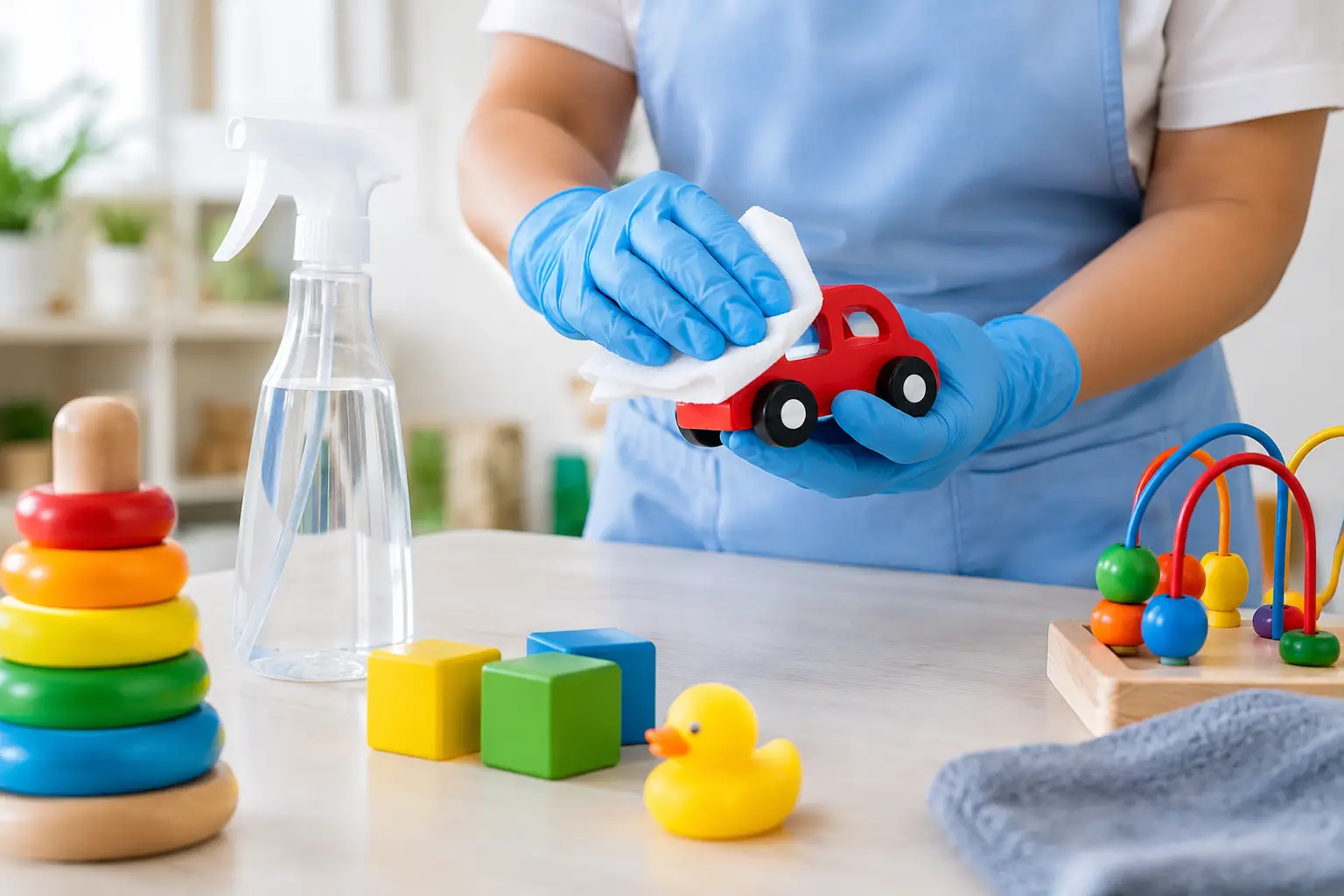
A toy bin can look orderly at pickup time and still create a sanitation problem by morning. Blocks pass through dozens of hands, toy phones touch faces, and infant toys regularly end up in mouths. When staff are managing arrivals, meals, naps, classroom transitions, and parent communication, toy sanitation can become an assumed task instead of a verified one.
To sanitize childcare toys reliably, a daycare needs more than a spray bottle and good intentions. It needs a clear process based on the type of toy, how children use it, the age group in the room, and the product directions. Most importantly, staff need a routine that makes completed work visible to the next shift and to management.
Cleaning, Sanitizing, and Disinfecting Are Different Jobs
These terms are often used interchangeably, but they describe different parts of a healthy childcare environment.
Cleaning removes visible soil, food residue, dust, and many germs from a surface. A toy covered in dried paint or snack residue must be cleaned before a sanitizer or disinfectant can work as intended. Applying a product over soil may make the toy smell clean, but it does not produce a dependable result.
Sanitizing reduces germs on a cleaned surface to levels considered safer under public health standards. In most classrooms, sanitizing is the regular response for hard, nonporous toys that children handle throughout the day.
Disinfecting uses a stronger process to kill a broader range of germs. It may be appropriate after exposure to bodily fluids, during a communicable illness concern, or when required by your center's policy or local health guidance. Disinfecting is not automatically better for every object or every moment. It often requires longer contact time, careful ventilation, and strict adherence to label instructions.
The right choice depends on the situation. A plastic stacking cup used during normal play may need routine cleaning and sanitizing. A toy contaminated by saliva, vomit, blood, or another bodily fluid requires immediate removal from use and a response consistent with your established exposure procedure.
Build a Toy Sanitation Schedule Around Actual Use
A generic end-of-day checklist is not enough for a busy childcare center. Toys do not all carry the same exposure level, and classrooms do not all operate the same way. Infant rooms, for example, require more frequent attention because mouthing is developmentally normal.
A workable schedule identifies when toys are cleaned and sanitized, who is responsible, and where the completion is recorded. The schedule should cover daily closing tasks, between-use tasks, and immediate-response tasks.
For routine operations, focus on these practical categories:
- Mouthed toys should be removed from circulation as soon as a child is finished with them. Place them in a clearly labeled “used toys” bin until they can be cleaned and sanitized.
- Shared hard-surface toys such as blocks, pretend-play items, toy vehicles, and manipulatives should be addressed on a defined daily schedule, with added attention during illness concerns.
- High-touch classroom items including activity tables, toy shelves, play kitchens, and sensory-table tools should be included in the room's cleaning plan, not treated as separate afterthoughts.
- Soft toys and fabric items need a separate process. If they are washable, launder them according to the manufacturer’s instructions. If they cannot be effectively cleaned, consider whether they belong in a high-use classroom at all.
The schedule should also account for enrollment patterns. A part-time classroom may not need the same cadence as a full-day infant room. Conversely, a center with extended hours may need a mid-day toy rotation so used items do not remain available too long.
Choose Products and Methods That Match the Toy
The product label is part of the procedure. It tells staff where a product may be used, whether a surface must be pre-cleaned, how long it must remain wet, and whether rinsing is required. Skipping contact time is one of the most common reasons sanitation programs fail quietly.
Use products appropriate for childcare settings and follow the manufacturer’s directions exactly. Staff should never mix chemicals, increase concentrations without instructions, or use one product as a substitute for another. More chemical does not mean more protection. It can leave residue, damage toys, create odors, or introduce unnecessary safety concerns.
Hard, nonporous toys are generally the easiest to manage. After removing visible soil, staff can apply the approved solution, keep the surface wet for the required contact time, and allow it to air dry or rinse when the label requires it.
Some small toys may be suitable for a designated dishwasher or other approved mechanical washing process. That can improve consistency when the equipment, water temperature, detergent, and drying process are appropriate. It is not a shortcut for every toy. Items with batteries, electronics, glued parts, or manufacturer restrictions need another method.
Porous toys require more judgment. Stuffed animals, dress-up clothes, dolls with fabric bodies, and foam items can trap moisture and may not tolerate routine chemical application. A washable rotation helps. Keep enough duplicate items on hand so staff can remove a toy for laundering without leaving a classroom under-equipped.
Make the Used-Toy System Easy to Follow
The strongest sanitation plan will still break down if employees have nowhere to put used toys during a busy day. A clearly marked container in each classroom solves a basic operational problem: it separates toys that are ready for children from toys awaiting processing.
The container should be easy for teachers to reach but kept out of children's access. Staff need clear guidance that toys placed in the bin do not return to the play area until the full cleaning and sanitizing process is complete.
Toy rotation is especially helpful in infant and toddler rooms. Put out a manageable number of toys, remove items as they are mouthed, then replenish from a clean supply. This reduces confusion and prevents staff from trying to sanitize a large, mixed collection during active classroom time.
Avoid creating a system that is too complicated to sustain. If staff need to decode color charts, hunt for supplies in another wing, or rely on verbal handoffs, steps will be missed. Store approved supplies securely but close to the point of use, and keep the written procedure simple enough to follow during a real shift.
Train for the Details That Get Missed
New employees may understand that toys need to be sanitized without understanding how to do it correctly. Training should cover the full sequence: remove the toy from use, clean off soil, apply the correct product, meet the contact time, complete any required rinse or air-dry step, and return the toy only when it is ready.
It should also explain what to do when a toy is damaged. Cracked plastic, peeling paint, torn fabric, exposed stuffing, and loose parts are not just maintenance issues. They create surfaces that are difficult to clean and may introduce safety hazards. Staff should know who to notify and where to place damaged items until they are removed or replaced.
A short demonstration is more effective than handing someone a binder. Have employees sanitize a sample toy while a supervisor observes. This quickly reveals misunderstandings about dilution, dwell time, rinsing, or storage.
Document the Process Without Creating Busywork
Documentation is not about adding paperwork for its own sake. It gives directors and facility managers a way to confirm that routine work happened, identify recurring gaps, and respond before a parent complaint or licensing inspection exposes the issue.
A simple classroom log can record the date, room, task completed, staff initials, and any exceptions such as damaged toys removed from use or a product supply issue. Supervisors should review logs regularly rather than filing them away. A blank log, repeated late entries, or the same unresolved note each week points to a process problem that needs attention.
Quality checks matter here. A quick walkthrough can confirm whether used-toy bins are being used, whether supplies are available, whether toys are visibly clean, and whether classroom staff understand the current procedure. The goal is accountability with support, not catching people doing something wrong.
For centers that use an outside cleaning partner, clarify the handoff. Classroom staff typically manage toys during operating hours because they know which items were mouthed or contaminated. A commercial cleaning team can support the documented plan by cleaning classroom surfaces, floors, restrooms, common areas, and designated toy-cleaning tasks after hours. The responsibilities should be written down so no one assumes the other party handled it.
When Illness Is Circulating, Increase Oversight
When a classroom has increased absences or a reported illness, routine procedures may need adjustment. Follow your center policy and guidance from the appropriate health authorities. This may mean increasing attention to high-touch items, changing toy rotation frequency, temporarily removing difficult-to-clean shared materials, or using a disinfecting process where appropriate.
Communication matters as much as the product used. Tell staff what has changed, why it changed, and when the enhanced procedures will be reviewed. Vague instructions such as “clean more often” create uneven results. Clear instructions create confidence and consistency.
For daycare leaders in Newark and across North Jersey, a documented toy sanitation process helps protect children, support staff, and demonstrate that the center is being managed with care. CEECEE Commercial Cleaning can help evaluate after-hours classroom cleaning responsibilities and build a site-specific plan that supports your team's daily routines. Schedule a free walkthrough or request a customized proposal, then give your staff a process they can carry out confidently every day.
Call (917) 837-6499 or email info@ceeceecleaning.com