Medical Cleaning vs Standard Janitorial: Key Differences
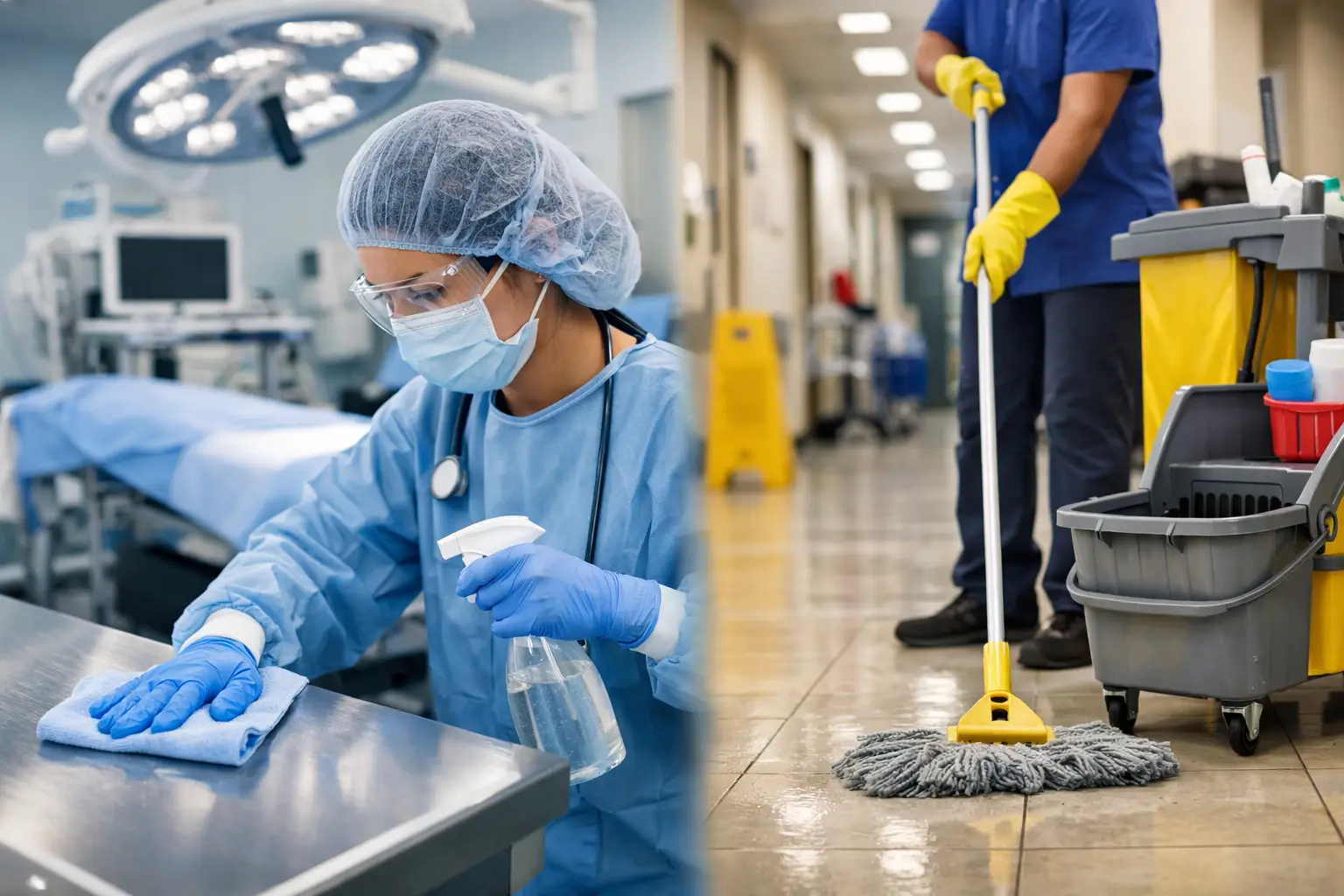
A waiting room can look clean at 7:00 a.m. and still fall short of what a medical or dental practice needs. The difference is not simply how often floors are mopped or trash is removed. Medical cleaning vs standard janitorial comes down to how the work is planned, documented, communicated, and performed around areas where patients, staff, and visitors may face greater hygiene and safety concerns.
For practice administrators and facility managers, choosing the wrong scope can create more than an appearance problem. Missed touchpoints, unclear waste procedures, inconsistent restroom care, or a crew that does not understand clinical traffic patterns can affect patient confidence and add another vendor issue to your day. The right approach starts with understanding what each service is designed to do.
Medical Cleaning vs Standard Janitorial: The Core Difference
Standard janitorial service is designed to maintain the general cleanliness and presentation of a commercial facility. It commonly includes emptying trash, vacuuming, mopping hard floors, cleaning restrooms, dusting reachable surfaces, wiping breakrooms, and maintaining entryways. For offices, churches, dealerships, and many shared commercial spaces, this type of recurring service can be the appropriate foundation.
Medical cleaning uses many of those same tasks, but applies a more site-specific process to a medical, dental, therapy, or outpatient setting. The cleaning plan gives added attention to high-touch surfaces, treatment-room turnover needs, restroom conditions, reception areas, staff spaces, and the separation of cleaning tasks or tools when needed. It also places greater value on documented procedures, staff training, and clear escalation when an issue falls outside the agreed scope.
This does not mean every medical office needs the same level of service. A small administrative suite within a healthcare organization has different needs than a busy dental office with multiple operatories. The correct scope should reflect the services performed on site, patient volume, layout, hours, flooring, and the responsibilities already handled by clinical staff.
Why a Clean-Looking Facility Is Not Always Enough
General appearance matters in every business, but it carries particular weight in patient-facing environments. Streaked glass at the entrance, full restroom dispensers, residue around a reception desk, or debris in corners can make patients question the care behind the scenes. Those details are also often the first things staff notice when cleaning is inconsistent.
In a medical setting, the focus extends beyond visible dirt. Frequently touched points such as door handles, light switches, chair arms, counters, check-in surfaces, restroom fixtures, and shared equipment areas may require scheduled attention based on how the practice operates. A documented plan helps ensure these items are not cleaned only when someone remembers to mention them.
A cleaning company should also understand the limits of its role. Clinical staff typically retain responsibility for certain patient-care areas, instruments, regulated materials, and tasks governed by the practice's own protocols. A clear scope identifies what the cleaning team handles, what the practice handles, and how concerns are reported. That clarity prevents assumptions that can lead to missed work.
Training and Procedures Matter More in Medical Spaces
A standard janitorial team may be well prepared to care for offices and common areas, yet still need additional direction before working in a medical facility. Medical environments call for stronger awareness of cross-contamination risks, personal protective equipment requirements, chemical label instructions, and the order in which rooms and surfaces are cleaned.
The goal is not to make cleaning unnecessarily complicated. It is to make the process repeatable. For example, a crew may need separate supplies for restrooms and patient-care areas, a defined process for cleaning touchpoints, and instructions for notifying the site contact when they encounter a spill, damaged dispenser, unusual waste, or supply shortage.
Training should be paired with supervision. Even a detailed scope loses value if no one checks that it is being followed. Periodic inspections, written checklists, and direct follow-up give practice administrators a way to verify performance without walking the building each morning looking for missed details.
Disinfection Is Not Just Another Word for Cleaning
Cleaning and disinfection are related, but they are not identical steps. Cleaning removes visible soil and residue from a surface. Disinfection is a separate process that depends on using the appropriate product according to its label directions, including required contact time.
For a medical or dental office, the schedule and locations for disinfection should be discussed during the walkthrough. A reception counter may need regular attention after business hours, while certain treatment-room tasks may need to be completed by staff between patients. The plan should match the workflow rather than create confusion about who is responsible.
Avoid broad promises that a cleaning program can eliminate all risk. No cleaning provider can guarantee that. What a well-managed program can do is support a cleaner, more controlled facility through consistent procedures, appropriate products, documented expectations, and responsive communication.
Documentation Creates Accountability
One of the biggest practical differences between medical cleaning and basic janitorial work is documentation. In a high-traffic practice, verbal instructions can be forgotten, especially when staffing changes or office hours shift. A site-specific scope turns expectations into a working reference.
A useful medical cleaning plan may identify room-by-room tasks, service frequency, touchpoint priorities, floor-care requirements, restroom replenishment responsibilities, supply storage rules, and the process for reporting issues. It should also state what is excluded. If a task is outside the nightly scope, the client should know that before there is a problem.
Documentation benefits both sides. The facility team knows what to expect, and the cleaning team knows how the site operates. When an issue is reported, the conversation can focus on resolving it rather than debating whether the task was included.
At CEECEE Commercial Cleaning, this is part of The CEECEE Standard: a documented scope, regular quality checks, and communication that does not require clients to repeatedly chase their cleaning provider.
When Standard Janitorial May Be Enough
Not every healthcare-related property requires a specialized medical cleaning scope throughout the entire building. Standard janitorial may be appropriate for administrative offices, leasing offices, nonclinical common areas, or properties where patient care does not occur. It may also be sufficient when clinical staff manage all treatment-area cleaning under their own procedures and the janitorial team is assigned only to public and support spaces.
The key is not the name of the service. It is whether the scope addresses the actual risk and operating needs of the facility. A generic checklist may work for a quiet back-office suite, but it can leave gaps in a busy patient-facing practice.
Ask practical questions during the walkthrough. Which spaces receive the most traffic? What surfaces are touched repeatedly? Who handles treatment-room turnover? Are there different rules for waste, supplies, or access? Which complaints have occurred with previous vendors? The answers shape a plan that is useful instead of generic.
What to Look for in a Medical Cleaning Partner
Before selecting a provider, ask how they develop the scope for your facility and how they verify that work is completed. A good answer should include a walkthrough, site-specific instructions, a defined communication contact, and a process for addressing missed work.
Also ask how the company handles staffing continuity. Familiarity matters in medical and dental offices because each site has its own access procedures, room layouts, supply locations, and expectations. A provider should have a plan for training replacements and keeping site information current when a regular team member is unavailable.
Finally, pay attention to the questions they ask you. A cleaning partner that asks about patient flow, high-priority areas, building access, floor types, and your current pain points is more likely to build a workable program. One that offers the same checklist to every facility may not be accounting for the details that affect your staff and patients every day.
Build the Scope Around Your Facility
For medical and dental offices in Newark and surrounding northern New Jersey communities, the best answer is often a customized blend of recurring janitorial work and medical-focused procedures. Reception areas, restrooms, staff rooms, corridors, offices, and floors still need dependable routine care. Patient-facing and clinical-adjacent spaces may need more detailed instructions, closer inspection, and better coordination with the practice team.
A free walkthrough is the right place to identify those distinctions before service begins. It gives your team an opportunity to explain what has been missed in the past, clarify responsibilities, and establish a cleaning plan that protects the first impression your facility works hard to create. Request a customized proposal when you are ready for a cleaning program that is clear on paper and consistent in practice.
Call (917) 837-6499 or email info@ceeceecleaning.com