Medical Clinic Cleaning Example for NJ Practices
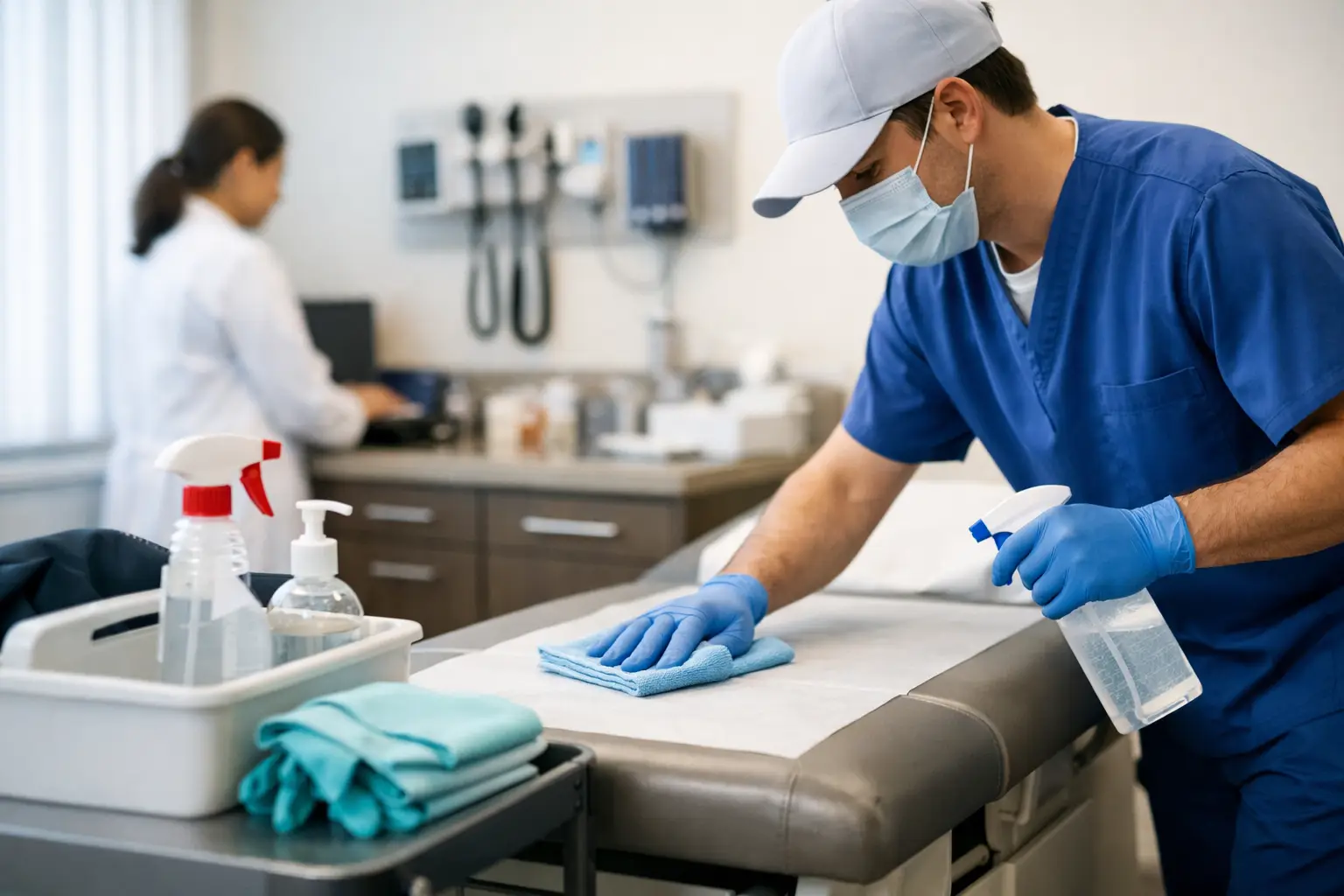
A missed fingerprint on the glass door is frustrating. A missed cleaning task in an exam room or restroom can create a much bigger concern for patients, staff, and the practice administrator responsible for the facility. This medical clinic cleaning example shows what a clear, workable cleaning plan looks like when it is built around the way a real practice operates.
For a medical office, cleaning is not simply about making the space look orderly after hours. It is about maintaining a predictable environment from the waiting room to the staff break area, while respecting patient flow, privacy, and the clinic's own infection-control procedures. The right scope should be specific enough that no one has to guess what gets cleaned, how often it happens, or who follows up when an issue is found.
Medical Clinic Cleaning Example: A Four-Exam-Room Practice
Consider a family medicine clinic in Essex County with four exam rooms, a reception desk, a waiting room, two restrooms, a small staff area, and administrative offices. The practice sees patients throughout the day and schedules commercial cleaning after closing, five nights per week.
Before service begins, the cleaning provider walks the site with the practice administrator. That walkthrough identifies traffic patterns, sensitive areas, surfaces that need special care, supply locations, access procedures, and concerns from the staff. Those details become a documented, site-specific scope of work rather than a generic checklist used for every building.
The clinic may need a different plan than a dental office, urgent care center, or specialty practice. A high-volume waiting room may require more frequent attention. A clinic with carpeted offices but hard flooring in patient areas needs a floor-care plan that addresses both. The goal is not to overclean every surface with the same product. It is to clean the right areas, at the right frequency, using methods approved for the surfaces and aligned with the practice's requirements.
Reception and waiting room
The reception area is where patients form their first impression, often before speaking to anyone. At each evening visit, the cleaner empties waste and replaces liners, removes visible debris, wipes and disinfects high-touch points according to product directions, and cleans glass entry doors and interior glass as needed.
High-touch points may include door handles, chair arms, check-in counters, pens provided by the practice, light switches, and payment-counter surfaces. The reception desk itself should be treated carefully. Staff documents, patient information, computers, and personal items should not be moved or handled unless the practice has given clear instructions.
Floors are vacuumed or swept, then damp mopped where applicable. Corners, baseboards, and the space beneath waiting-room chairs should not become a once-a-month surprise. These details are often where a facility starts to look neglected, even when the center of the floor appears clean.
Exam rooms and clinical support areas
Exam rooms require a clearly defined division of responsibility. In many practices, clinical staff handle between-patient disinfection and any cleaning related to patient care procedures. The evening cleaning team handles the tasks assigned in the service scope after the clinic closes.
For this example, the evening scope includes removing regular waste as directed, cleaning floors, wiping nonclinical high-touch surfaces, cleaning exterior cabinet fronts, spot-cleaning doors and walls, and addressing sinks or counters only where the practice has specified that work. The cleaning team does not handle sharps, regulated medical waste, biohazard materials, or items outside the agreed scope.
That boundary matters. A reliable provider should ask questions early instead of making assumptions about clinical areas. If a staff member reports a spill, an overflow, or a concern that requires a different response, the provider should communicate promptly and follow the facility's established procedure.
Restrooms and staff areas
Restrooms are one of the quickest ways to lose patient confidence. A restroom can look acceptable at 9:00 a.m. and need attention by midafternoon, especially in a busy practice. Evening service should include cleaning and disinfecting toilets, sinks, fixtures, partitions, dispensers, handles, and touchpoints; emptying waste; refilling agreed supplies; cleaning mirrors; and mopping floors.
For clinics with heavy patient traffic, the administrator may also schedule a daytime porter visit or a mid-day restroom check. It depends on the number of patients, restroom location, and whether staff have time to monitor supplies. A five-night-per-week cleaning schedule does not solve a daytime supply issue by itself.
The staff break area needs the same practical attention. Counters, tables, appliance exteriors, sink areas, and floors should be cleaned without interfering with personal food or belongings. Trash should be removed, but a cleaner should never make decisions about documents, containers, or items left on desks.
A Sample Cleaning Frequency Plan
A strong medical office plan separates nightly work from weekly and periodic tasks. This keeps the team focused on daily patient-facing details while ensuring less visible areas do not fall behind.
Each service visit: Waste removal, floor care, restroom cleaning, high-touch surface cleaning, entry glass spot cleaning, waiting-room detailing, and assigned exam-room tasks are completed and checked.
Weekly: The team may detail chair legs and undersides, vacuum upholstery where appropriate, clean baseboards in high-traffic areas, wipe interior glass more thoroughly, dust vents within reachable areas, and address buildup around restroom fixtures.
Monthly or as needed: This can include machine scrubbing hard floors, carpet extraction in administrative areas, detailed wall spot cleaning, high dusting, and treatment of recurring floor stains. The schedule should reflect actual use. A carpeted hallway near the entrance may need service more often during wet North Jersey weather than a low-traffic back office.
What Makes This Example Accountable
A checklist is useful, but it is not proof that the work was done well. The difference is inspection and follow-up. For this clinic, the supervisor conducts scheduled quality checks and reviews recurring findings with the practice contact. If restroom dispensers are repeatedly running low or dust is collecting near a particular air vent, the plan is adjusted before the issue turns into a complaint.
Communication should also be straightforward. The practice administrator needs one clear contact for requests, schedule changes, building access issues, and service concerns. A cleaning provider should not require repeated reminders to correct the same missed item.
At CEECEE Commercial Cleaning, this approach is part of The CEECEE Standard: a documented plan, consistent service, routine oversight, and practical communication with the people responsible for the facility. It is designed for practice administrators who need to know that the details are being managed without adding another vendor to their daily follow-up list.
Questions to Ask Before Approving a Clinic Cleaning Scope
Before choosing a provider, a practice administrator should be able to get direct answers to a few operational questions. Ask how exam rooms are handled, which tasks remain with clinical staff, and how the team responds if it encounters something outside the normal scope. Confirm the cleaning frequency for restrooms, patient areas, offices, and floors.
Also ask who performs inspections, how issues are documented, and how quickly concerns are communicated. The lowest-friction cleaning relationship is one where expectations are written down, supervisors verify the work, and changes are addressed without confusion.
A medical clinic should feel organized and cared for from the front door through the final exam room. Schedule a free walkthrough with CEECEE Commercial Cleaning to build a cleaning plan that fits your practice, your patient traffic, and your facility's daily routine.
Call (917) 837-6499 or email info@ceeceecleaning.com