Medical Janitorial Trends That Matter in 2026
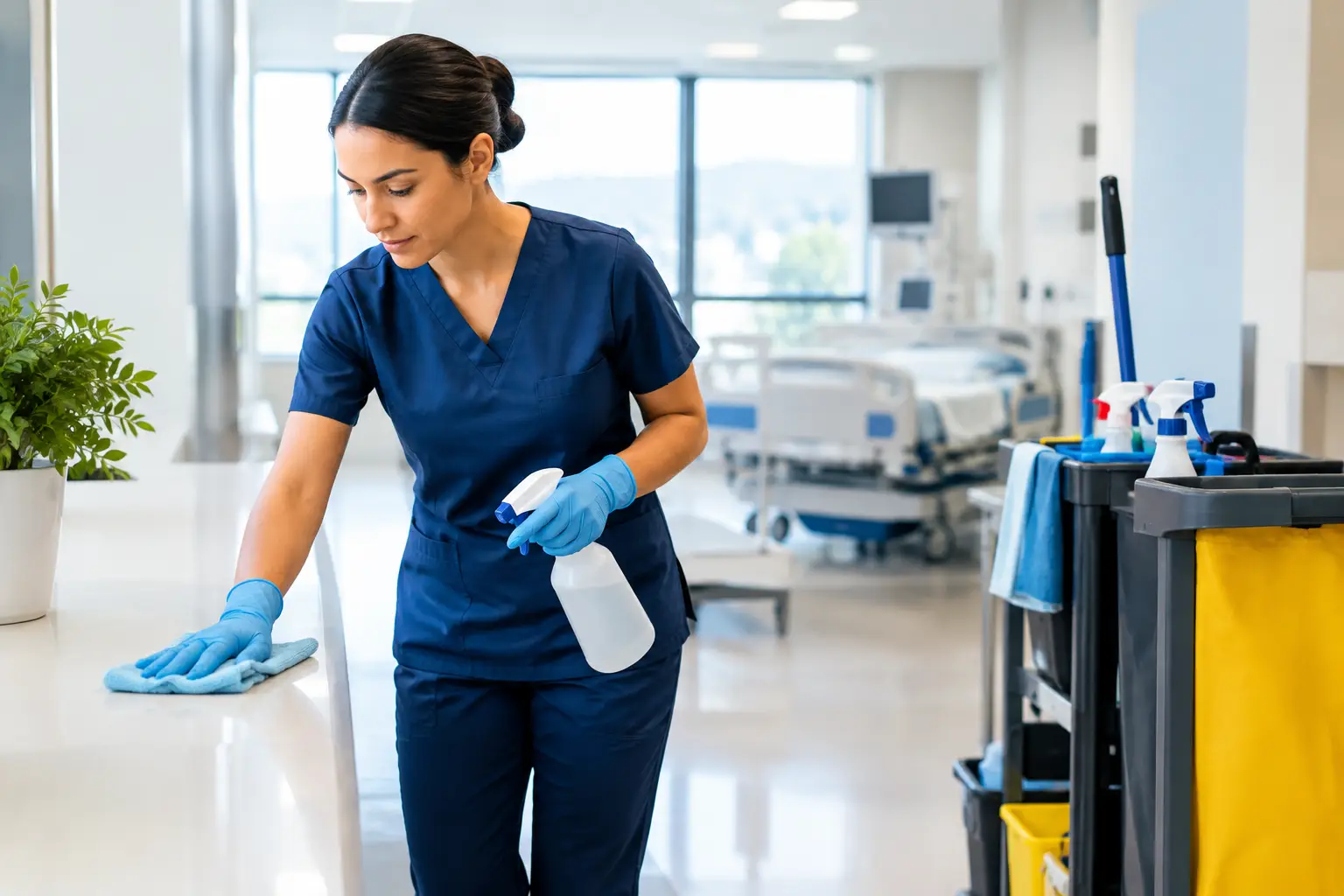
A patient notices a smudged glass door, an overflowing restroom bin, or dust along the base of an exam room wall long before they understand your practice's clinical standards. Staff notice something else: whether treatment rooms are reset properly, supplies are where they belong, and cleaning concerns are resolved without repeated emails. Medical janitorial trends are raising expectations on both fronts.
For practice administrators and facility managers, the real change is not a single new product or machine. It is a stronger focus on dependable processes. Medical offices need cleaning that supports infection-prevention protocols, protects patient confidence, and gives busy teams clear proof that the work was completed as planned.
Medical Janitorial Trends Are Becoming More Operational
A medical cleaning program used to be judged largely by appearance. Appearance still matters, but it is no longer enough. A clean-looking lobby does not answer whether high-touch points were addressed, whether a spill was handled according to the facility's protocol, or whether an issue in a restroom was reported before opening hours.
The most meaningful trend is the move from general cleaning to site-specific, documented service. Different areas of a medical or dental office carry different needs. A reception area sees constant hand contact and public traffic. Exam rooms require careful attention to touch surfaces and orderly turnover. Staff break rooms, restrooms, and administrative spaces each have their own traffic patterns and cleaning priorities.
A reliable provider should turn those differences into a written scope of work, not rely on a generic checklist used at every building. That document should state what is cleaned, how often, which areas need special attention, and who receives updates if conditions change. It gives the cleaning team direction and gives the practice a clear standard to measure.
More Focus on High-Touch and High-Use Areas
High-touch cleaning is not new, but facilities are becoming more precise about where it happens and when. Door handles, check-in counters, chair arms, light switches, payment terminals, restroom fixtures, elevator buttons, and shared workstations all deserve attention. The right frequency depends on patient volume, office hours, the type of care delivered, and how the space is used.
For example, a busy urgent care waiting area may need touchpoint service during operating hours, while a specialist office with scheduled appointments may rely mostly on detailed after-hours cleaning. Neither approach is automatically better. The key is matching the plan to the facility rather than making assumptions.
Cleaning teams also need to understand the difference between cleaning and disinfecting. Cleaning removes visible soil and debris. Disinfecting uses an appropriate product and contact time to reduce germs on hard, nonporous surfaces. Rushing through either step can create a false sense of security. A provider should use products according to label directions and follow the facility's established infection-control requirements.
Documentation Is Now Part of the Service
When a practice manager has to ask whether a task was completed, confidence drops quickly. That is why inspection records, service logs, and clear issue reporting are becoming standard expectations in well-managed medical facilities.
Documentation does not need to create extra paperwork for the office. It should make oversight easier. A practical system may include a documented scope, scheduled quality inspections, notes on recurring concerns, and confirmation when a service issue has been corrected. If a dispenser is broken, a floor finish is failing, or a restroom needs added attention, the cleaner should communicate the condition promptly instead of leaving the client to discover it.
This matters especially in multi-provider offices and larger healthcare properties. Several people may share responsibility for the space, but no one should have to chase a vendor for basic answers. Clear communication creates accountability without adding unnecessary meetings or messages.
Quality Checks Should Look Beyond the Obvious
A quality inspection should cover more than whether trash was removed. It should examine the details that affect safety, presentation, and daily operations: corners and edges of flooring, fingerprints on glass, dust around vents, cleanliness of restroom partitions, condition of entry mats, and the restocking needs identified in the agreed scope.
Inspection findings are most useful when they lead to follow-up. If the same issue appears twice, the solution may be a retraining need, a change in task frequency, or an adjustment to the cleaning sequence. Repeating the same complaint is not a communication plan.
Training and Staffing Stability Matter More Than Ever
Medical facilities cannot treat cleaning staff as interchangeable. A trained team understands which tools and cloths belong in which areas, how to prevent cross-contamination, where to store equipment, and how to work respectfully around patients and clinical personnel.
Staffing stability has a direct effect on consistency. When a new person arrives without a site orientation, small but important details are easily missed: which entrance is used after hours, where sharps containers are located, what areas are restricted, or which surfaces require special care. Turnover can happen in any service business, but the provider should have a process for training replacements and maintaining the same site standard.
For a North Jersey practice, dependable communication is also practical. Weather, traffic, building access, and last-minute scheduling changes can affect service. A cleaning partner that communicates early and has clear supervision can prevent a minor disruption from becoming an opening-day problem.
Technology Has a Place, but It Is Not the Plan
Electrostatic application equipment, microfiber systems, touch-free dispensers, digital inspection tools, and floor-care equipment can all support a medical cleaning program. Used correctly, these tools can improve coverage, reduce waste, and make performance easier to document.
But equipment does not replace trained people or a sound process. An electrostatic sprayer is not automatically appropriate for every room or every surface. Digital checklists are useful only when supervisors review them and correct problems. Even a well-equipped team can miss the details if it does not understand the building's workflow.
When evaluating a cleaning provider, ask how technology supports the actual scope of work. A clear answer should explain the purpose of the tool, the training behind it, and how results are verified. Vague promises about advanced methods are not enough.
Floors and Restrooms Are Receiving Closer Attention
Floor appearance affects first impressions, but floor care in healthcare environments is also about maintenance planning. Entrance areas may collect moisture, salt, and grit during New Jersey winters. Hallways and waiting rooms see rolling chairs, carts, and steady foot traffic. Without routine care, hard floors can lose their finish and carpets can hold visible soil at the edges and entry points.
A sensible plan combines daily service with periodic deeper work based on traffic and flooring type. That may include machine scrubbing, carpet extraction, spot treatment, burnishing, or finish maintenance. The appropriate schedule depends on the facility, not a calendar copied from another office.
Restrooms deserve the same practical attention. Patients often judge the entire practice by these spaces. Consistent cleaning, odor control, touchpoint disinfection, and timely reporting of maintenance concerns all matter. If restroom complaints are recurring, the answer may be more frequent checks, better supply monitoring, or a different cleaning sequence.
How to Turn Trends Into a Better Cleaning Program
Medical janitorial trends are useful only when they solve daily operational problems. Start by walking the facility from the patient's point of view, then from the staff's point of view. Identify high-traffic zones, high-touch surfaces, restricted areas, recurring complaints, and times when cleaning can occur without disrupting care.
Then ask whether your current scope reflects those realities. If service has changed because of new providers, expanded hours, increased patient volume, or different room use, the cleaning plan should change too. A static scope often leads to missed details, even when the cleaning team is working hard.
At CEECEE Commercial Cleaning, we build medical and dental office cleaning plans around the facility's actual workflow, with documented expectations and quality checks that make follow-up straightforward. If your Newark-area practice needs a cleaning program that staff do not have to manage every night, schedule a free walkthrough and request a customized proposal.
Call (917) 837-6499 or email info@ceeceecleaning.com