Post Construction Cleaning for Offices
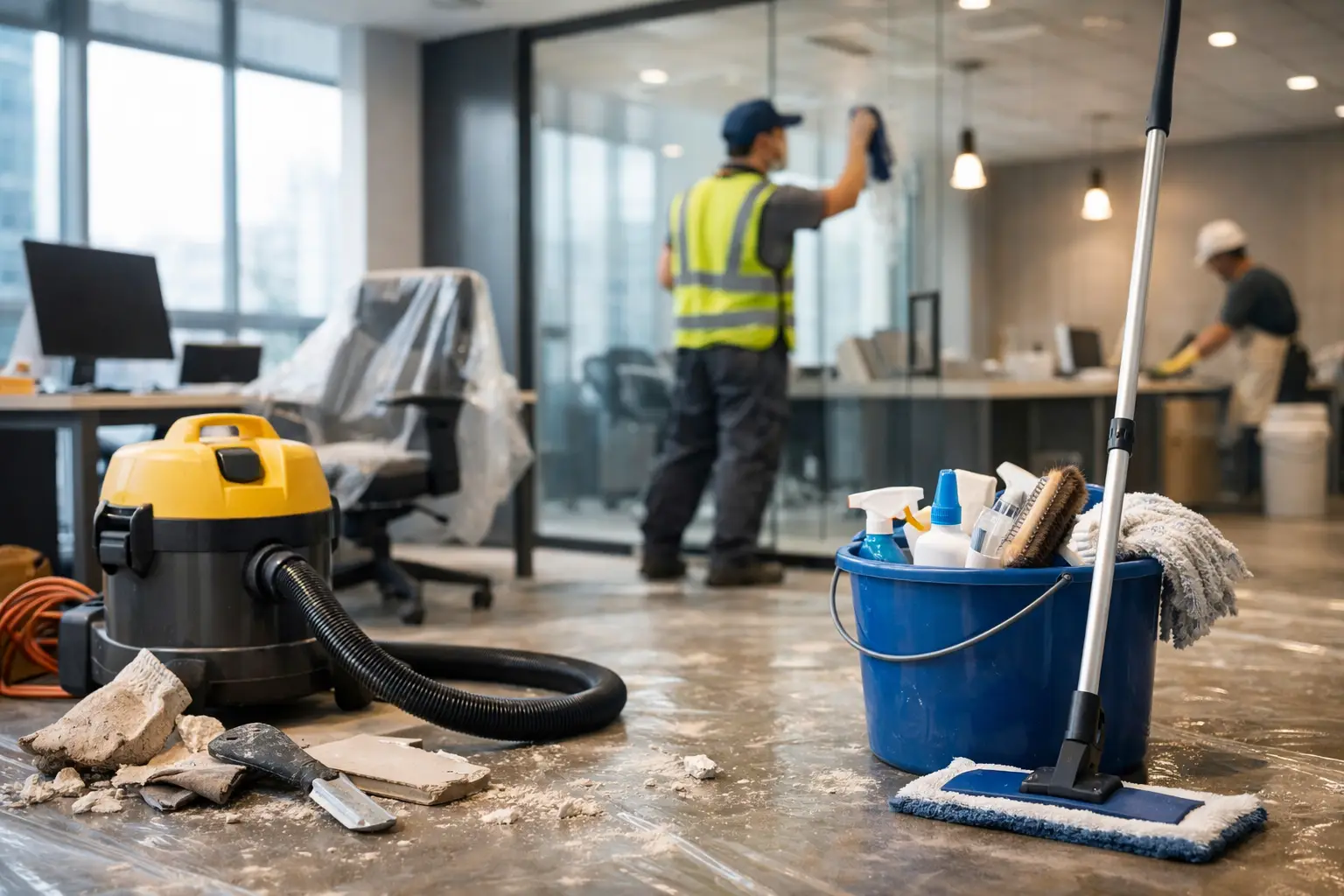
A newly built or renovated office can look finished at a glance and still be nowhere near ready for staff, tenants, or clients. Fine dust settles into vents, tracks, fixtures, and flooring. Adhesive residue shows up on glass and trim. Restrooms may be installed but not fully detailed. That is why post construction cleaning for offices is not just a final wipe-down. It is the step that turns a construction site into a usable workplace.
For office managers, facility managers, and property teams, the real concern is not whether dust is visible on day one. It is whether the space feels ready, whether first impressions hold up, and whether the cleaning partner can work from a clear scope without creating more follow-up for your team. A rushed cleanup often leads to complaints from employees, delayed occupancy, indoor dust issues, and missed details that become your problem after handoff.
What post construction cleaning for offices actually includes
Construction debris removal is only the beginning. In an office setting, the cleaning process usually needs to address multiple layers of residue left behind by contractors, trades, and punch-list activity. That includes drywall dust, sawdust, packaging scraps, stickers, caulk smears, paint splatter, and settled particles that travel farther than most people expect.
A proper cleaning scope typically covers hard surfaces, high and low dusting, interior glass, doors, frames, baseboards, light fixtures, vents, restroom detailing, breakroom cleanup, and floor finishing steps based on the material in place. Carpet may need detailed vacuuming with repeat passes. Hard floors may need dust mopping, scrubbing, and finish protection depending on the condition and manufacturer guidance.
What gets overlooked most often are the edges and touchpoints. Window tracks, door hardware, switch plates, cabinet interiors, reception counters, and conference room ledges tend to hold the fine dust that makes a space feel unfinished even after the big debris is gone.
Why office environments need a different approach
An office is not just another commercial interior. It has image-sensitive areas and daily-use zones that affect how people judge the business from the moment they walk in. Reception areas, glass-front offices, meeting rooms, restrooms, elevator lobbies, and employee kitchens all need close attention because they shape first impressions quickly.
There is also an operational issue. Offices often reopen on a deadline tied to move-in schedules, leadership visits, inspections, or tenant occupancy. If the cleaning team is not organized, every delay pushes pressure back onto the office manager or property team. A good post construction cleaning plan accounts for timing, access, punch-list coordination, and the reality that other trades may still be present.
That is where documented scopes matter. Without a written plan, one team may assume another handled interior glass, restroom accessories, or floor detailing. Those assumptions are expensive because they show up after furniture arrives and the space is already in use.
The biggest mistakes made during post construction cleaning
The most common mistake is treating the job like routine janitorial work. Post-construction cleanup is more detailed, more dust-heavy, and more dependent on sequencing. If floors are cleaned before overhead dusting is complete, they will need to be redone. If HVAC vents and ledges are ignored, settled dust can continue circulating after occupancy.
Another issue is starting before the site is truly ready. If paint is still being touched up, flooring is unfinished, or contractors are still cutting material indoors, the cleaning team can only do partial work. That creates rework and confusion about who is responsible for the final condition.
Communication failures cause just as many problems as missed cleaning steps. When there is no clear point of contact, no scope confirmation, and no final checklist, small issues become last-minute fire drills. For busy facility teams, that is usually the bigger frustration. They do not want to chase updates or walk every room pointing out obvious items.
How to know when the office is ready for final cleaning
The best timing depends on the project, but the office should be substantially complete before final cleaning begins. Major construction should be done, debris should be removed, utilities should be functioning, and surfaces should be ready to detail without active work continuing around them.
It also helps to separate cleaning into phases when the project calls for it. Some offices benefit from an initial rough clean to remove larger debris and dust buildup, followed by a final detail clean closer to turnover. In larger spaces or multi-tenant buildings, a touch-up clean right before occupancy may also make sense.
This is one of those areas where it depends on the project schedule. A single-floor office refresh may need one well-timed final cleaning. A larger renovation with phased turnover may need a more structured plan. The important part is aligning the cleaning schedule with site readiness, not just the calendar.
What decision-makers should ask before hiring a cleaning company
The right questions are less about promises and more about process. Ask how the company documents the scope, who performs quality checks, and how issues are handled if another trade leaves dust or debris after cleaning is complete. Ask whether they tailor the plan by room type and flooring type. Ask what the final walkthrough looks like and who communicates status updates.
You should also ask how they protect accountability on a fast-moving project. A company that uses site-specific scopes of work, inspection checklists, and direct communication tends to create fewer surprises than one that works from verbal assumptions.
For offices in northern New Jersey, this matters even more when timelines are tight and building access is limited. Whether the site is in Newark, Montclair, Paramus, or a nearby market, the cleaner needs to coordinate around elevators, tenant schedules, parking, and punch-list traffic without losing control of the details.
Why floor care and dust control deserve extra attention
Flooring often takes the most abuse during construction, and it is usually the first thing people notice when they enter the office. Dust trapped along edges, footprints in finish, adhesive residue, and debris in carpet pile can make a brand-new space look neglected.
Different materials need different handling. Hard floors may require gentle but thorough removal of residue before any protective treatment. Carpet needs repeated vacuuming and attention to corners, transitions, and under built-in furniture. If the wrong tools or chemicals are used, the floor can be marked or dulled before the office even opens.
Dust control is just as important because office spaces are filled with horizontal surfaces and air movement. Desks, millwork, vents, frames, and ledges all collect fine particles. If those areas are missed, the office can look clean during handoff and dusty again within hours.
What a well-managed post-construction cleaning process looks like
A strong process starts before anyone unloads equipment. The cleaning company should confirm the site condition, define the scope, identify exclusions, and align on timing. That planning step is what keeps expectations realistic and prevents confusion when the project is moving quickly.
From there, the work should follow a logical sequence, usually top to bottom and back to front, with special attention to dust migration and floor protection. Teams should know which areas are complete, which are pending, and which may need a return visit after final contractor activity.
The last piece is verification. A final walkthrough, documented inspection, and responsive follow-up help ensure the office is actually ready for use, not just technically cleaned. This is where accountability makes the difference. When a cleaning partner has a clear standard and checks their own work, your team spends less time managing the cleanup and more time focusing on opening the space.
At CEECEE Commercial Cleaning, that mindset is part of The CEECEE Standard - clear communication, documented scopes, site-specific planning, and follow-through that supports your operations instead of adding to your workload.
Choosing a partner for post construction cleaning for offices
If you are evaluating vendors, look past general service descriptions and focus on whether they understand office turnover, occupant expectations, and the cost of missed details. The right company should be able to explain how they manage dust, sequence the work, inspect results, and communicate throughout the job.
A clean office after construction is not just about appearance. It affects employee confidence, client perception, and how smoothly the transition into the space goes. When the cleaning is handled with consistency and accountability, the office feels finished the moment people walk in.
If your office, medical suite, or commercial space is nearing completion, a walkthrough before final cleaning can save time and prevent last-minute issues. A clear scope now is much easier than fixing missed details after opening day.
Call (917) 837-6499 or email info@ceeceecleaning.com