How to Remove Office Carpet Stains Without Damage
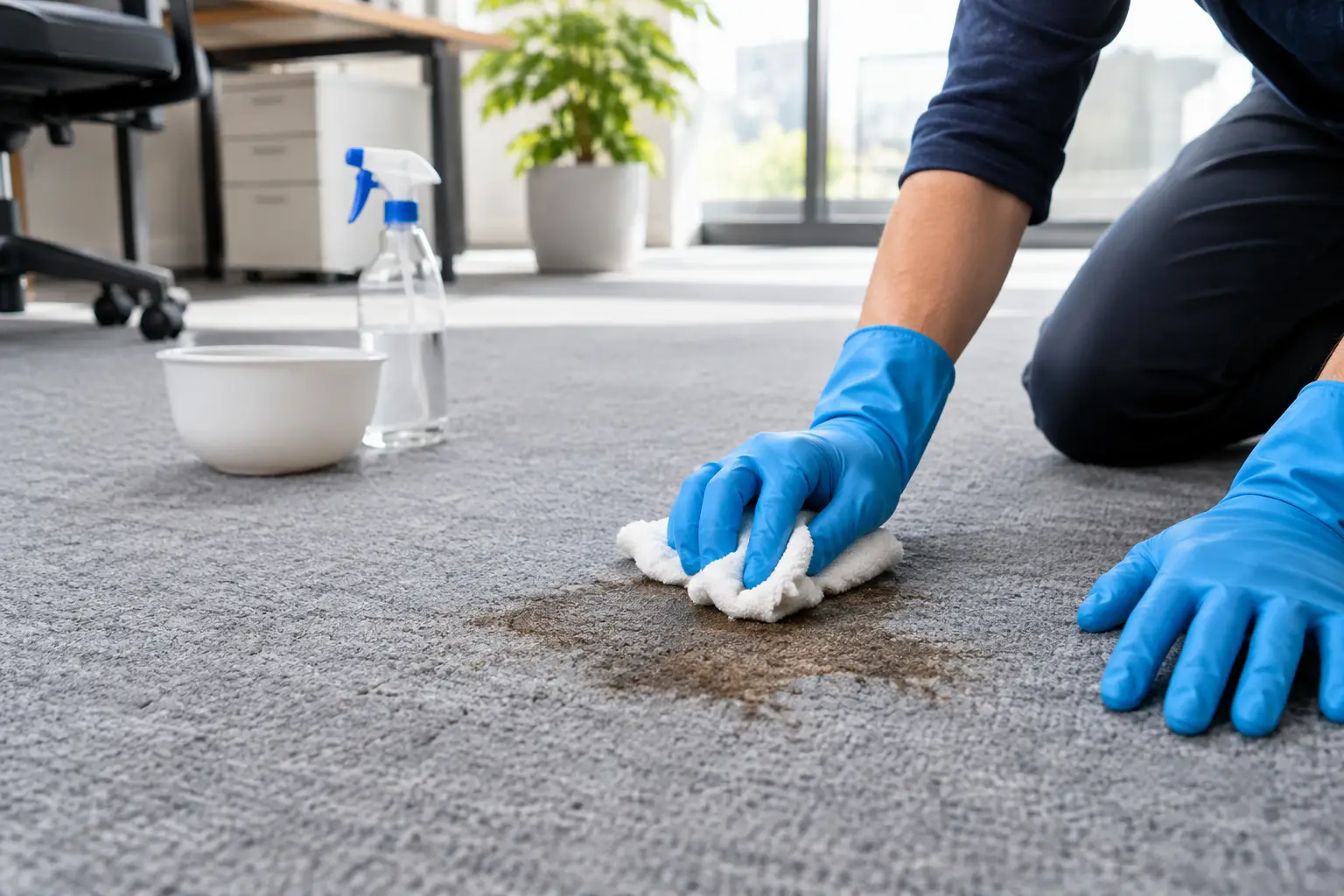
A coffee spill beside the conference table can become a dark traffic-lane stain by the next morning. A leaking toner cartridge, tracked-in winter salt, or an employee’s lunch can create the same problem. Knowing how to remove office carpet stains promptly protects more than the carpet - it protects the condition visitors, tenants, patients, and employees associate with your facility.
For office managers and facility managers, the real challenge is not finding a spray bottle. It is responding quickly without setting the stain, damaging the carpet backing, creating a sticky residue, or leaving a damp area that attracts more soil. The right approach depends on what spilled, how long it has been there, the carpet construction, and whether previous cleaning attempts have changed the spot.
Start With Containment, Not Scrubbing
The first few minutes matter. Block foot traffic around the spill and place a wet-floor sign nearby if the area is damp. This prevents the material from being ground deeper into the fibers and reduces slip risk in busy offices, medical suites, and common areas.
Blot liquids immediately with clean, white absorbent towels. Press down firmly, lift, and move to a clean section of the towel. Do not rub in circles. Scrubbing frays carpet fibers, spreads the spill outward, and can push liquid into the backing or subfloor. White towels matter because colored towels can transfer dye to light commercial carpet.
For solids such as food, mud, or dried material, lift away as much as possible with a dull scraper or disposable scoop before applying any solution. The less material left in the carpet, the less cleaning chemistry is needed.
If the source is unknown, treat the area cautiously. An unidentified spot near a printer may be ink or toner. A dark mark around an entry may be oily road grime mixed with de-icing salt. Using the wrong product can make either issue harder to correct.
How to Remove Office Carpet Stains by Type
Most commercial carpeting can handle careful spot treatment, but “one cleaner for everything” is not a reliable facility plan. Always follow the carpet manufacturer’s guidance and test a cleaning solution in an inconspicuous area first, especially on patterned carpet, carpet tiles, wool blends, or recently installed flooring.
Coffee, Tea, and Soft Drinks
After blotting, apply a small amount of a neutral carpet spotter to a clean towel rather than pouring it directly onto the carpet. Blot from the outer edge toward the center so the stain does not spread. Follow with a lightly damp towel to remove cleaner residue, then blot dry.
Coffee can leave a tan or yellow-brown shadow even after the liquid is gone. That discoloration often requires a professional treatment rather than repeated applications of a general cleaner. Repeatedly soaking the same area rarely improves the result.
Food and Grease
Food stains frequently contain oil, protein, and colorants, which is why they can reappear after the carpet dries. Remove solids first, then use a carpet-safe spotter appropriate for greasy soils. Work in small amounts and blot thoroughly.
Avoid using excessive degreaser. Many strong products leave residue behind, and residue acts like a magnet for foot traffic soil. The spot may look clean at first and appear darker than the surrounding carpet a week later.
Ink, Toner, and Marker
Ink and toner need a measured response. Do not scrub or apply random solvents from a supply closet. Certain solvents can spread the pigment, remove color from carpet fibers, or affect adhesive beneath carpet tiles.
Isolate the area, document what caused it if possible, and notify your cleaning provider or floor-care specialist. For a small fresh mark, professional spot treatment may resolve the issue. Large toner spills, especially around equipment, may require controlled removal and extraction to keep fine particles from spreading.
Mud, Salt, and Entryway Soil
North Jersey winters are particularly hard on commercial carpets. Moisture, salt residue, and grit travel from lobbies into hallways, elevators, and offices. Let heavy mud dry when possible, then vacuum it thoroughly before using moisture. Adding water to wet mud too early can turn a surface issue into a larger stain.
Salt residue may leave a white or gray film. A carpet-safe rinse and extraction process is often more effective than spot cleaning alone because the residue can spread beyond the visible mark. Entry mats, regular vacuuming, and prompt inspection after storms do more to prevent this problem than emergency cleaning products.
Blood or Other Biological Spills
In medical, dental, daycare, and fitness facilities, bodily-fluid incidents should be handled under the site’s documented safety procedures. Staff need appropriate personal protective equipment, an approved disinfecting process, and proper waste handling. Do not treat these events as ordinary carpet spots.
Carpet may require specialized cleaning or removal depending on the volume of the spill, the material involved, and the carpet’s condition. Clear incident communication and a documented response protect occupants and help facility leaders make appropriate decisions.
Avoid the Mistakes That Turn a Spot Into a Replacement Issue
The most common mistake is over-wetting. If cleaning solution reaches the backing and does not dry promptly, odor, wicking, and adhesive problems can follow. Wicking happens when soil below the surface rises back through the fibers during drying, making a “cleaned” spot reappear.
Another mistake is using too much product. More cleaner does not mean a cleaner carpet. Residue attracts soil and can leave a hard-edged ring around the treated area. A light application, careful blotting, and a residue-removal rinse are usually safer.
Heat can also be a problem. Avoid applying high heat to protein-based stains or using equipment that is not approved for the carpet. Heat may set some stains and can affect certain carpet fibers. When carpet tiles are involved, aggressive cleaning can also loosen edges or leave visible differences between tiles.
Finally, do not ignore recurring stains. If the same area keeps spotting, the cause may be a beverage station leak, a planter, a roof or window issue, an entryway mat that is undersized, or insufficient vacuuming in a high-traffic zone. Cleaning the symptom without investigating the source wastes time and budget.
When to Call for Professional Carpet Care
A trained commercial cleaning team should be involved when a stain is large, old, greasy, unknown, repeatedly returning, or located in a high-visibility area. Professional service is also the practical choice when multiple stains are appearing across a suite or when the carpet has broad traffic-lane discoloration.
Extraction, low-moisture cleaning, encapsulation, and targeted spot treatment each have a place. The correct method depends on carpet type, soil load, occupancy needs, drying time, and the facility’s maintenance history. For example, a busy medical office may need a low-moisture method that allows rooms to return to service quickly, while a heavily soiled office corridor may benefit from deeper restorative cleaning during off-hours.
Good carpet care should also include documentation. Your cleaning provider should note stain locations, probable causes, treatments used, and whether follow-up is needed. This gives office and property managers a clear record and helps identify patterns before isolated spots become a larger floor-care problem.
Build Stain Response Into the Cleaning Plan
The best way to manage carpet stains is to make the response predictable. Keep approved spot-cleaning supplies available to trained personnel, establish who reports spills, and make sure the cleaning team knows which areas require special attention. Reception areas, break rooms, conference rooms, printer stations, and entrances usually deserve closer inspection.
A site-specific plan should include routine vacuuming, scheduled spot treatment, periodic deep cleaning, and quality checks of high-traffic carpet. It should also account for seasonal conditions. In Newark and throughout Essex County, winter weather can quickly change the maintenance needs of a lobby or corridor.
At CEECEE Commercial Cleaning, carpet care is treated as part of the facility’s overall presentation, not as an afterthought once stains become obvious. A documented scope, clear communication about issues, and follow-up inspections help keep small problems from becoming permanent visual distractions.
If carpet stains are affecting your office’s appearance or returning after routine cleaning, schedule a free walkthrough and request a customized proposal. A clear plan for response, maintenance, and follow-up gives your team one less facility issue to chase.
Call (917) 837-6499 or email info@ceeceecleaning.com