School Cleaning That Keeps Campuses Ready
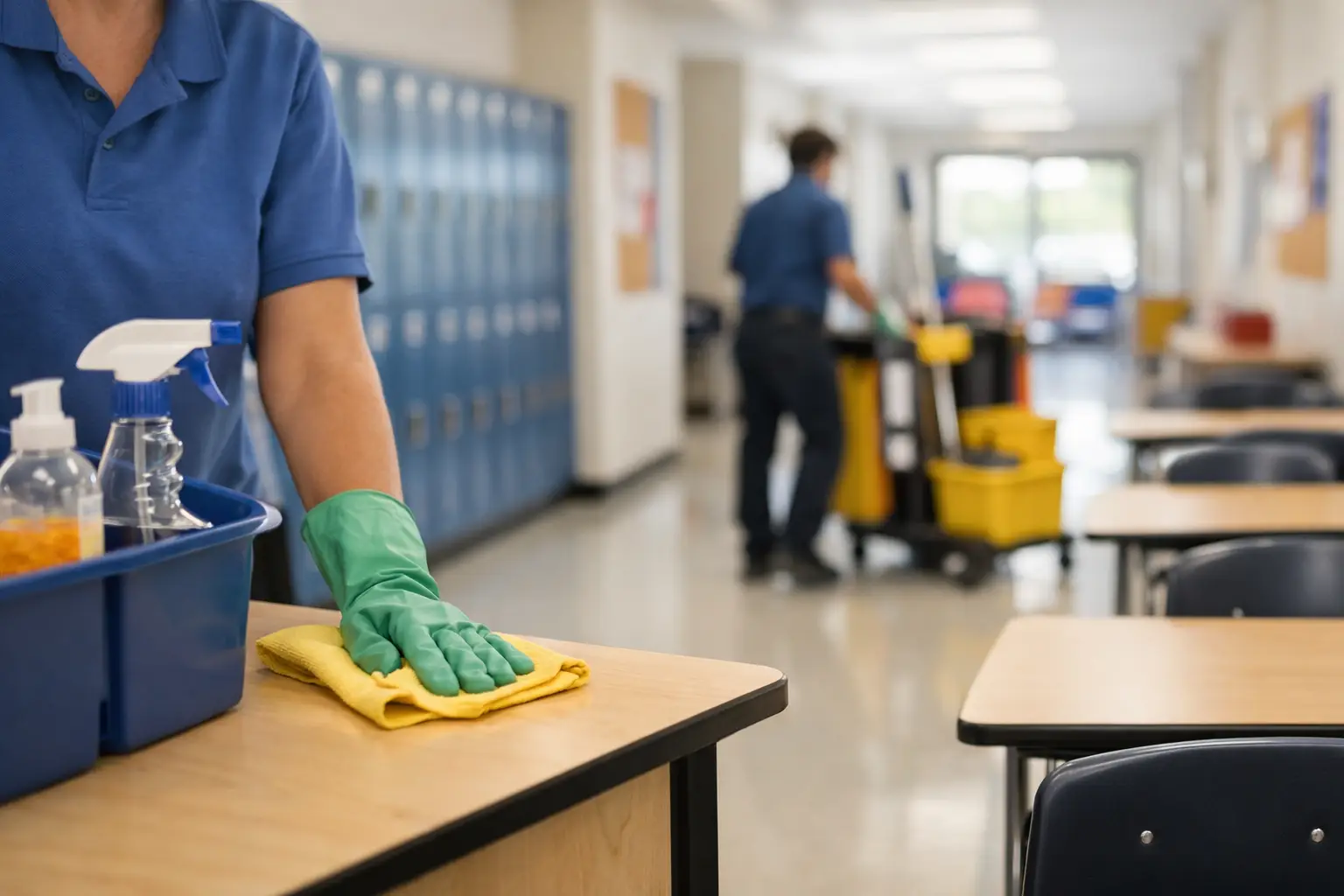
A restroom without soap before first period, a sticky cafeteria floor after lunch, or trash left in a classroom overnight can create more than complaints. These issues affect student comfort, staff morale, safety, and the confidence families place in a school. Effective school cleaning is not simply a nightly checklist. It is a coordinated plan that keeps a busy learning environment ready for the next day.
For school facility managers and operations leaders, the challenge is consistency. Hundreds of people move through classrooms, hallways, gyms, offices, cafeterias, and restrooms every day. A cleaning provider must know which spaces need daily attention, which details require periodic care, and how to report a problem before it becomes a disruption.
What School Cleaning Must Accomplish
A school has a different traffic pattern than a typical office. The day starts with arrival, peaks during passing periods and lunch, then shifts to after-school programs, athletics, meetings, and community use. Cleaning needs change by the hour and by the area of the building.
The goal is to maintain a clean, safe, and presentable campus without interfering with instruction or scheduled activities. That requires more than assigning a crew to empty bins and vacuum floors. It requires a documented scope of work, clear priorities, and a team that understands how each area is used.
Classrooms need tidy floors, emptied wastebaskets, clean touchpoints, and desks or surfaces addressed according to the school’s procedures. Restrooms need dependable servicing, stocked consumables, odor control, and frequent attention to high-touch areas. Cafeterias need a plan that accounts for food debris, spills, tables, floors, and waste volume. Entryways and corridors need ongoing floor care because they shape the first impression for students, staff, visitors, and families.
A good plan also recognizes that not every task belongs on the same schedule. Daily cleaning handles immediate hygiene and appearance needs. Weekly and monthly work may include detailed floor edges, high dusting, carpet spot treatment, machine scrubbing, and other areas that are easy to miss when the focus is only on the visible basics.
The Details That Cause the Most Complaints
Most cleaning frustrations do not begin with a major failure. They begin with small details that repeat: an overflowing restroom bin, fingerprints on a front-office door, a missed spill near a drinking fountain, or a classroom trash can that was not emptied before morning.
These details matter because they are highly visible. Teachers and staff should not have to submit the same request every week or walk a building looking for work that was supposed to be completed. When they do, the cleaning vendor becomes another task for the facility team to manage.
The strongest school cleaning programs identify recurring pressure points during a walkthrough and build them into the service plan. For example, a cafeteria may need extra attention after lunch, while a gym lobby may require floor spot cleaning before evening events. A school with young students may have more frequent restroom checks. A campus that hosts weekend activities may need a different service schedule than one used only during standard school hours.
There is no universal checklist that fits every school. The right approach depends on the building layout, enrollment, programs, floor types, staffing needs, and hours of use.
Build a Site-Specific Cleaning Plan
A cleaning plan should make expectations clear before service begins. It should define the spaces being cleaned, task frequencies, access procedures, special requirements, and the person responsible for communication on both sides.
At minimum, the plan should address the following areas:
- Classrooms, offices, staff rooms, and administrative spaces
- Restrooms, locker rooms, and nursing or wellness areas
- Cafeterias, kitchens, and food-service adjacent spaces
- Entrances, hallways, stairwells, gyms, and auditoriums
- Floor care, carpet care, trash handling, and supply replenishment
The list is only the starting point. A site-specific plan should state what “clean” means in each area. For instance, restroom service may include disinfecting touchpoints, cleaning fixtures, removing waste, checking dispensers, and reporting damaged hardware. Floor care may include daily vacuuming or mopping, plus scheduled machine scrubbing, burnishing, or carpet extraction based on the flooring and traffic level.
This level of detail protects the school and the cleaning team. Staff know what to expect, supervisors can inspect against the agreed scope, and issues can be addressed with facts rather than assumptions.
Cleaning for Health Without Disrupting Learning
Schools require thoughtful cleaning practices because they serve children, educators, support staff, and visitors throughout the day. High-touch surfaces such as door handles, railings, faucet handles, dispensers, shared equipment, and reception counters deserve regular attention. Restrooms, cafeterias, and health-related areas need procedures that align with the school’s own policies and applicable requirements.
However, more cleaning activity is not always better if it disrupts instruction or creates avoidable scheduling conflicts. Timing matters. Day porters can handle spills, restrooms, entrances, and urgent needs while students are present. Evening crews can complete deeper routine cleaning after classes and activities are finished. Periodic floor work may need to be scheduled around events, testing, summer programs, or breaks.
Communication is what makes this work. When a school has an assembly, a concert, a weather-related closure, or a late athletic event, the cleaning team needs advance notice and a clear process for adjusting coverage. In return, the cleaning provider should confirm changes, communicate concerns, and document completed follow-up.
Why Floor Care Deserves Its Own Plan
Floors carry much of a school’s daily wear. Rain, snow, salt, dirt, food debris, and heavy foot traffic can quickly make entrances and hallways look neglected. In North Jersey, winter weather adds another layer of difficulty, particularly in lobbies, corridors, and areas near exterior doors.
Routine mopping or vacuuming is necessary, but it does not replace a floor maintenance program. Hard surfaces may need machine scrubbing, refinishing, or burnishing at planned intervals. Carpeted areas may need regular vacuuming, spot removal, and periodic extraction to maintain appearance and manage embedded soil.
The trade-off is scheduling. Deep floor work can improve appearance and extend the useful life of flooring, but it needs enough dry time and access to be completed safely. A provider should recommend a realistic schedule based on the materials, traffic, and building calendar rather than applying the same approach to every facility.
Accountability Should Be Visible
A school should not have to guess whether cleaning tasks were completed. Quality checks are one of the clearest differences between a vendor that simply shows up and a cleaning partner that manages the work.
Inspections should focus on the areas people notice most and the tasks that carry the greatest health and safety impact. Restroom condition, trash removal, floor appearance, touchpoint cleaning, entryways, and cafeteria spaces are common priorities. Findings should be documented, corrected promptly, and used to improve future service.
Accountability also means having a clear way to report issues. If a teacher notices a spill, a dispenser is empty, or an area needs extra attention before an event, the request should not disappear into a generic inbox. Schools need a responsive point of contact, a reliable escalation process, and confirmation when the issue is resolved.
That is the practical value behind The CEECEE Standard: clear expectations, documented work, inspections, and proactive follow-up. The aim is to give facility leaders visibility without forcing them to supervise every cleaning visit.
Questions to Ask a School Cleaning Provider
Before selecting a provider, ask how the company develops site-specific scopes, handles schedule changes, trains staff for active educational settings, and verifies work. Ask who performs inspections, how concerns are communicated, and what happens when a recurring issue is identified.
It is also useful to discuss staffing continuity. Familiar crews who understand the building, access rules, and priorities can reduce missed details. At the same time, the provider should have enough supervision and support to maintain standards when staffing changes occur.
A proposal should be specific enough to show how the provider will care for your campus. If the scope is vague, the service will likely become vague as well.
For schools in Newark, Essex County, and surrounding North Jersey communities, a walkthrough is the best place to start. CEECEE Commercial Cleaning can review your building’s traffic patterns, cleaning priorities, and current pain points to develop a customized facility cleaning proposal. A dependable cleaning plan gives your staff one less problem to chase and helps every school day begin with spaces ready for learning.
Call (917) 837-6499 or email info@ceeceecleaning.com