Why Are GPS Check Ins Important for Cleaning?
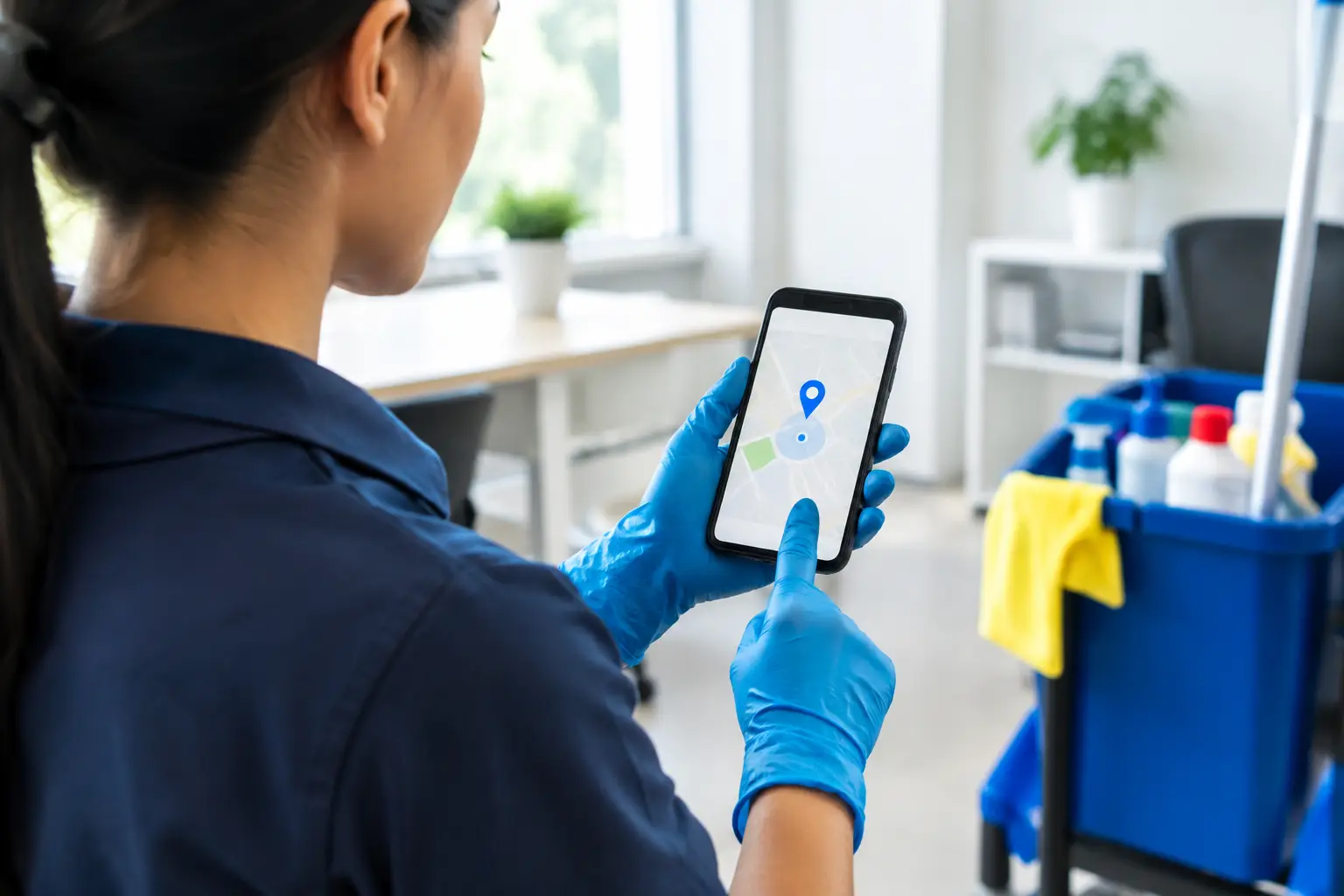
A cleaner scheduled for 6:00 p.m. may have completed every task on the scope, but that does not help an office manager who arrives the next morning to an unserviced restroom. Why are GPS check ins important? They create a clear, time-stamped record that a cleaning team arrived at the right facility when scheduled, giving managers a practical starting point when questions arise.
For commercial facilities, this is not about watching people for the sake of it. It is about reducing uncertainty. A dependable cleaning partner should make it easier to confirm service, address exceptions, and protect the standard your employees, visitors, patients, or tenants experience each day.
GPS Check Ins Confirm the Most Basic Promise
At its core, a GPS check in verifies presence at a designated location. When a cleaner checks in through an approved system, the record typically captures the date, time, and location associated with the start of the shift. A checkout can document when the scheduled visit ended.
That information answers a simple but essential question: was the team on site for the planned service window? For a facility manager responsible for multiple properties, that answer should not depend on a vague text message or a handwritten time sheet submitted days later.
Consider a multi-tenant office building in Newark. A tenant reports that a lobby trash can was full at 8:00 a.m. The issue may be a missed visit, an incomplete task, an unusually heavy evening event, or a trash can that filled after the cleaners left. A GPS record does not answer every question by itself, but it confirms whether the team was there and when. That allows the cleaning provider and property manager to investigate based on facts rather than assumptions.
Why GPS Check Ins Are Important for Accountability
Commercial cleaning is often performed after business hours, when the client is not on site. That makes accountability especially valuable. GPS check ins establish an objective service record without requiring an office manager, practice administrator, or business owner to stay late and supervise arrivals.
They also support fair, direct conversations. If a team checked in on time but a detail was missed, the discussion can focus on the task, the scope of work, and corrective action. If there was a delayed arrival, the provider can explain what happened and communicate how it will be handled. The goal is not to catch someone in a mistake. The goal is to make sure a problem is identified early and resolved rather than repeated.
For cleaning companies, this visibility matters as well. Supervisors can see potential attendance issues quickly, verify that teams are assigned to the correct site, and follow up when a check in is missing. That is far more useful than finding a problem after a client has already had to report it.
They Make Communication More Specific
Poor vendor communication often sounds like this: “The crew was there” or “We will look into it.” Those statements may be well-intended, but they leave a manager with little information and no clear next step.
GPS check-in records give communication a factual foundation. A provider can confirm that a crew arrived at 6:12 p.m., identify that the usual lead was reassigned, or recognize immediately that a scheduled visit did not begin as expected. When paired with a documented scope of work and inspection notes, the conversation becomes more productive.
For example, a dental practice may notice that a waiting room floor does not look right on Monday morning. The provider can review the service record, confirm the cleaning window, and check whether floor care was part of that evening's routine service or scheduled for another visit. If the work was missed, the provider should arrange follow-up and document the correction. If the scope needs adjustment due to increased foot traffic, the manager has a clear basis for updating the plan.
This is how a cleaning relationship becomes easier to manage. Issues are not ignored, and neither side has to rely on memory.
GPS Data Supports Better Quality Control
A check in proves a team reached the site. It does not prove that every restroom was cleaned correctly, every touchpoint was addressed, or every carpet stain was treated. Those distinctions matter.
The strongest quality-control process uses GPS check ins as one piece of a larger system. A documented site-specific plan defines what should be done. Supervisor inspections, task checklists, client feedback, and corrective follow-up help verify how well the work was completed.
This layered approach is especially useful in facilities with different cleaning needs. A gym may need close attention to locker rooms, high-touch equipment areas, and entry glass. A daycare has its own high-use surfaces and timing requirements. An auto dealership may need polished customer areas without disrupting sales operations. Attendance data helps confirm the visit occurred, while inspections and communication help confirm the work met expectations.
At CEECEE Commercial Cleaning, this is the practical thinking behind The CEECEE Standard: clear expectations, documented service, and follow-up that does not leave the client guessing.
Faster Response When Something Changes
Facility operations rarely follow a perfect schedule. A late meeting may keep employees in the office. A winter storm can affect travel across North Jersey. A building access issue may prevent a crew from entering on time. A medical office may need an extra cleanup after an unusually busy day.
GPS check-ins help a provider spot exceptions promptly. If the expected check in does not appear, a supervisor can contact the crew, verify access, and notify the client when necessary. That proactive step can prevent a small scheduling problem from becoming a next-day complaint.
The data can also reveal patterns. If a particular site regularly has late arrivals because its service window conflicts with traffic, security procedures, or closing schedules, the provider and client can adjust the plan. If staff check in consistently but service takes longer than allotted, the scope or staffing level may need review.
Good information does not replace good judgment. It gives both parties a better way to use it.
Privacy and Practical Limits Matter
GPS check-ins should be used thoughtfully. Clients generally need confirmation that a crew arrived and departed, not minute-by-minute tracking of every employee throughout a shift. Cleaning companies should be transparent with their staff about what the system records, when it is used, and how the information supports scheduling, payroll, safety, and service accountability.
Accuracy also depends on the technology and the property. GPS can be less precise inside large buildings, underground areas, or dense urban locations. A sensible system accounts for reasonable location tolerances and allows a supervisor to review exceptions rather than treating every imperfect signal as a failure.
Most importantly, GPS records should not become a substitute for management. A cleaner can be on site and still need support, clearer instructions, or an inspection follow-up. The technology is valuable because it provides evidence, not because it solves every service issue automatically.
What Facility Managers Should Ask a Cleaning Provider
When evaluating a commercial cleaning partner, ask how the company verifies attendance and responds when a scheduled visit is missed or delayed. Ask whether service records are reviewed by a supervisor and how client concerns are documented and closed out.
It is also useful to ask how attendance verification connects to the actual cleaning plan. The right provider should be able to explain the difference between confirming an arrival and verifying completed work. That distinction signals a more mature approach to accountability.
For offices, medical and dental practices, gyms, churches, dealerships, and managed properties, the real benefit is confidence. You should not have to spend your mornings wondering whether your cleaning crew arrived, whether an issue was reported, or whether you will need to chase someone for answers.
If your current cleaning process leaves too many unanswered questions, schedule a free walkthrough with CEECEE Commercial Cleaning and request a customized proposal built around your facility, service schedule, and expectations.
Call (917) 837-6499 or email info@ceeceecleaning.com